


Phylogenetic distribution of phenotypic traits in Bacillus thuringiensis determined by multilocus sequence analysis
- PMID: 23762464
- PMCID: PMC3677866
- DOI: 10.1371/journal.pone.0066061
Phylogenetic distribution of phenotypic traits in Bacillus thuringiensis determined by multilocus sequence analysis
Abstract
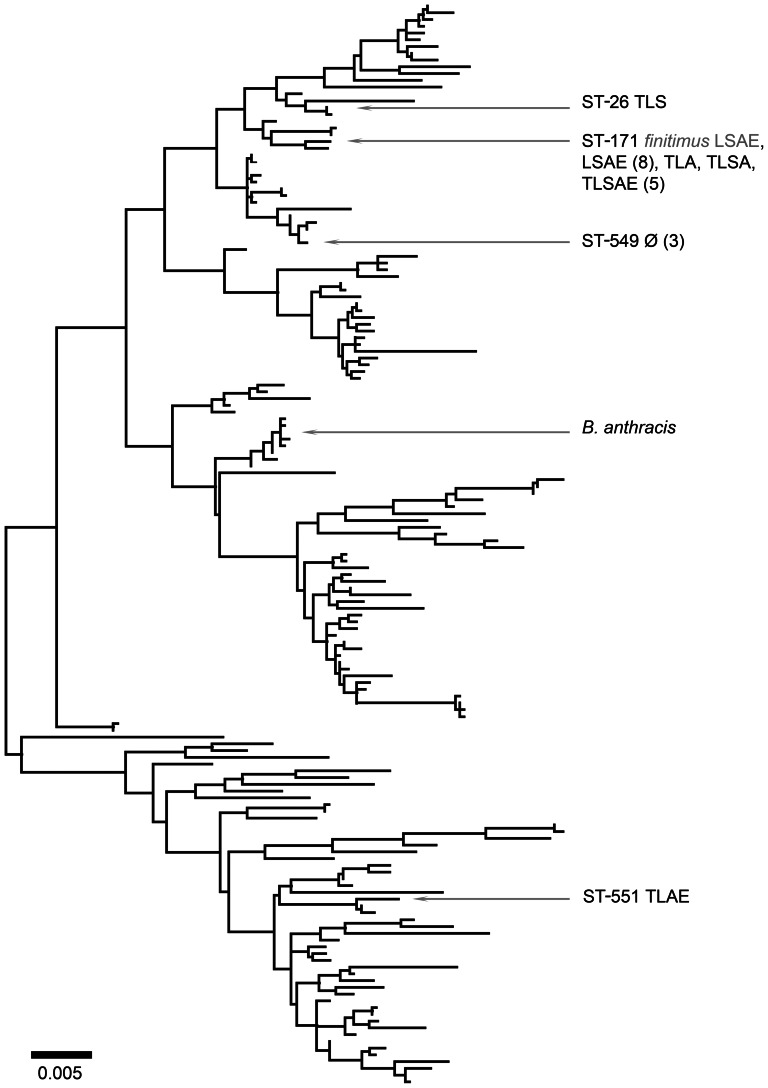
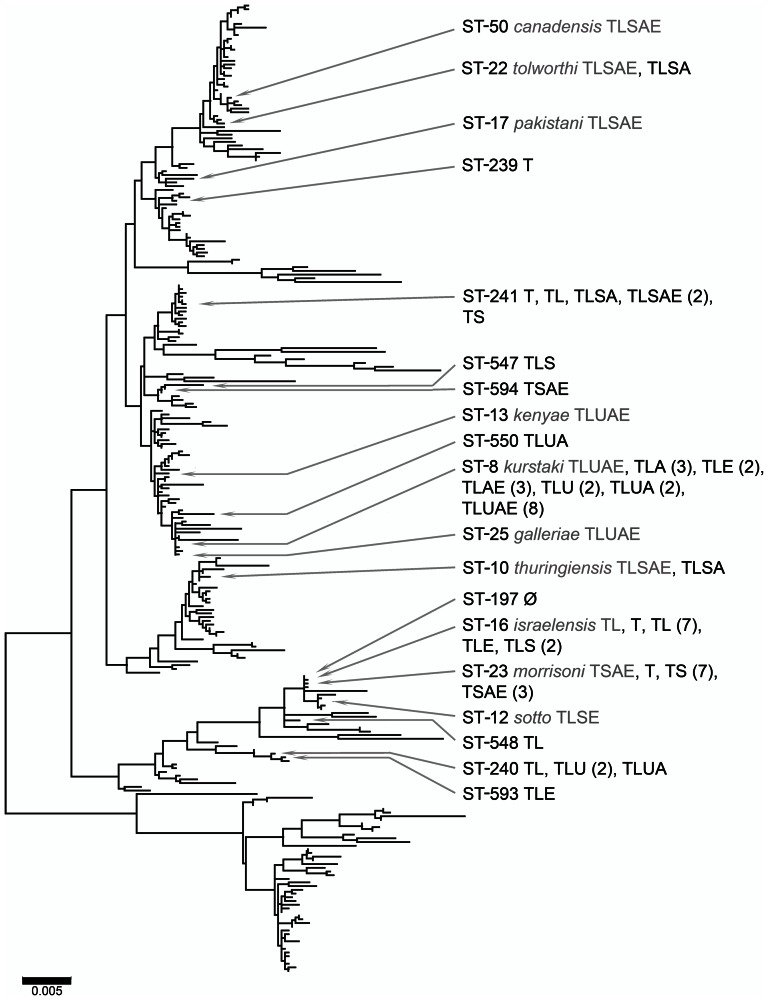
Diverse isolates from a world-wide collection of Bacillus thuringiensis were classified based on phenotypic profiles resulting from six biochemical tests; production of amylase (T), lecithinase (L), urease (U), acid from sucrose (S) and salicin (A), and the hydrolysis of esculin (E). Eighty two isolates representing the 15 most common phenotypic profiles were subjected to phylogenetic analysis by multilocus sequence typing; these were found to be distributed among 19 sequence types, 8 of which were novel. Approximately 70% of the isolates belonged to sequence types corresponding to the classical B. thuringiensis varieties kurstaki (20 isolates), finitimus (15 isolates), morrisoni (11 isolates) and israelensis (11 isolates). Generally, there was little apparent correlation between phenotypic traits and phylogenetic position, and phenotypic variation was often substantial within a sequence type. Isolates of the sequence type corresponding to kurstaki displayed the greatest apparent phenotypic variation with 6 of the 15 phenotypic profiles represented. Despite the phenotypic variation often observed within a given sequence type, certain phenotypes appeared highly correlated with particular sequence types. Isolates with the phenotypic profiles TLUAE and LSAE were found to be exclusively associated with sequence types associated with varieties kurstaki and finitimus, respectively, and 7 of 8 TS isolates were found to be associated with the morrisoni sequence type. Our results suggest that the B. thuringiensis varieties israelensis and kurstaki represent the most abundant varieties of Bt in soil.
Conflict of interest statement
Figures
References
-
- Heimpel AM, Angus TA (1958) The taxonomy of insect pathogens related to Bacillus cereus Frankland and Frankland. Can J Microbiol 4: 531–541. - PubMed
-
- de Barjac H, Bonnefoi A (1962) Essai de classification biochimique et sérologique de 24 souches de Bacillus du type B. thuringiensis . Entomophaga 18: 5–31.
-
- de Barjac, H(1981) Identification of H-serotypes of Bacillus thuringiensis. In: Burgess, H.D. (ed.) Microbial control of pests and plant diseases 1970–1980. Academic Press, Inc., London, pp. 35–45.
-
- Heimpel AM (1967) A taxonomic key proposed for the species of “crystalliferous” bacteria. J Invertebr Pathol 9: 364–375. - PubMed
Publication types
MeSH terms
Substances
LinkOut - more resources
Full Text Sources
Other Literature Sources
