


Metal-on-metal hip prostheses and systemic health: a cross-sectional association study 8 years after implantation
- PMID: 23762480
- PMCID: PMC3677913
- DOI: 10.1371/journal.pone.0066186
Metal-on-metal hip prostheses and systemic health: a cross-sectional association study 8 years after implantation
Abstract
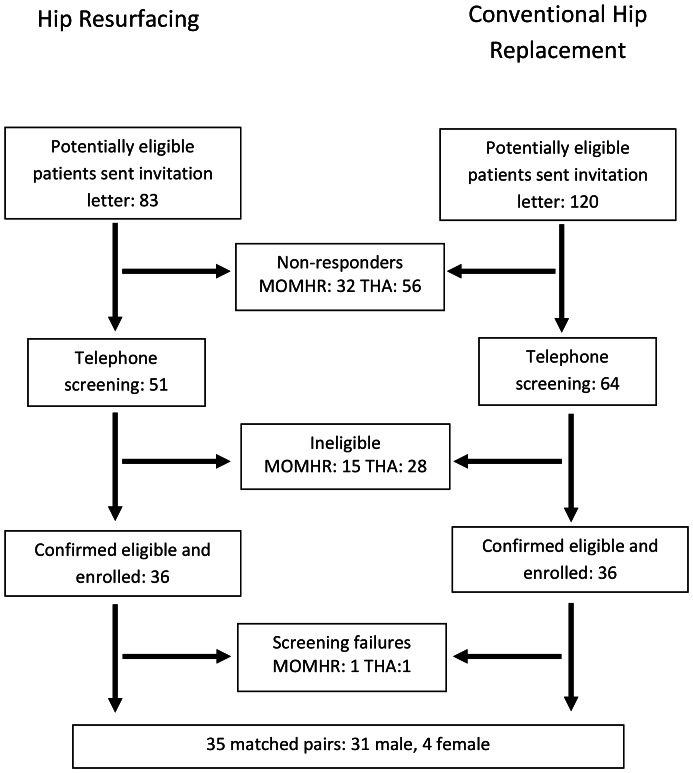
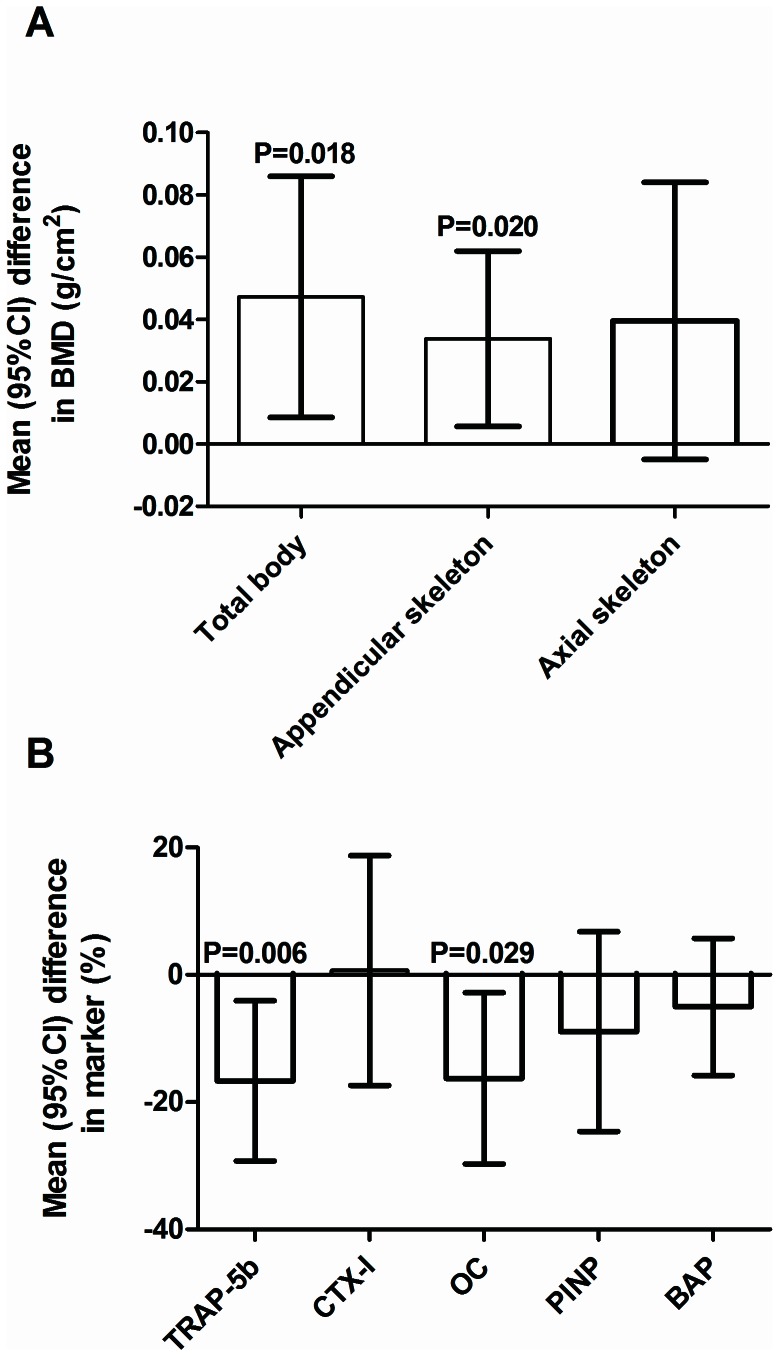
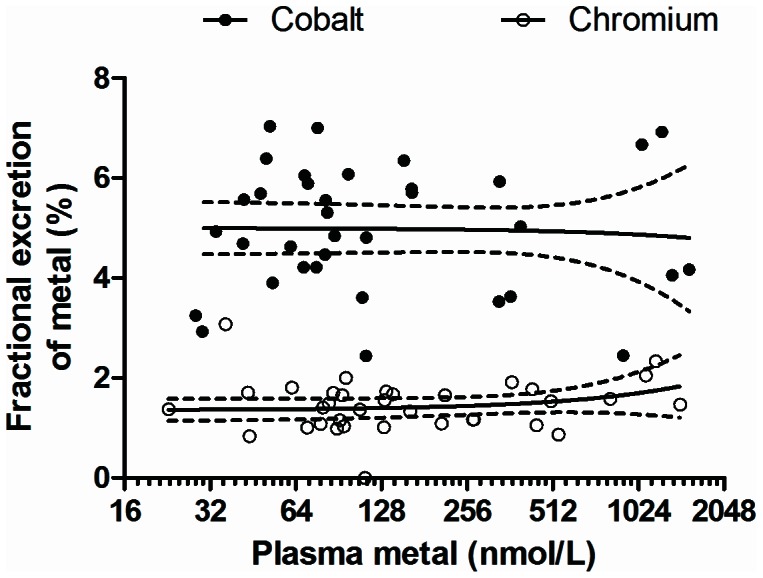
There is public concern over the long term systemic health effects of metal released from hip replacement prostheses that use large-diameter metal-on-metal bearings. However, to date there has been no systematic study to determine which organs may be at risk, or the magnitude of any effect. We undertook a detailed cross-sectional health screen at a mean of 8 years after surgery in 35 asymptomatic patients who had previously received a metal-on-metal hip resurfacing (MoMHR) versus 35 individually age and sex matched asymptomatic patients who had received a conventional hip replacement. Total body bone mineral density was 5% higher (mean difference 0.05 g/cm², P = 0.02) and bone turnover was 14% lower (TRAP 5b, mean difference -0.56IU/L, P = 0.006; osteocalcin, mean difference -3.08 ng/mL, P = 0.03) in the hip resurfacing versus conventional hip replacement group. Cardiac ejection fraction was 7% lower (mean absolute difference -5%, P = 0.04) and left ventricular end-diastolic diameter was 6% larger (mean difference 2.7 mm, P = 0.007) in the hip resurfacing group versus those patients who received a conventional hip replacement. The urinary fractional excretion of metal was low (cobalt 5%, chromium 1.5%) in patients with MoMHR, but creatinine clearance was normal. Diuretic prescription was associated with a 40% increase in the fractional excretion of chromium (mean difference 0.5%, P = 0.03). There was no evidence of difference in neuropsychological, renal tubular, hepatic or endocrine function between groups (P>0.05). Our findings of differences in bone and cardiac function between patient groups suggest that chronic exposure to low elevated metal concentrations in patients with well-functioning MoMHR prostheses may have systemic effects. Long-term epidemiological studies in patients with well-functioning metal on metal hip prostheses should include musculoskeletal and cardiac endpoints to quantitate the risk of clinical disease.
Conflict of interest statement
Figures
References
-
- Cohen D (2012) How safe are metal-on-metal hip implants? BMJ 344: e1410. - PubMed
-
- Wilkinson JM (2012) Metal-on-metal hip prostheses: where are we now? BMJ 345: e7792. - PubMed
-
- Heisel C, Streich N, Krachler M, Jakubowitz E, Kretzer JP (2008) Characterization of the running-in period in total hip resurfacing arthroplasty: an in vivo and in vitro metal ion analysis. J Bone Joint Surg Am 90 Suppl 3125–133. - PubMed
-
- Daniel J, Ziaee H, Pradhan C, Pynsent PB, McMinn DJ (2007) Blood and urine metal ion levels in young and active patients after Birmingham hip resurfacing arthroplasty: four-year results of a prospective longitudinal study. J Bone Joint Surg Br 89: 169–173. - PubMed
-
- Steens W, von FG, Katzer A (2006) Severe cobalt poisoning with loss of sight after ceramic-metal pairing in a hip—a case report. Acta Orthop 77: 830–832. - PubMed
Publication types
MeSH terms
Substances
LinkOut - more resources
Full Text Sources
Other Literature Sources
Medical
