


The studies of chlorogenic Acid antitumor mechanism by gene chip detection: the immune pathway gene expression
- PMID: 23762780
- PMCID: PMC3665237
- DOI: 10.1155/2013/617243
The studies of chlorogenic Acid antitumor mechanism by gene chip detection: the immune pathway gene expression
Erratum in
-
Corrigendum to "the studies of chlorogenic Acid antitumor mechanism by gene chip detection: the immune pathway gene expression".J Anal Methods Chem. 2015;2015:538539. doi: 10.1155/2015/538539. Epub 2015 Mar 16. J Anal Methods Chem. 2015. PMID: 25852960 Free PMC article.
Retraction in
-
Retracted: The Studies of Chlorogenic Acid Antitumor Mechanism by Gene Chip Detection: The Immune Pathway Gene Expression.J Anal Methods Chem. 2020 Dec 21;2020:1237865. doi: 10.1155/2020/1237865. eCollection 2020. J Anal Methods Chem. 2020. PMID: 33414979 Free PMC article.
Abstract
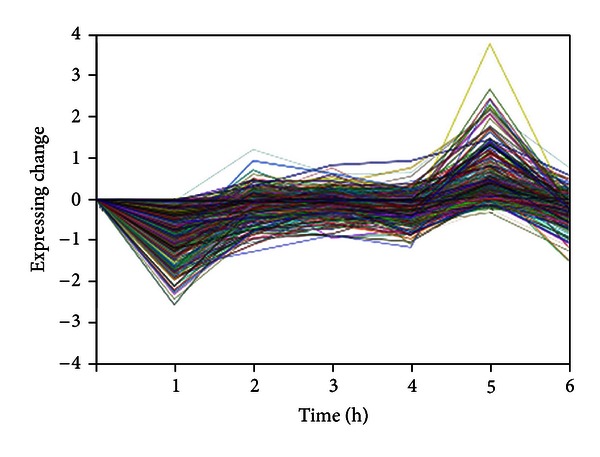
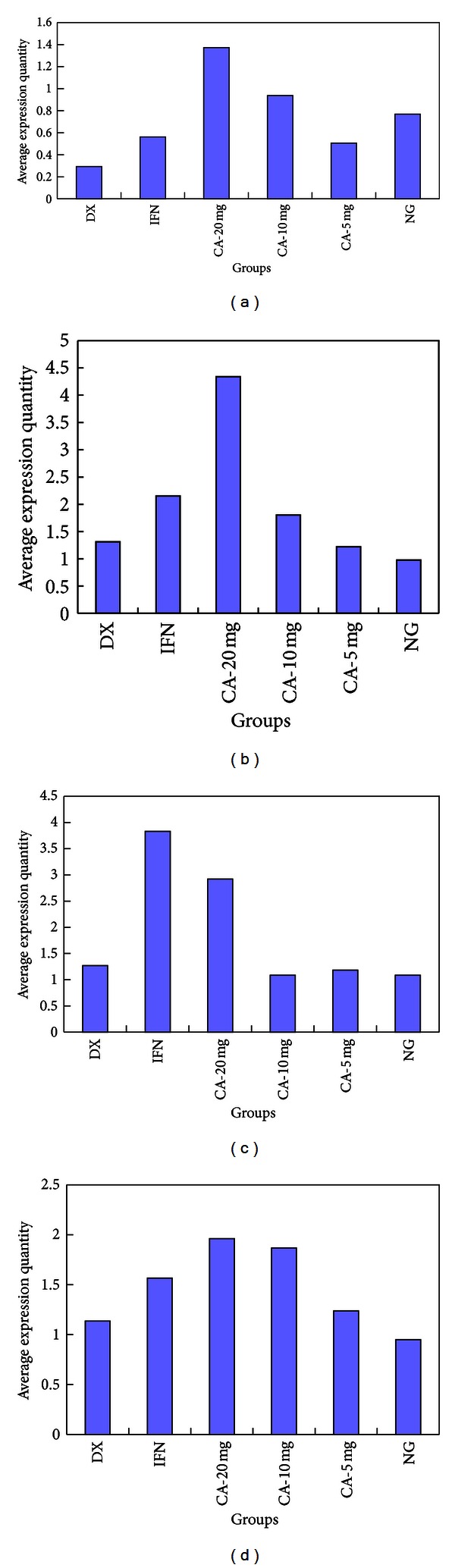
Persistently increasing incident of cancer in human beings has served to emphasize the importance of studies on mechanism of antitumor substances. Chlorogenic acid (CA), extracted from folium cortex eucommiae, has been confirmed to have lots of biological activities encompassing inhibition of tumor. However, the anticancer mechanism of CA remains unclear. Here, we have utilized a whole mouse genome oligo microarray (4∗44K) to analyze gene expression level of female BALB/c mice (implanted with EMT-6 sarcoma cells) after treatment with low, medium, and high-dose CA (5 mg/kg, 10 mg/kg, and 20 mg/kg), docetaxel, interferon, and normal saline separately at 6 time points (3rd, 6th, 9th, 12th, 15th, and 18th days after administration). Differentially expressed genes screened out by time-series analysis, GO analysis, and pathway analysis, and four immune-related genes were selected for further confirmation using RT-qPCR. The results demonstrated that CA is able to change gene expression and that the responsive genes (CaN, NFATC2, NFATC2ip, and NFATC3) involved in immune pathways had been significantly upregulated by CA. Expression of immune factors such as IL-2R and IFN- γ can be improved by CA to promote activation and proliferation of T cells, macrophages, and NK cells, thus enhancing their surveillance and killing abilities, further suppressing the growth rate of tumor cells.
Figures
References
-
- McKallip R, Li R, Ladisch S. Tumor gangliosides inhibit the tumor-specific immune response. Journal of Immunology. 1999;163(7):3718–3726. - PubMed
-
- Rosenberg SA. Progress in human tumour immunology and immunotherapy. Nature. 2001;411(6835):380–384. - PubMed
-
- Ostrand-Rosenberg S. Animal models of tumor immunity immunotherapy and cancer vaccines. Current Opinion in Immunology. 2004;16(2):1430–1450. - PubMed
-
- Zhang AL, Ma Q, Gao JM. Studies on bioactivities of chlorogenic acid and its analogues. Chinese Traditional and Herbal Drugs. 2001;32(2):173–176.
-
- Kasai H, Fukada S, Yamaizumi Z, et al. Action of chlorogenic acid in vegetables and fruits as an inhibitor of 8-hydroxy-deoxyguanseine formation in vitro and in a rat carcinogenesis mode1. Food and Chemical Toxicology. 2000;38(5):467–471. - PubMed
Publication types
LinkOut - more resources
Full Text Sources
Other Literature Sources
