


Rehabilitating walking speed poststroke with treadmill-based interventions: a systematic review of randomized controlled trials
- PMID: 23764885
- PMCID: PMC4478607
- DOI: 10.1177/1545968313491005
Rehabilitating walking speed poststroke with treadmill-based interventions: a systematic review of randomized controlled trials
Abstract
Background: In the past several years, several randomized controlled trials (RCTs) have been reported regarding the efficacy of treadmill-based walking-specific rehabilitation programs, either individually (TT) or combined with body weight support (BWSTT), over control group therapies poststroke. No clear consensus exists as to whether treadmill-based interventions are superior in rehabilitating walking speed (WS) poststroke.
Objective: To review published RCTs examining TT and BWSTT poststroke and describe the effects on improving and retaining WS.
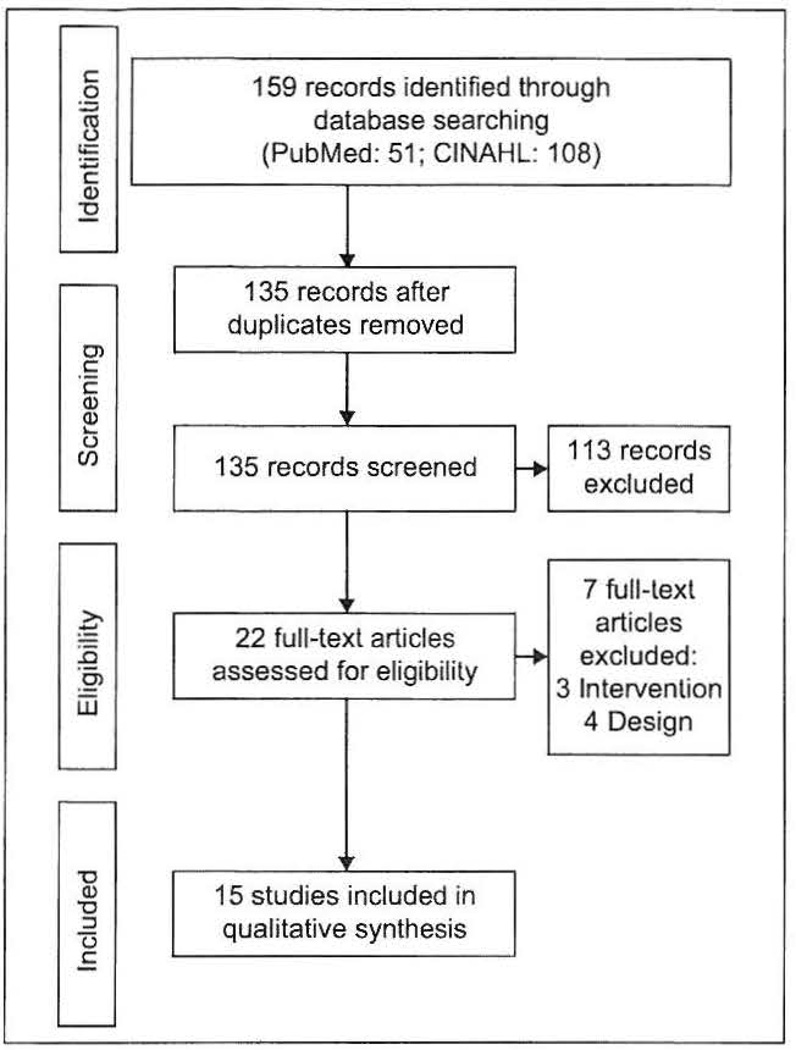
Methods: A systematic literature search in computerized databases was conducted to identify RCTs whose methodological quality was assessed with PEDro. Pre- and post-WS, change in WS, functional outcomes, and follow-up speed were extracted and calculated from each study. Additionally, statistical results of each study were examined, and the intragroup and intergroup effect sizes (ESintra and ESinter, respectively) were calculated.
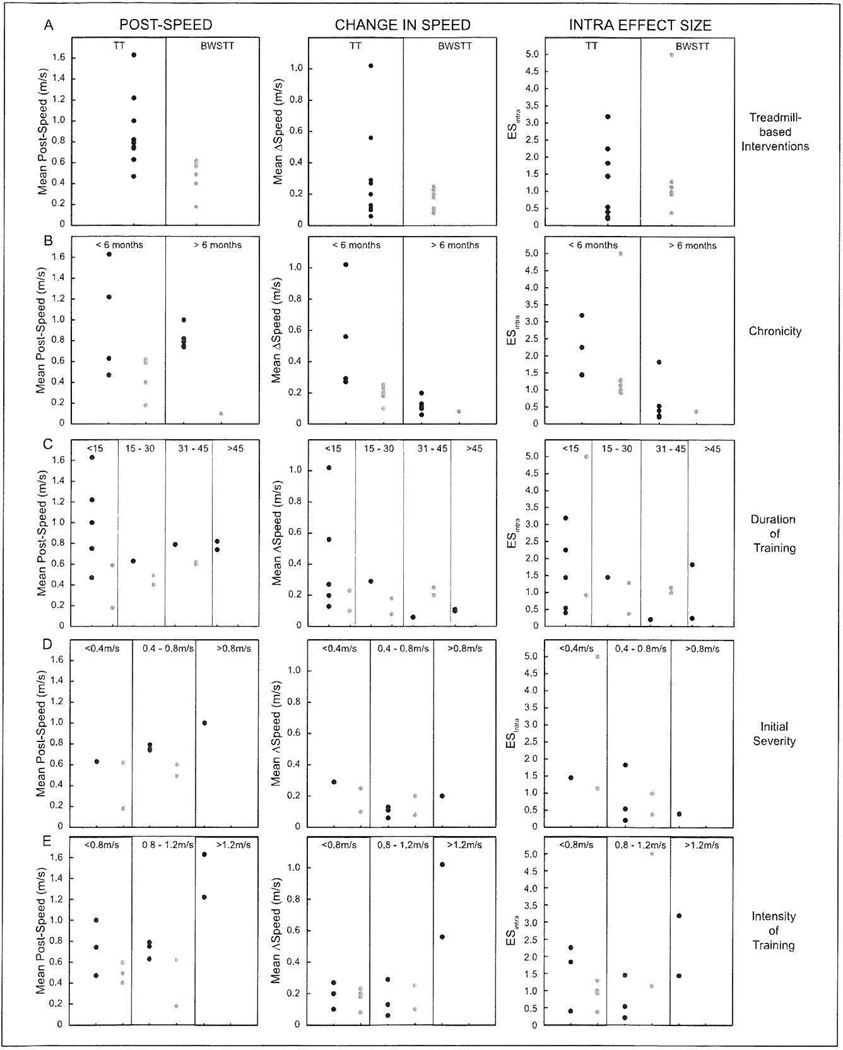
Results: All studies (8 TT; 7 BWSTT) met the inclusion criteria, and their methodological quality was generally good, with a mean PEDro score 6.9/10. Of the 15 studies, 8 studies (4 TT; 4 BWSTT) reported intragroup significant increases of WS, whereas only 4 (4 TT) found superiority of treadmill interventions. Nine studies demonstrated large ESintra (4 TT; 5 BWSTT), yet only 3 showed large ESinter (1 TT; 2 BWSTT). Four studies (2 TT and 2 BWSTT) reported retention of gains in WS, regardless of intervention.
Conclusions: Treadmill-based interventions poststroke may increase and retain WS, but their universal superiority to other control group therapies has failed to be established.
Keywords: activity-based interventions; cerebrovascular accident; rehabilitation; walking.
Conflict of interest statement
The author(s) declared no potential conflicts of interest with respect to the research, authorship, and/or publication of this article.
Figures
References
-
- Barbeau H. Locomotor training in neurorehabilitation: emerging rehabilitation concepts. Neurorehabil Neural Repair. 2003;17:3–11. - PubMed
-
- Behrman AL, Lawless-Dixon AR, Davis SB, et al. Locomotor training progression and outcomes after incomplete spinal cord injury. Phys Ther. 2005;85:1356–1371. - PubMed
-
- Behrman AL, Bowden MG, Nair PM. Neuroplasticity after spinal cord injury and training: an emerging paradigm shift in rehabilitation and walking recovery. Phys Ther. 2006;86:1406–1425. - PubMed
-
- Dickstein R. Rehabilitation of gait speed after stroke: a critical review of intervention approaches. Neurorehabil Neural Repair. 2008;22:649–660. - PubMed
Publication types
MeSH terms
Grants and funding
LinkOut - more resources
Full Text Sources
Other Literature Sources
Medical
Miscellaneous
