Comparative Study
. 2013 Aug 15;305(4):G314-24.
doi: 10.1152/ajpgi.00457.2012. Epub 2013 Jun 13.

Differential expression of multidrug resistance protein 5 and phosphodiesterase 5 and regulation of cGMP levels in phasic and tonic smooth muscle

Affiliations
Comparative Study

Differential expression of multidrug resistance protein 5 and phosphodiesterase 5 and regulation of cGMP levels in phasic and tonic smooth muscle

Othman Al-Shboul et al. Am J Physiol Gastrointest Liver Physiol. .

Abstract

Previous studies have identified differences in the expression of proteins that regulate myosin light chain phosphorylation and contraction in tonic and phasic smooth muscle. cGMP plays a critical role in smooth muscle relaxation and is important for optimal function of phasic and tonic smooth muscle. The intracellular cGMP levels are regulated by its hydrolysis via phosphodiesterase 5 (PDE5) and efflux via novel multidrug resistance protein 5 (MRP5). In the present study we tested the hypothesis that the differences in the phasic and tonic behavior of smooth muscles may be related to differences in mechanisms that terminate cGMP signaling. Expression of PDE5 and MRP5 was significantly (more than 2-fold) higher in fundus compared with antrum. The NO donor S-nitrosoglutathione (GSNO) caused an increase in PDE5 activity and intra- and extracellular cGMP levels in both fundus and antrum. Stimulation of PDE5 activity and increase in extracellular cGMP were significantly higher in fundus, whereas increase in intracellular cGMP was significantly higher in antrum. GSNO-induced increase in extracellular cGMP was blocked in dispersed cells by the cyclic nucleotide export blocker probenecid and in cultured muscle cells by depletion of ATP or suppression of MRP5 by siRNA, providing evidence that cGMP efflux was mediated by ATP-dependent export via MRP5. Consistent with the higher expression and activity levels of PDE5 and MRP5, GSNO-induced PKG activity and muscle relaxation were significantly lower in muscle cells from fundus compared with antrum. Thus higher expression of PDE5 and MRP5 in muscle cells from fundus correlates with tonic phenotype of muscle.

Keywords: MRP5; cyclic nucleotides; phasic muscle; tonic muscle.


Figures
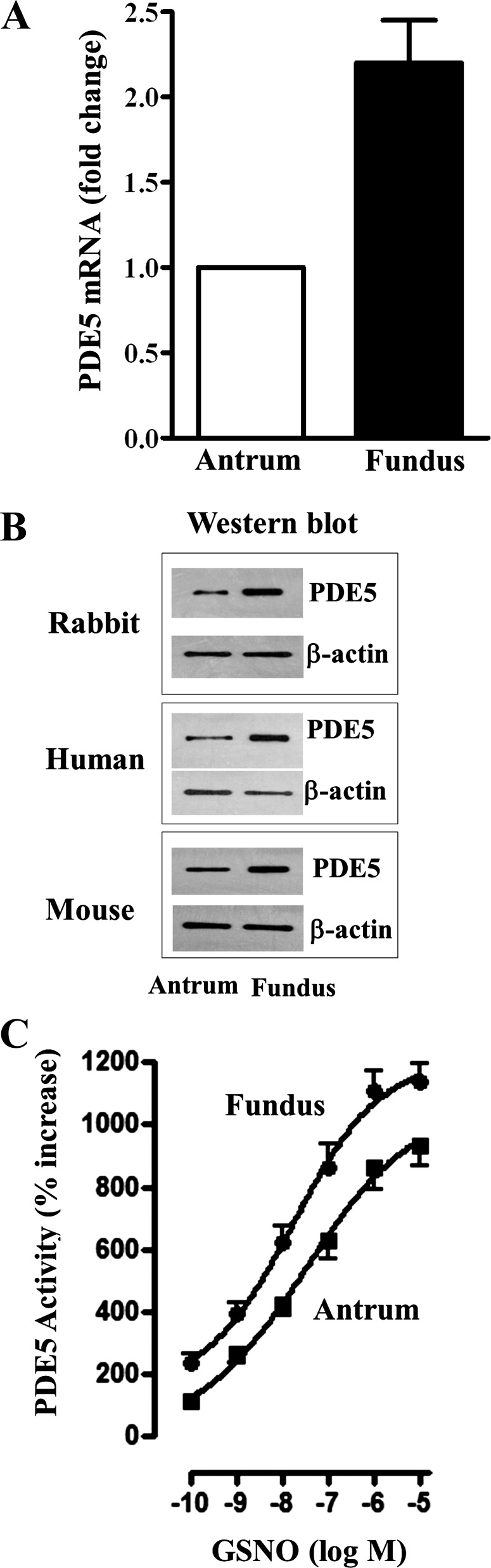
Fig. 1.
Fig. 1.
Differential expression of phosphodiesterase 5 (PDE5) and S-nitrosoglutathione (GSNO)-stimulated PDE5 activity in fundus and antrum. A: total RNA isolated from cultured (first passage) muscle cells from antrum and fundus was reverse transcribed using 2 μg of total RNA. The cDNA was amplified with specific primers for PDE5A by real-time RT-PCR. Relative quantification of a target gene in relation to reference gene was calculated on the basis of ΔΔCt values. Results demonstrated that mRNA levels of PDE5A are significantly higher in fundus compared with antrum. Values represent means ± SE of 3 separate experiments. B: representative Western blot results of PDE5A expression. Cell lysates derived from dispersed muscle cells of antrum and fundus of rabbit, human, and mouse stomach containing equal amounts of total proteins were separated with SDS-PAGE and expression of PDE5A was analyzed by using selective antibody for PDE5A. Membranes were reblotted to measure β-actin. Protein bands were visualized with enhanced chemiluminescence, images were quantified, and densitometric values were calculated after normalization to β-actin density. Results are expressed as fold increase over the expression of PDE5 in antrum. C: 1 ml of cell suspension (2 × 10⁶ cells/ml) of freshly dispersed muscle cells from antrum and fundus was treated with different concentrations of GSNO, an NO donor, for 60 s. The cells were homogenized in the lysis buffer and the protein content in the supernatants was measured. PDE5 was immunoprecipitated from lysates containing equal amount of protein, and the activity was measured in immunoprecipitates by liquid chromatography using [3H]cGMP as substrate. The amount of radioactivity in the elutes was measured by liquid scintillation and the results are expressed as percent increase above basal values (antrum: 238 ± 56 cpm/mg protein; fundus: 285 ± 45 cpm/mg protein). Values represent means ± SE of 5–6 separate experiments.
Fig. 2.
Fig. 2.
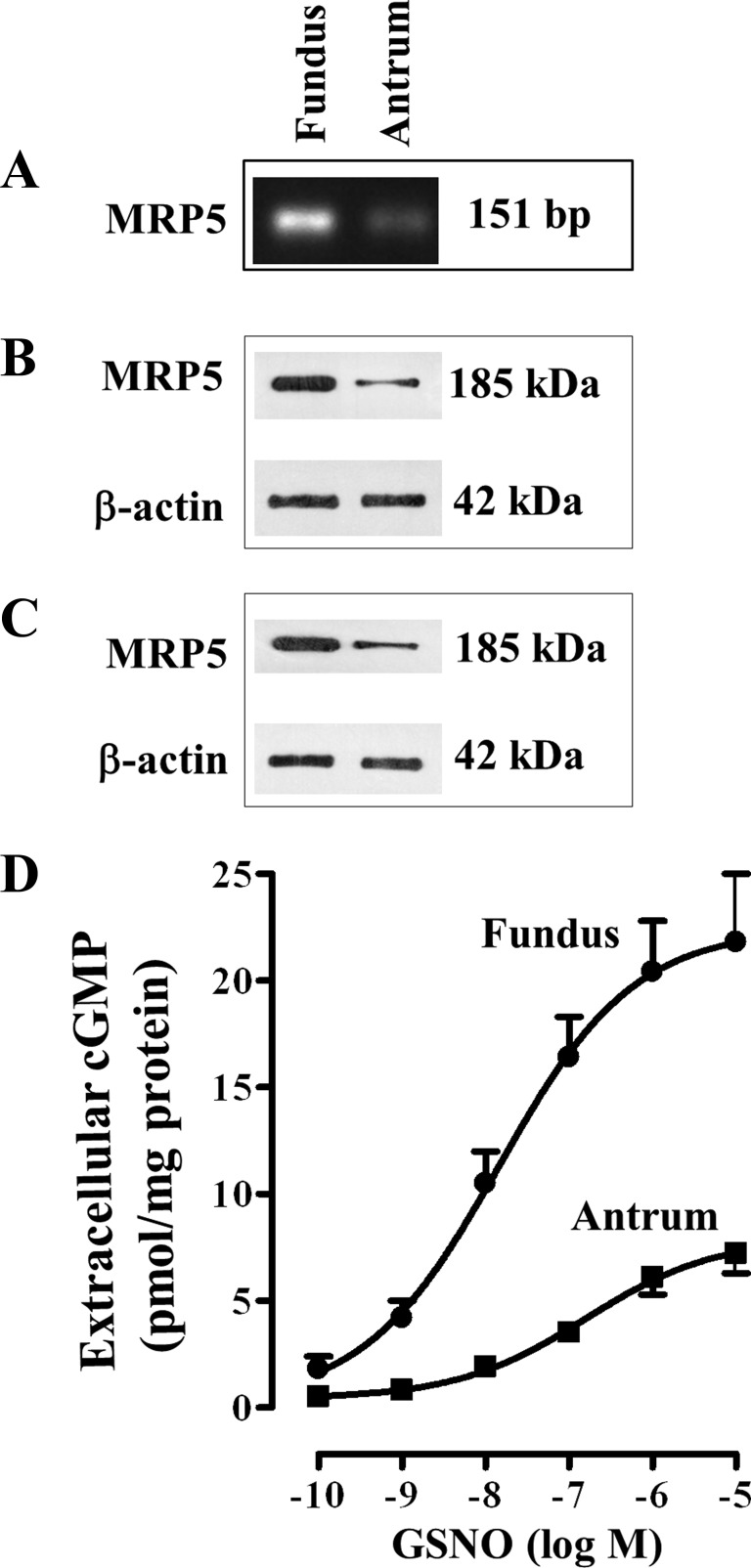
Differential expression of multidrug resistance protein 5 (MRP5) and GSNO-stimulated efflux of cGMP in fundus and antrum. A: total RNA isolated from cultured (first passage) muscle cells from antrum and fundus was reverse transcribed using 2 μg of total RNA. The cDNA was amplified with specific primers for MRP5 by RT-PCR. The primer set generated only one PCR product (151 bp), and the identity and integrity of these products were confirmed by electrophoresis in agarose gel in the presence of ethidium bromide and sequencing of the individual band. B and C: representative Western blot results of MRP5 expression. Cell lysates derived from dispersed muscle cells of antrum and fundus of rabbit (B) and human (C) stomach containing equal amounts of total proteins were separated with SDS-PAGE, and expression of MRP5 was analyzed with selective antibody for MRP5. Membranes were reblotted to measure β-actin. Protein bands were visualized with enhanced chemiluminescence, images were quantified, and densitometric values were calculated after normalization to β-actin density. D: 1 ml of cell suspension (2 × 10⁶ cells/ml) of freshly dispersed muscle cells from antrum and fundus was treated with different concentrations of GSNO for 20 min in the presence of nonspecific PDE inhibitor, 100 μM IBMX. cGMP was measured by radioimmunoassay using [125I]cGMP in the supernatant to reflect and extracellular cGMP levels. The results are expressed as pmol/mg protein. Values represent means ± SE of 5 separate experiments.
Fig. 3.
Fig. 3.
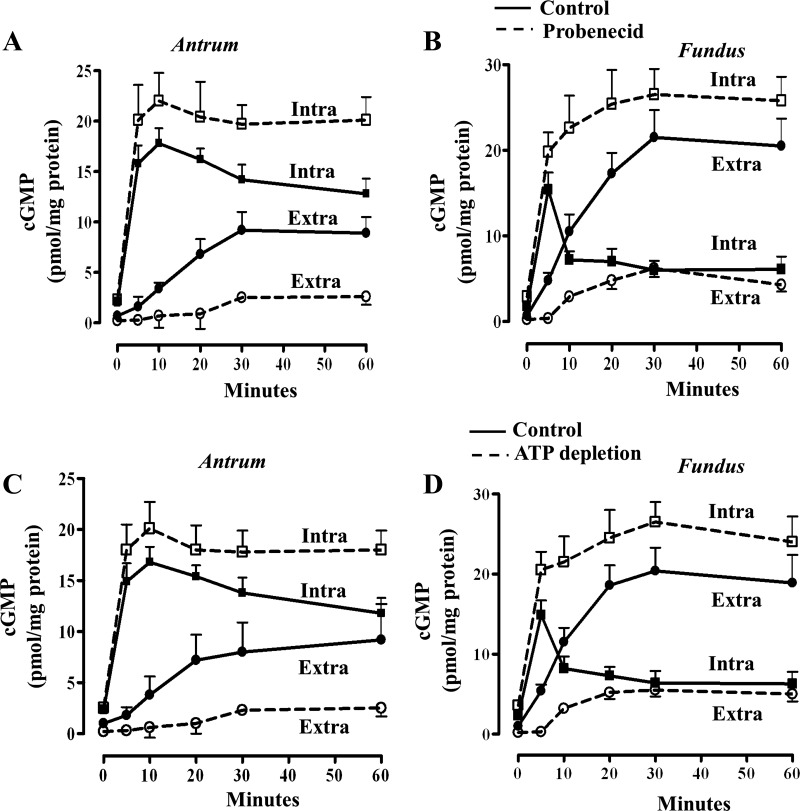
ATP-dependent cGMP efflux. A and B: 1 ml of cell suspension (2 × 10⁶ cells/ml) of freshly dispersed muscle cells from antrum and fundus was treated with GSNO for different times in the presence of nonspecific PDE inhibitor, 100 μM IBMX (solid line). Under these experimental conditions, the effect of PDE5 on cGMP degradation was precluded. In some experiments cells were incubated with probenecid (200 μM), a common cyclic nucleotide inhibitor (dashed line). C and D: 1 ml of cell suspension (2 × 10⁶ cells/ml) of freshly dispersed muscle cells from antrum and fundus was treated with GSNO for different times in the presence of nonspecific PDE inhibitor, 100 μM IBMX under normal (solid lines) and under ATP-depleting conditions (dashed lines). cGMP was measured by radioimmunoassay using [125I]cGMP in the cell pellet and supernatant to reflect intracellular (Intra; squares) and extracellular (Extra; circles) cGMP levels, respectively. The results are expressed as pmol/mg protein. Values represent means ± SE of 5 separate experiments.
Fig. 4.
Fig. 4.
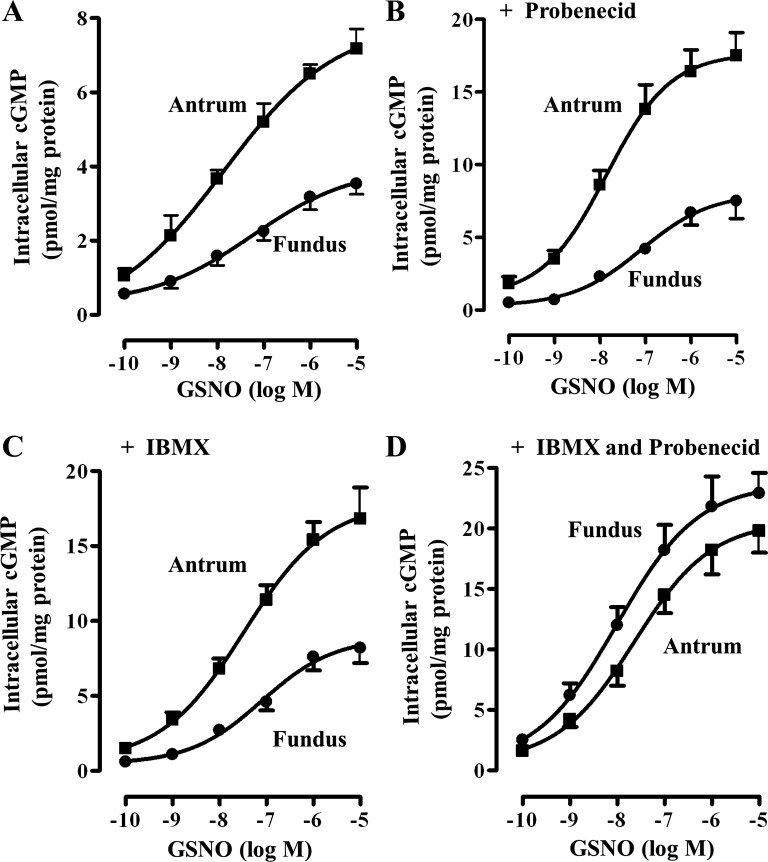
GSNO-induced increase in intracellular levels of cGMP. One milliliter of cell suspension (2 × 10⁶ cells/ml) of freshly dispersed muscle cells from antrum and fundus was treated with different concentrations of GSNO for 20 min and the reaction was terminated with 10% trichloroacetic acid. Intracellular cGMP levels in response to GSNO were measured in the absence of IBMX or probenecid (A) and in the presence of probenecid (200 μM) alone (B), IBMX (100 μM) alone (C), or both probenecid and IBMX (D). cGMP was measured by radioimmunoassay using [125I]cGMP and the results were expressed as pmol/mg protein. Values represent means ± SE of 5 separate experiments.
Fig. 5.
Fig. 5.
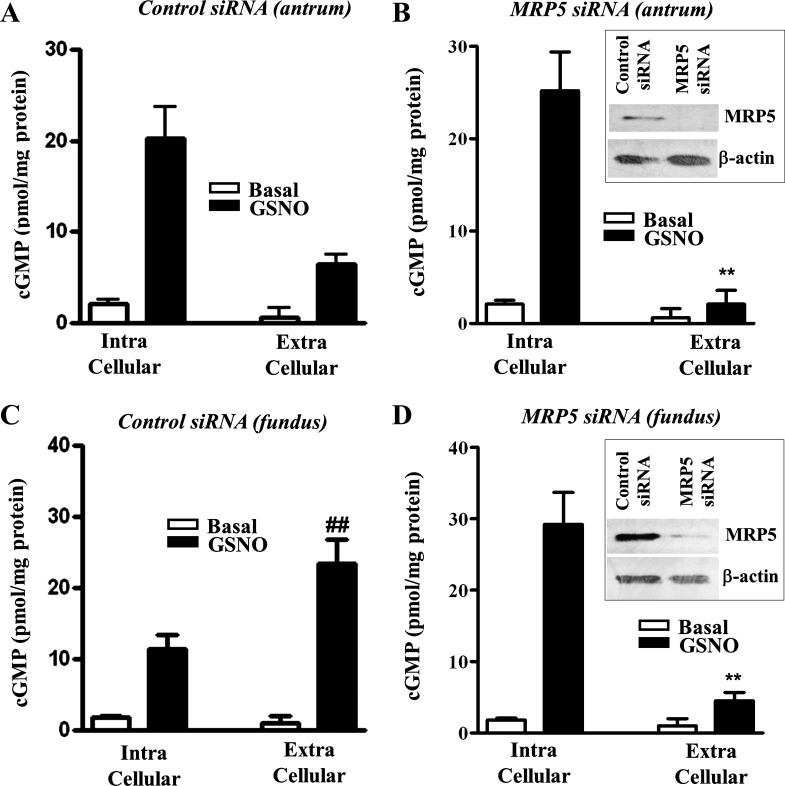
MRP5-mediated cGMP efflux. Cultured muscle cells from antrum (A and B) or fundus (C and D) were transfected with control siRNA (A and C) or MRP5 siRNA (B and D) for 48 h. Cells were treated with GSNO for 20 min in the presence of nonspecific PDE inhibitor, 100 μM IBMX. cGMP was measured by radioimmunoassay using [125I]cGMP in the cell pellet and supernatant to reflect intracellular and extracellular cGMP levels, respectively. The results are expressed as pmol/mg protein. Values represent means ± SE of 5 separate experiments. **P < 0.001 significant decrease extracellular cGMP levels in MRP5 siRNA cells compared with control cells. ##P < 0.01 significant increase in extracellular cGMP in fundus compared with antrum. Inset: Western blot analysis of MRP5 expression in cells transfected with control siRNA or MRP5 siRNA.
Fig. 6.
Fig. 6.
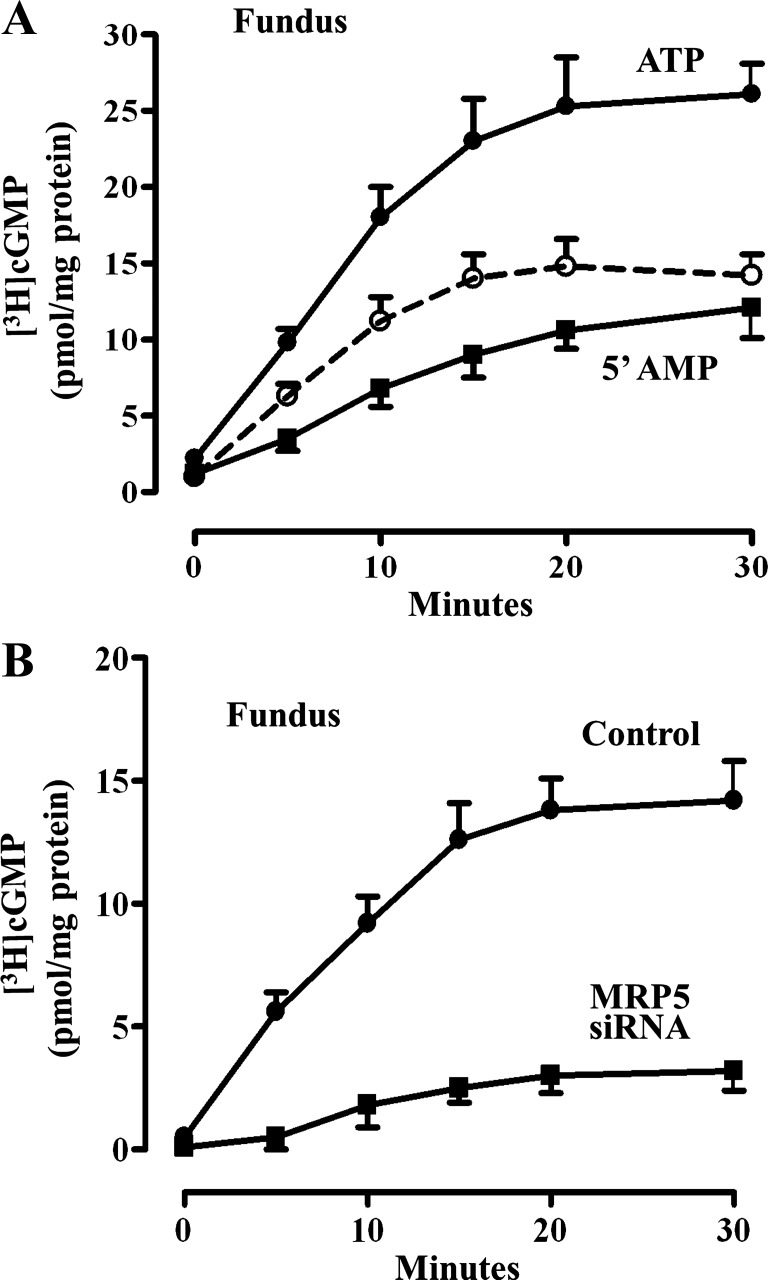
cGMP transport in plasma membrane vesicle. A: membrane vesicle (100 μg protein) prepared from muscle cells isolated from fundus were incubated with [3H]cGMP (5 μM) in the presence of ATP (5 mM) or 5′-AMP (5 mM) for different times. Vesicle-associated [3H]cGMP was measured by rapid filtration through nucleopore filters as described in methods. ATP-dependent transport (dashed line) was calculated as the difference between transport in the presence of ATP and in the presence of 5′-AMP. The results are expressed as pmol/mg protein. Values represent means ± SE of 5 separate experiments. B: cultured muscle cells from fundus were transfected with control vector or MRP5 siRNA for 48 h. Membrane vesicles (100 μg protein) were incubated with [3H]cGMP (5 μM) in the presence of ATP (5 mM) or 5′-AMP (5 mM) for different times. Vesicle-associated [3H]cGMP was measured by rapid filtration through nucleopore filters as described in methods. ATP-dependent transport expressed as pmol/mg protein is shown in the figure. Values represent means ± SE of 5 separate experiments.
Fig. 7.
Fig. 7.
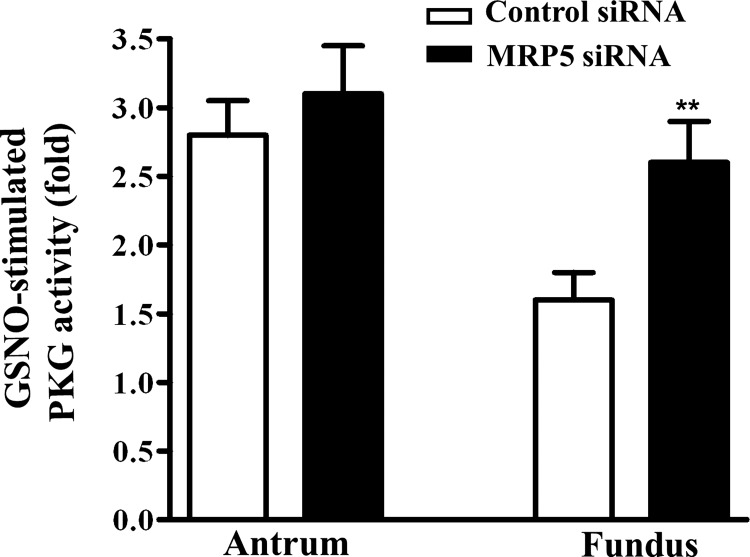
GSNO-induced PKG activity. Cultured muscle cells from fundus and antrum were transfected with control siRNA or MRP5 siRNA for 48 h. Cells were treated with GSNO (10 μM) for 10 min and then homogenized in the lysis buffer and the protein content in the supernatants was measured. PKG activity was measured in the presence or absence of cGMP by using a specific substrate [Arg-Lys-Arg-Ser-Arg-Ala-Glu (RKRSRAE)] and [32P]ATP, and the results are expressed as the ratio of activity in the absence or presence of cGMP. Values represent means ± SE of 4 separate experiments. **P < 0.01 significant increase in PKG activity in MRP5 siRNA-transfected cells compared with control cells.
Fig. 8.
Fig. 8.
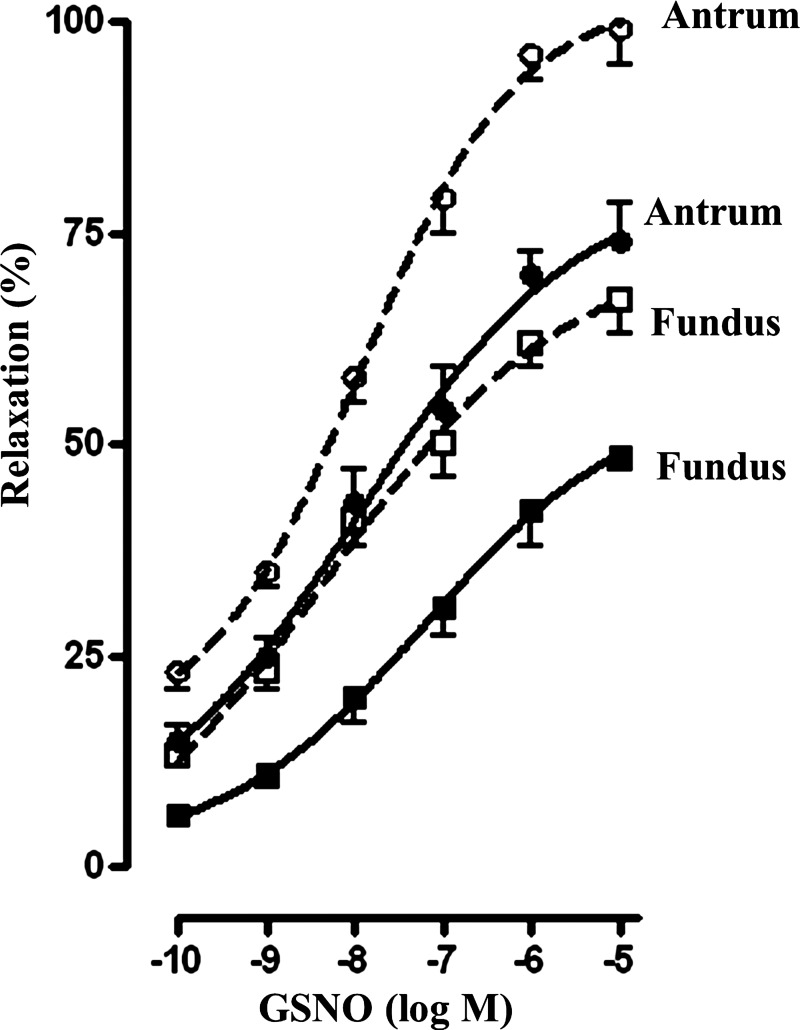
GSNO-induced muscle relaxation. Relaxation of dispersed muscle cells from antrum and fundus in response to different concentrations of GSNO was measured by scanning micrometry as decrease in ACh-induced contraction. In some experiments effect of GSNO was examined in the presence of probenecid (200 μM) and IBMX (100 μM) (dashed lines). Contraction was measured in response to maximal concentrations of ACh (0.1 μm) at 30 s as decrease in control cell length (antrum: control cell length 98 ± 3 μm; fundus: control cell length 91 ± 4 μm). Contraction was similar in muscle cells from antrum (28 ± 3% decrease) and fundus (29 ± 2% decrease). GSNO-caused relaxation was concentration dependent in both antrum and fundus and the relaxation was greater in antrum compared with fundus. Values represent means ± SE of 4 separate experiments.
Fig. 9.
Fig. 9.
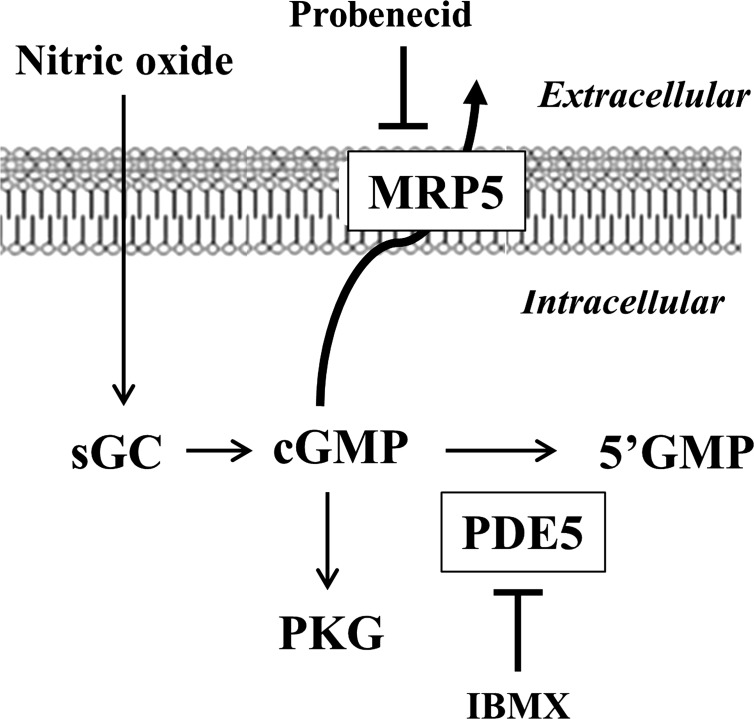
Termination of cGMP signaling in smooth muscle. cGMP produced from activation of soluble guanylyl cyclase (sGC) is rapidly degraded via PDE5 and exported via MRP5. Expression of PDE5 and MRP5 is higher, and termination of cGMP signaling is greater in muscle cells from fundus compared with antrum.

References

    1. Andric SA, Kostic TS, Stojilkovic SS. Contribution of multidrug resistance protein MRP5 in control of cyclic guanosine 5′-monophosphate intracellular signaling in anterior pituitary cells. Endocrinology 147: 3435–3445, 2006 - PubMed
    1. Babu GJ, Loukianov E, Loukianova T, Pyne GJ, Huke S, Osol G, Low RB, Paul RJ, Periasamy M. Loss of SM-B myosin affects muscle shortening velocity and maximal force development. Nat Cell Biol 3: 1025–1029, 2001 - PubMed
    1. Beavo JA. Cyclic nucleotide phosphodiesterases: functional implications of multiple isoforms. Physiol Rev 75: 725–748, 1995 - PubMed
    1. Bhetwal BP, An CL, Fisher SA, Perrino BA. Regulation of basal LC20 phosphorylation by MYPT1 and CPI-17 in murine gastric antrum, gastric fundus, and proximal colon smooth muscles. Neurogastroenterol Motil 23: e425–e436, 2011 - PMC - PubMed
    1. Bonnevier J, Fassler R, Somlyo AP, Somlyo AV, Arner A. Modulation of Ca2+ sensitivity by cyclic nucleotides in smooth muscle from protein kinase G-deficient mice. J Biol Chem 279: 5146–5151, 2004 - PubMed

Publication types

MeSH terms

LinkOut - more resources