


Review
doi: 10.1039/c3cs60094g.
Epub 2013 Jun 13.
Multi-stimuli responsive macromolecules and their assemblies
Affiliations
- PMID: 23765263
- PMCID: PMC3740153
- DOI: 10.1039/c3cs60094g
Item in Clipboard
Review
Multi-stimuli responsive macromolecules and their assemblies
Chem Soc Rev.
.
Abstract
In this review, we outline examples that illustrate the design criteria for achieving macromolecular assemblies that incorporate a combination of two or more chemical, physical or biological stimuli-responsive components. Progress in both fundamental investigation into the phase transformations of these polymers in response to multiple stimuli and their utilization in a variety of practical applications are highlighted. Using these examples, we aim to explain the origin of employed mechanisms of stimuli responsiveness which may serve as a guideline to inspire future design of multi-stimuli responsive materials.
Figures
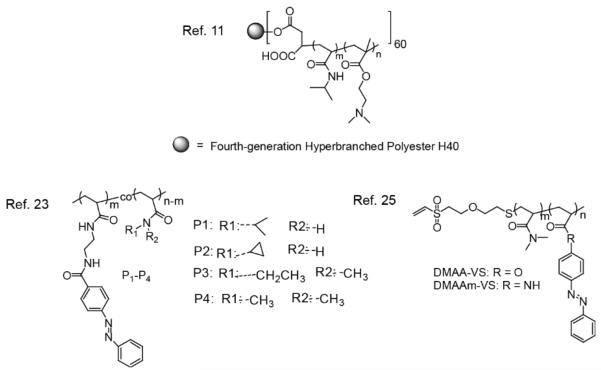
Structure of polymers sensitive to dual physical stimuli

Isomerization of azobenzene and salicylideneaniline
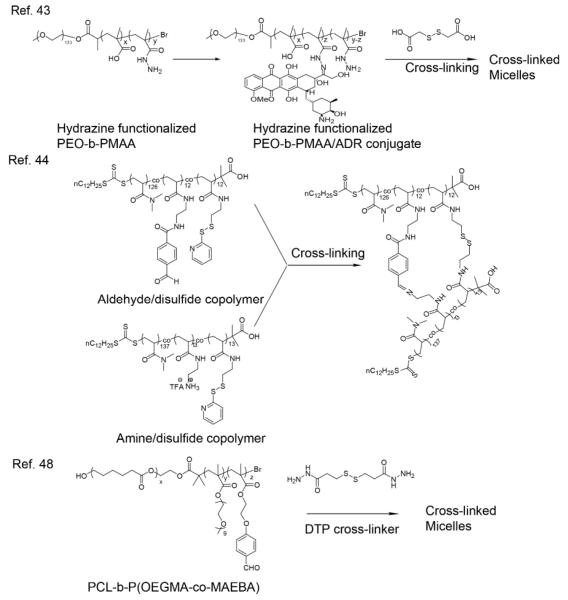
pH- and redox- responsive polymers
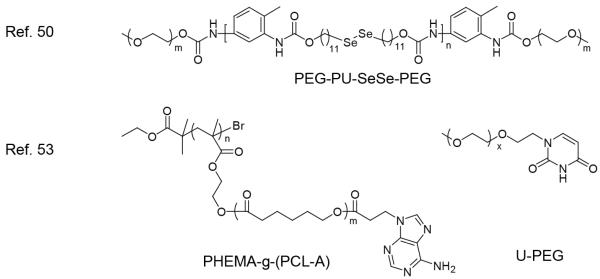
Structure of dual redox responsive polymer and pH/salt dual responsive polymer
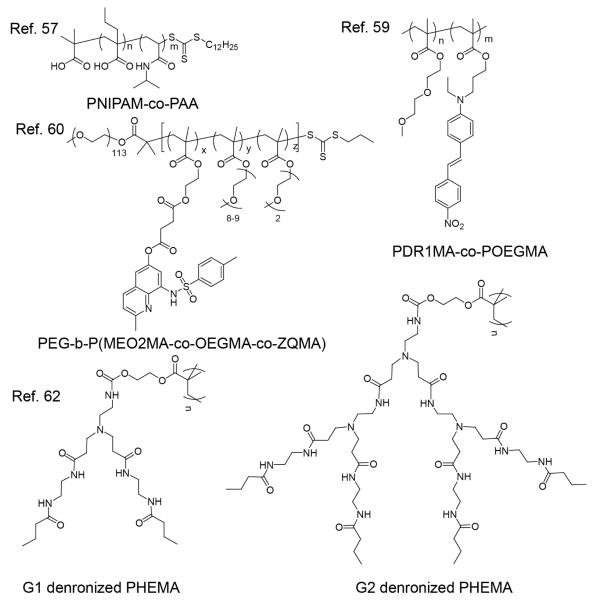
Chemical and physical dual stimuli responsive polymers
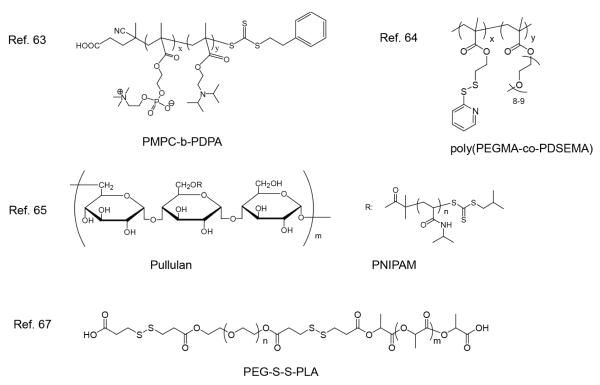
Chemical and physical dual stimuli responsive polymers
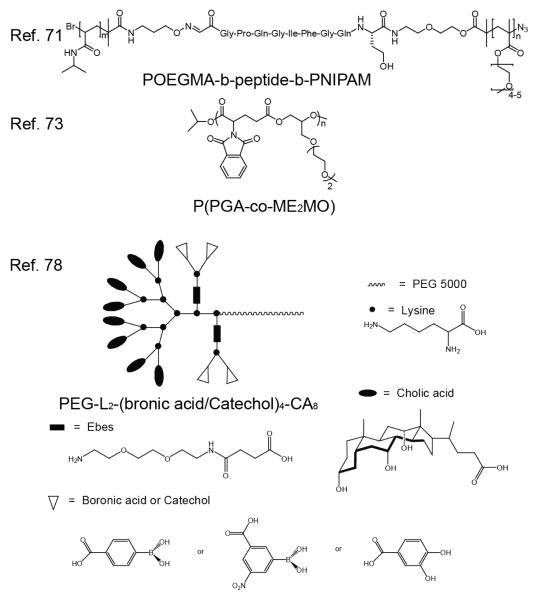
Bio-related dual stimuli-responsive polymers
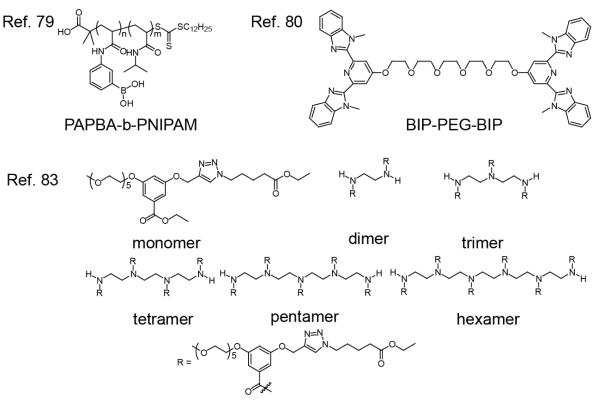
Responsive molecules sensitive to more than two stimuli
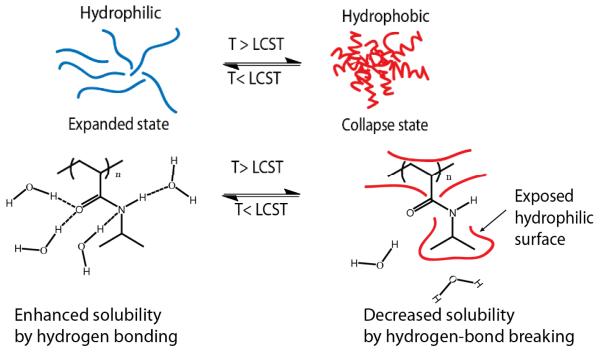
LCST behavior of PNIPAM
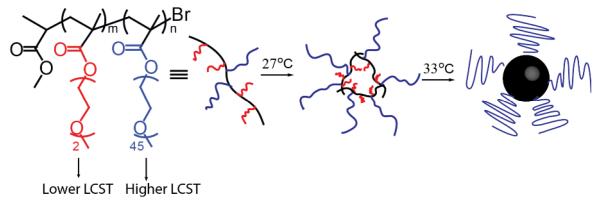
Representation of the two-stage thermally induced aggregation process
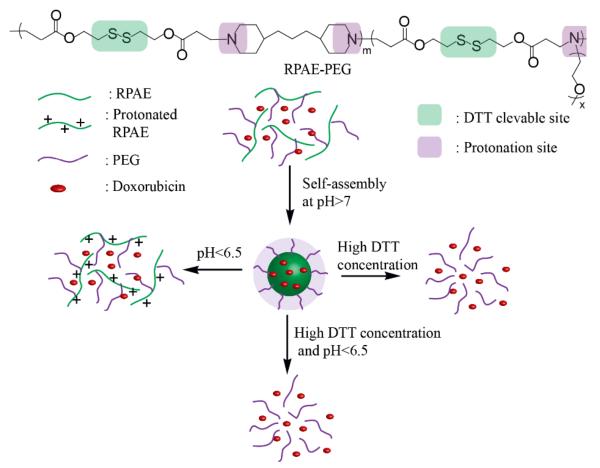
Schematic illustration of RPAE-PEG micelle dissociation and DOX release triggered by changing pH and DTT.

Chemical structure of the dual pH-responsive polymer-doxorubicin conjugate and pH triggered cellular internalization and intracellular drug release
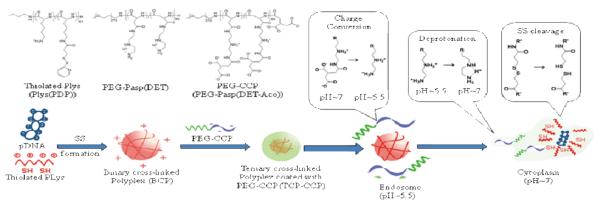
a) Chemical structure of polymers, b) Schematic illustration for preparation and intracellular trafficking of ternary cross-linked polyplex
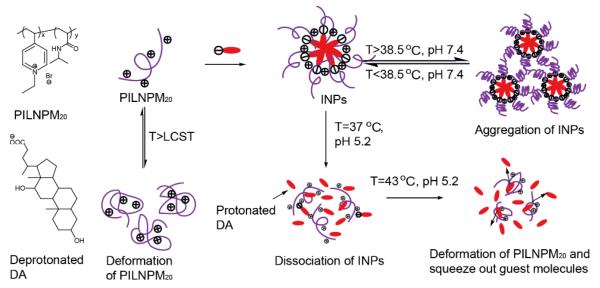
Temperature and pH mediated disassembly of electrostatically assembled nanoparticles.
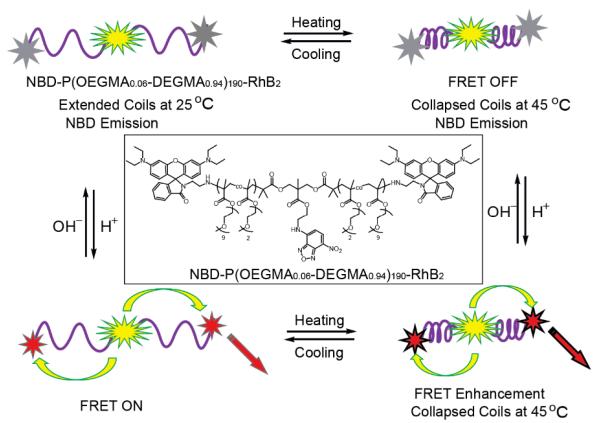
Schematic representation of FRET processes modulated by pH and temperature
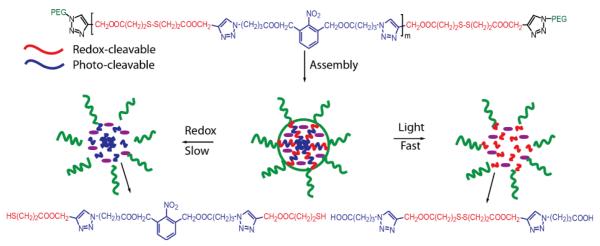
Fast and slow disassembly of micelles induced respectively by light and redox stimuli.
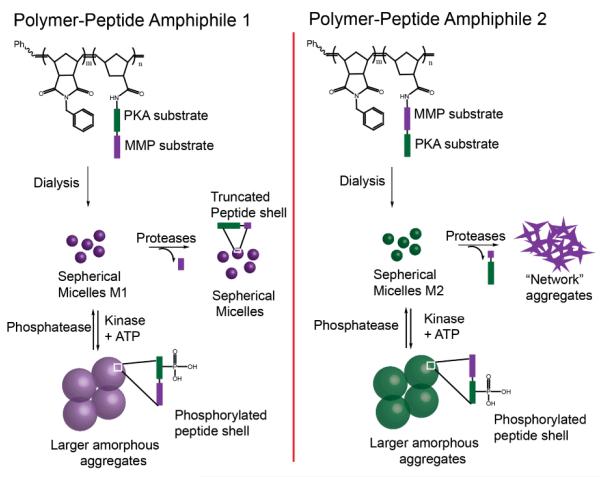
Enzymatic modulation of polymer morphologies
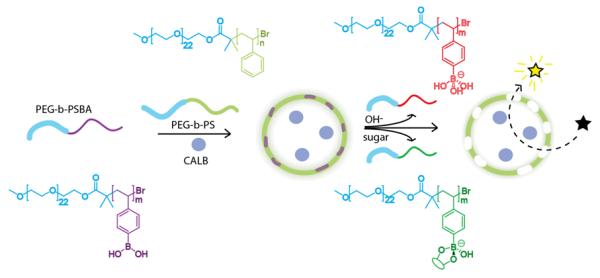
Sugar and OH− responsive permeable nanoreactor
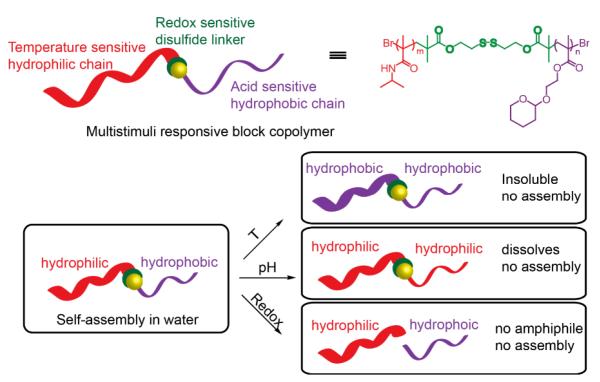
Schematic representation of block copolymer combined pH, thermo and reduction sensitivity
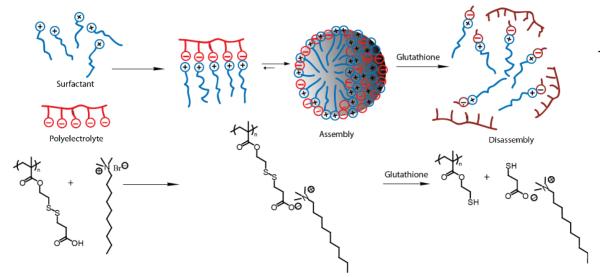
Multiple stimuli responsive polyelectrolyte/surfactant complex micelles.
References
-
- Binder WH, Sachsenhofer R. Macromol. Rapid Commun. 2007;28:15–54.
-
- Moad G, Rizzardo E, Thang SH. Aust. J. Chem. 2009;62:1402–1472.
-
- Matyjaszewski K. Macromolecules. 2012;45:4015–4039.
-
- Hawker CJ, Bosman AW, Harth E. Chem. Rev. 2001;101:3661–3688. - PubMed
-
- Hilf S, Kilbinger AFM. Nat. Chem. 2009;1:537–546. - PubMed
Publication types
MeSH terms
Substances
Grants and funding
LinkOut - more resources
Full Text Sources
Other Literature Sources
