


Role of extracellular vesicles in de novo mineralization: an additional novel mechanism of cardiovascular calcification
- PMID: 23766262
- PMCID: PMC3788633
- DOI: 10.1161/ATVBAHA.112.300128
Role of extracellular vesicles in de novo mineralization: an additional novel mechanism of cardiovascular calcification
Abstract
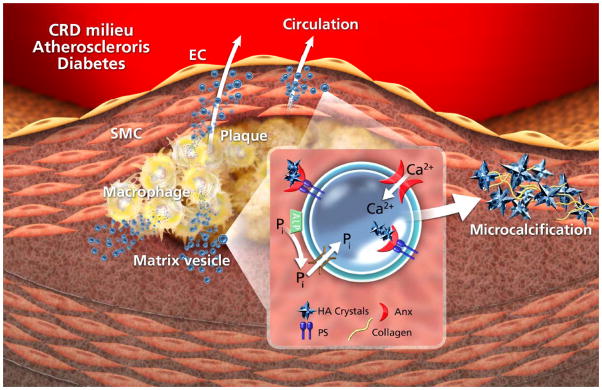
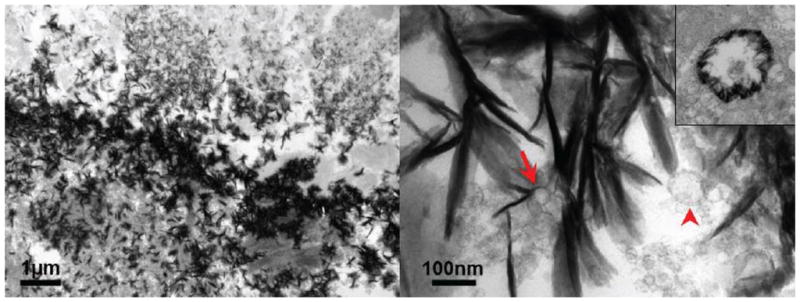
Extracellular vesicles are membrane micro/nanovesicles secreted by many cell types into the circulation and the extracellular milieu in physiological and pathological conditions. Evidence suggests that extracellular vesicles, known as matrix vesicles, play a role in the mineralization of skeletal tissue, but emerging ultrastructural and in vitro studies have demonstrated their contribution to cardiovascular calcification as well. Cells involved in the progression of cardiovascular calcification release active vesicles capable of nucleating hydroxyapatite on their membranes. This review discusses the role of extracellular vesicles in cardiovascular calcification and elaborates on this additional mechanism of calcification as an alternative pathway to the currently accepted mechanism of biomineralization via osteogenic differentiation.
Keywords: atherosclerosis; calcification; extracellular vesicles; inflammation; macrophages; rupture; valve disease.
Figures
References
-
- Johnson RC, Leopold JA, Loscalzo J. Vascular calcification: pathobiological mechanisms and clinical implications. Circ Res. 2006;99:1044–1059. - PubMed
-
- Vengrenyuk Y, Kaplan TJ, Cardoso L, Randolph GJ, Weinbaum S. Computational stress analysis of atherosclerotic plaques in ApoE knockout mice. Ann Biomed Eng. 2010;38:738–747. - PubMed
-
- Wenk JF. Numerical modeling of stress in stenotic arteries with microcalcifications: a parameter sensitivity study. J Biomech Eng. 2011;133:014503. - PubMed
Publication types
MeSH terms
Grants and funding
LinkOut - more resources
Full Text Sources
Other Literature Sources
Medical
