Huge liposarcoma of esophagus resected by endoscopic submucosal dissection: case report with video
- PMID: 23767044
- PMCID: PMC3678071
- DOI: 10.5946/ce.2013.46.3.297
Huge liposarcoma of esophagus resected by endoscopic submucosal dissection: case report with video
Abstract
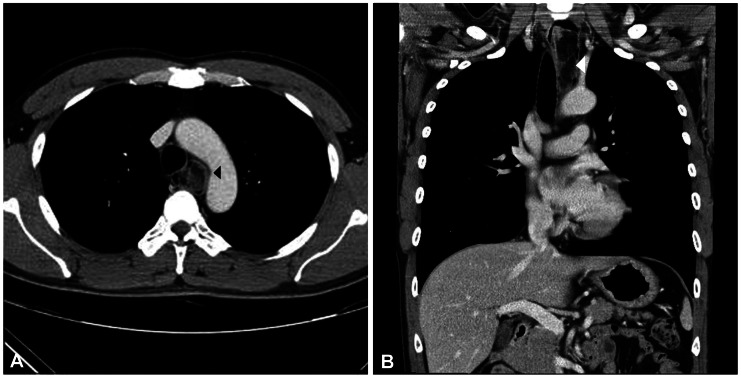
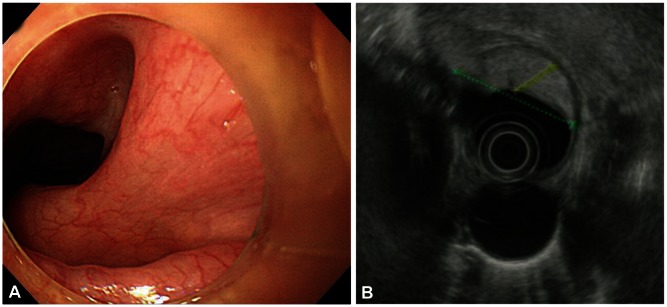
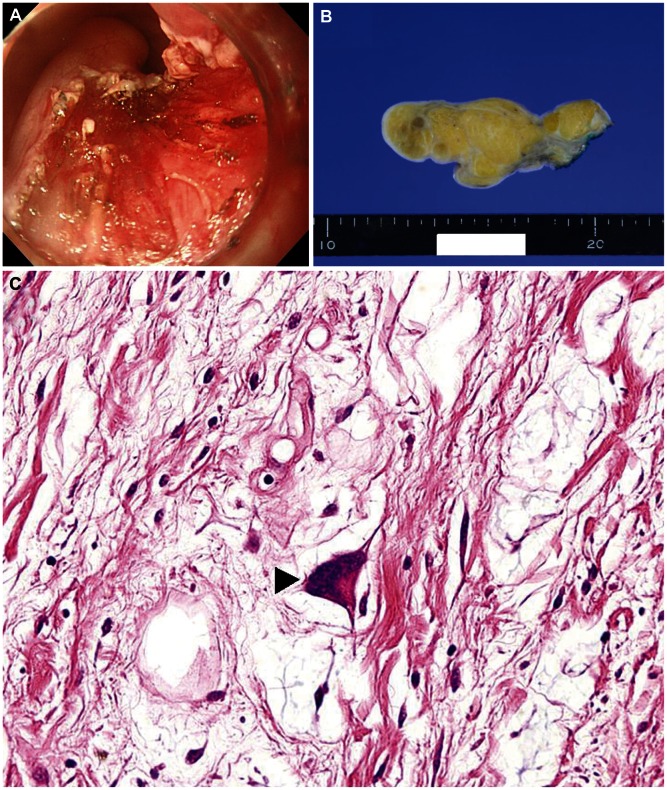
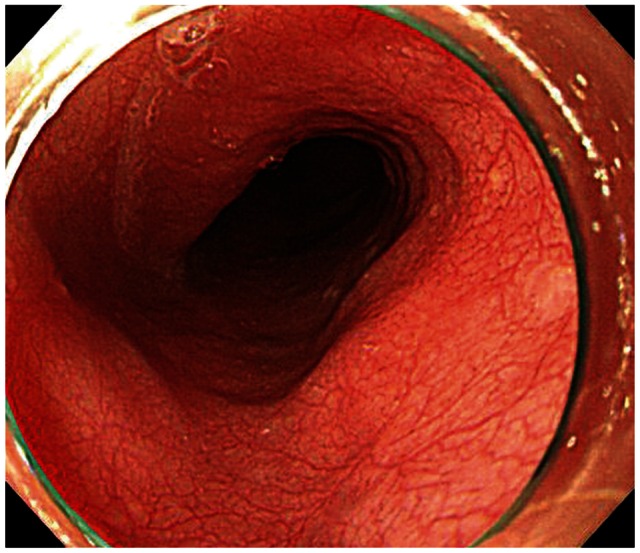
Liposarcoma is one of the most common soft tissue sarcomas occurring in adults, but it rarely occurs in the gastrointestinal tract and more uncommonly in the esophagus. To the best of our knowledge, there are only 19 reported cases of esophageal liposarcoma in the literature published in English language up to the year 2008, and they were all treated by surgical methods. Here, we report a case of primary liposarcoma of the esophagus which was treated with endoscopic submucosal dissection (ESD). ESD was well tolerated in this patient, suggesting that it may be a therapeutic option for primary esophageal sarcomas.
Keywords: Endoscopy; Esophageal neoplasms; Liposarcoma.
Conflict of interest statement
The authors have no financial conflicts of interest.
Figures
References
-
- Garcia M, Buitrago E, Bejarano PA, Casillas J. Large esophageal liposarcoma: a case report and review of the literature. Arch Pathol Lab Med. 2004;128:922–925. - PubMed
-
- Yang B, Shi PZ, Li X, Xu RJ. Well-differentiated liposarcoma of esophagus. Chin Med J (Engl) 2006;119:438–440. - PubMed
-
- Białek A, Wiechowska-Kozłowska A, Pertkiewicz J, et al. Endoscopic submucosal dissection for treatment of gastric subepithelial tumors (with video) Gastrointest Endosc. 2012;75:276–286. - PubMed
-
- Shi Q, Zhong YS, Yao LQ, Zhou PH, Xu MD, Wang P. Endoscopic submucosal dissection for treatment of esophageal submucosal tumors originating from the muscularis propria layer. Gastrointest Endosc. 2011;74:1194–1200. - PubMed
-
- Inoue H, Ikeda H, Hosoya T, et al. Submucosal endoscopic tumor resection for subepithelial tumors in the esophagus and cardia. Endoscopy. 2012;44:225–230. - PubMed
LinkOut - more resources
Full Text Sources
Other Literature Sources
Miscellaneous