


Flat fold and cup-shaped N95 filtering facepiece respirator face seal area and pressure determinations: a stereophotogrammetry study
- PMID: 23767820
- PMCID: PMC4545596
- DOI: 10.1080/15459624.2013.801246
Flat fold and cup-shaped N95 filtering facepiece respirator face seal area and pressure determinations: a stereophotogrammetry study
Abstract
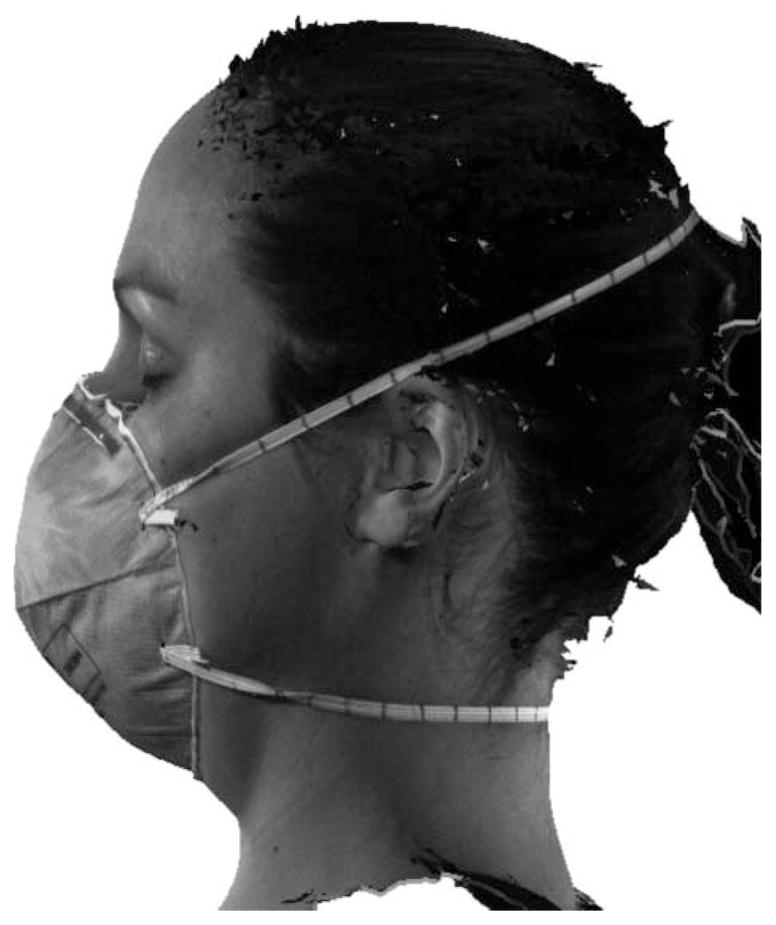
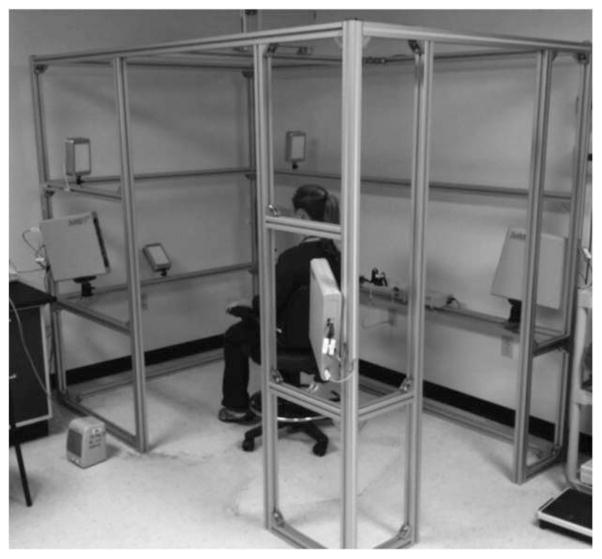
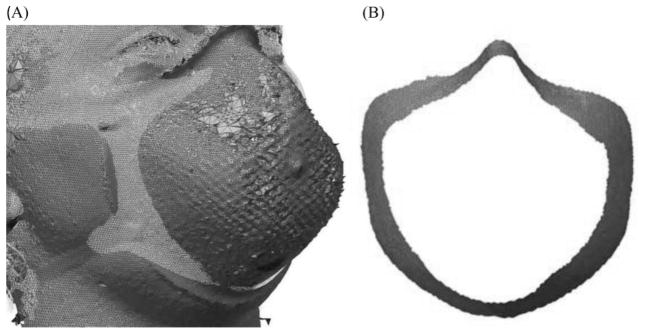
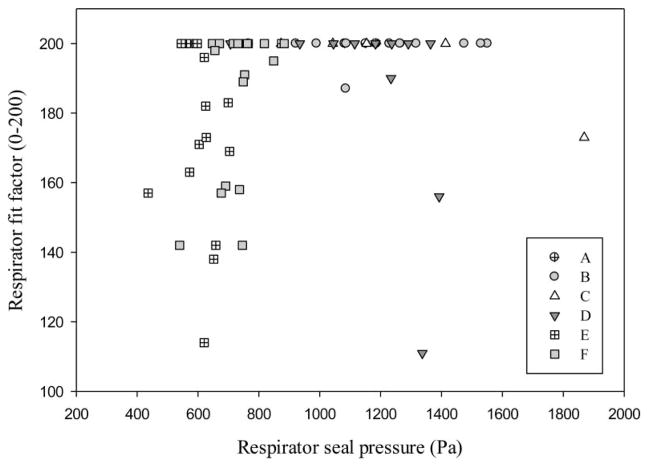
Twenty subjects underwent quantitative respirator fit testing with two styles (flat fold, cup-shaped) of N95 filtering facepiece respirators (N95 FFRs). Passing a fit test was followed by stereophotogrammetry to determine the face seal area and computation of seal pressure. There were significantly different seal pressures (p < 0.01) between standard size flat fold and cup-shaped N95 FFRs but no significant differences in face seal area. No significant differences were noted in fit factors, but more individuals passed fit testing wearing flat fold respirators. The ability of flat fold N95 FFRs, at lower seal pressures, to obtain similar fit factors as cup-shaped N95 FFR at higher seal pressures offers the possibility of enhanced facial comfort without a loss of protection. Stereophotogrammetry offers a relatively simple, non-invasive technology to evaluate various properties of N95 FFR fit.
Figures
References
-
- Rengasamy S, Eimer BC. Nanoparticle penetration through filter media and leakage through face seal interface of N95 filtering fasf cepiece respirators. Ann Occup Hyg. 2012;56(5):568–580. - PubMed
-
- Roberge R, Niezgoda G, Benson S. Analysis of forces generated by N95 filtering facepiece respirator tethering devices: A pilot study. J Occup Environ Hyg. 2012;9:517–523. - PubMed
-
- Lei Z, Yang J, Zhuang Z. Headform and N95 filtering facepiece respirator interaction: Contact pressure simulation and validation. J Occup Environ Hyg. 2012;9:46–58. - PubMed
-
- Yang J, Lei Z. [accessed August 15, 2012];Computational Fluid Dynamics for Respirator Fit and Leak Locations. Available at http://www.aiha.org/education/meetings-conferences/aihce/archivedabstrac....
Publication types
MeSH terms
Grants and funding
LinkOut - more resources
Full Text Sources
Other Literature Sources
Medical