


doi: 10.3201/eid1907.121576.
Molecular epidemiologic source tracking of orally transmitted Chagas disease, Venezuela
Affiliations
- PMID: 23768982
- PMCID: PMC3903455
- DOI: 10.3201/eid1907.121576
Item in Clipboard
Molecular epidemiologic source tracking of orally transmitted Chagas disease, Venezuela
Emerg Infect Dis.
2013 Jul.
Abstract
Oral outbreaks of Chagas disease are increasingly reported in Latin America. The transitory presence of Trypanosoma cruzi parasites within contaminated foods, and the rapid consumption of those foods, precludes precise identification of outbreak origin. We report source attribution for 2 peri-urban oral outbreaks of Chagas disease in Venezuela via high resolution microsatellite typing.
Keywords: Caracas; Chagas disease; Trypanosoma cruzi; Vargas State; Venezuela; molecular epidemiology; oral; orally transmitted; parasites; trypanosome; vector-borne infections; zoonoses.
Figures
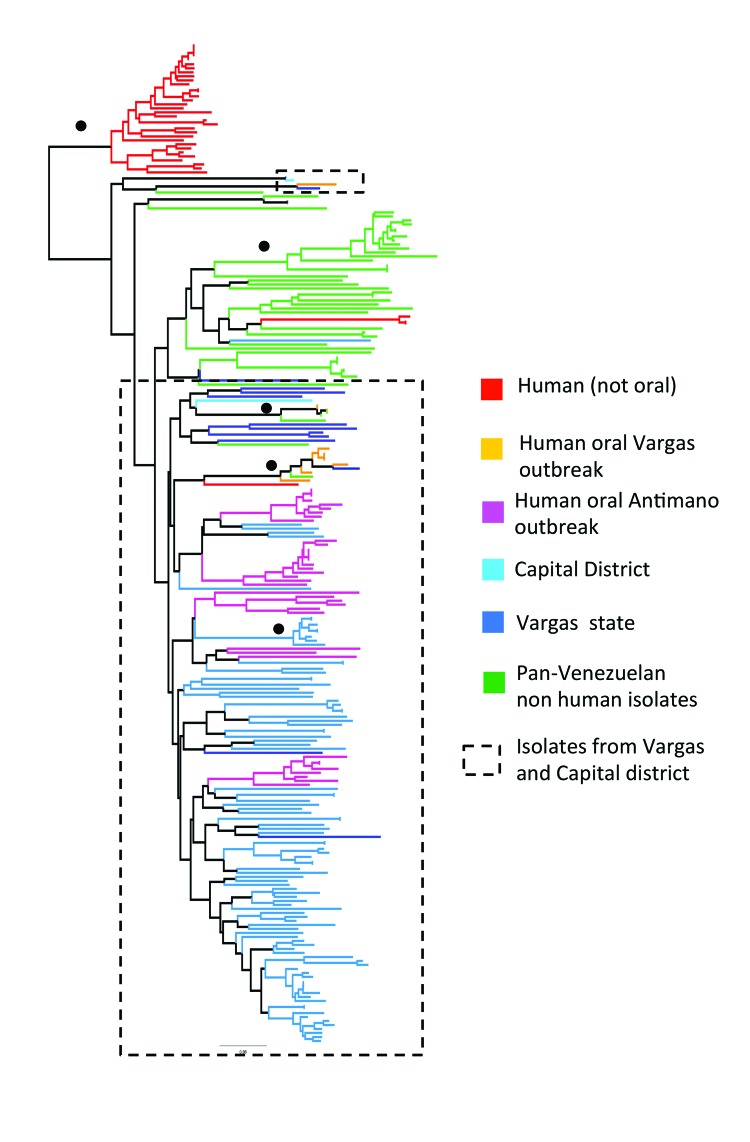
Unrooted neighbor joining tree showing genetic clustering among Trypanosoma cruzi isolates from 2 outbreaks of oral disease in northern Venezuela. Based on pairwise genetic distances (1 – proportion of shared alleles) between multilocus microsatellite profiles (23 loci) generated from 246 isolates and clones. Black circles indicate nodes with >60% bootstrap support. Branch color key is shown. Dashed boxes indicate isolates associated with the outbreaks.
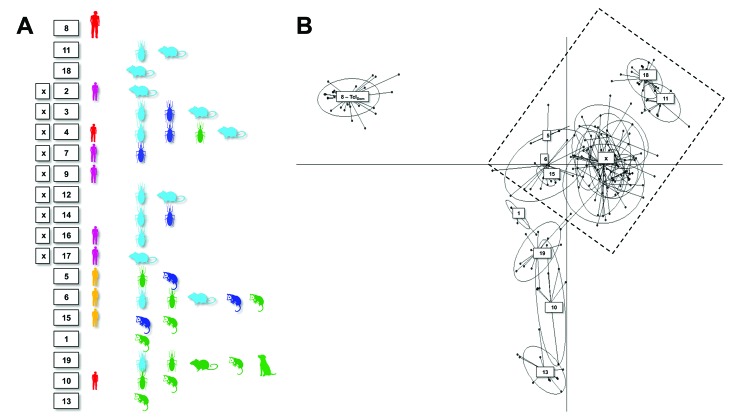
Discriminant analysis of principal components showing genetic clustering among Trypanosoma cruzi isolates from 2 outbreaks of oral disease in northern Venezuela. Six principal components were retained, explaining 80% of the diversity. Ellipses correspond to the optimal (as defined by the Bayesian information criterion minimum) number of population clusters among the genotypes analyzed. Images indicate sample host origin (human, rodent, marsupial, or triatomine), while colors correspond to the key in Figure 1. A full list of samples and population assignments (numbered boxes) is included in Technical Appendix 2. Dashed box indicates the isolates associated with the outbreaks.
References
Publication types
MeSH terms
Substances
LinkOut - more resources
Full Text Sources
Other Literature Sources
Medical