


Non-dystrophic myotonia: prospective study of objective and patient reported outcomes
- PMID: 23771340
- PMCID: PMC3692030
- DOI: 10.1093/brain/awt133
Non-dystrophic myotonia: prospective study of objective and patient reported outcomes
Abstract
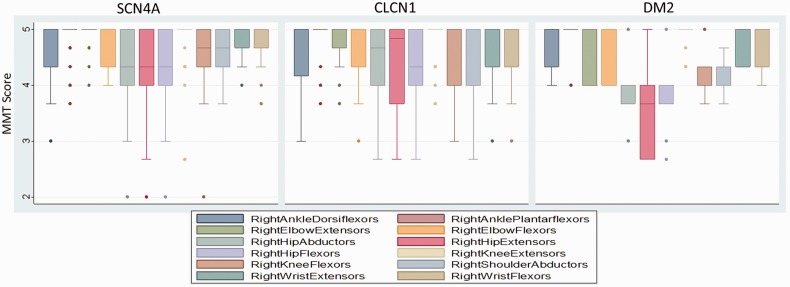
Non-dystrophic myotonias are rare diseases caused by mutations in skeletal muscle chloride and sodium ion channels with considerable phenotypic overlap between diseases. Few prospective studies have evaluated the sensitivity of symptoms and signs of myotonia in a large cohort of patients. We performed a prospective observational study of 95 participants with definite or clinically suspected non-dystrophic myotonia recruited from six sites in the USA, UK and Canada between March 2006 and March 2009. We used the common infrastructure and data elements provided by the NIH-funded Rare Disease Clinical Research Network. Outcomes included a standardized symptom interview and physical exam; the Short Form-36 and the Individualized Neuromuscular Quality of Life instruments; electrophysiological short and prolonged exercise tests; manual muscle testing; and a modified get-up-and-go test. Thirty-two participants had chloride channel mutations, 34 had sodium channel mutations, nine had myotonic dystrophy type 2, one had myotonic dystrophy type 1, and 17 had no identified mutation. Phenotype comparisons were restricted to those with sodium channel mutations, chloride channel mutations, and myotonic dystrophy type 2. Muscle stiffness was the most prominent symptom overall, seen in 66.7% to 100% of participants. In comparison with chloride channel mutations, participants with sodium mutations had an earlier age of onset of stiffness (5 years versus 10 years), frequent eye closure myotonia (73.5% versus 25%), more impairment on the Individualized Neuromuscular Quality of Life summary score (20.0 versus 9.44), and paradoxical eye closure myotonia (50% versus 0%). Handgrip myotonia was seen in three-quarters of participants, with warm up of myotonia in 75% chloride channel mutations, but also 35.3% of sodium channel mutations. The short exercise test showed ≥10% decrement in the compound muscle action potential amplitude in 59.3% of chloride channel participants compared with 27.6% of sodium channel participants, which increased post-cooling to 57.6% in sodium channel mutations. In evaluation of patients with clinical and electrical myotonia, despite considerable phenotypic overlap, the presence of eye closure myotonia, paradoxical myotonia, and an increase in short exercise test sensitivity post-cooling suggest sodium channel mutations. Outcomes designed to measure stiffness or the electrophysiological correlates of stiffness may prove useful for future clinical trials, regardless of underlying mutation, and include patient-reported stiffness, bedside manoeuvres to evaluate myotonia, muscle specific quality of life instruments and short exercise testing.
Keywords: CLCN1; SCN4A; myotonia; non-dystrophic myotonia; paramyotonia.
Figures
References
-
- Basu A, Nishanth P, Ifaturoti O. Pregnancy in women with myotonia congenita. Int J Gynaecol Obstet. 2009;106:62–3. - PubMed
-
- Cannon SC. Spectrum of sodium channel disturbances in the nondystrophic myotonias and periodic paralyses. Kidney Int. 2000;57:772–9. - PubMed
-
- Cannon SC. Pathomechanisms in channelopathies of skeletal muscle and brain. Annu Rev Neurosci. 2006;29:387–415. - PubMed
-
- Colding-Jorgensen E. Phenotypic variability in myotonia congenita. Muscle Nerve. 2005;32:19–34. - PubMed
-
- Day JW, Ricker K, Jacobsen JF, Rasmussen LJ, Dick KA, Kress W, et al. Myotonic dystrophy type 2: molecular, diagnostic and clinical spectrum. Neurology. 2003;60:657–64. - PubMed
Publication types
MeSH terms
Substances
Grants and funding
LinkOut - more resources
Full Text Sources
Other Literature Sources
Miscellaneous
