


Predictive factors for successful clinical outcome 1 year after an intensive combined physical and psychological programme for chronic low back pain
- PMID: 23771553
- PMCID: PMC3897840
- DOI: 10.1007/s00586-013-2844-z
Predictive factors for successful clinical outcome 1 year after an intensive combined physical and psychological programme for chronic low back pain
Abstract
Purpose: The aim of this longitudinal study is to determine the factors which predict a successful 1-year outcome from an intensive combined physical and psychological (CPP) programme in chronic low back pain (CLBP) patients.
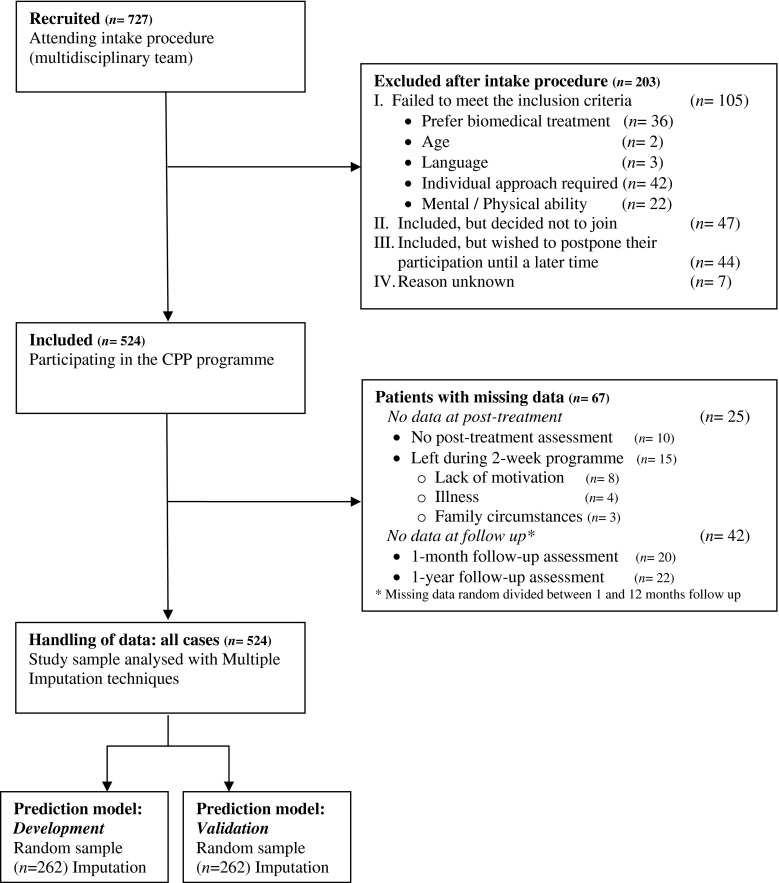
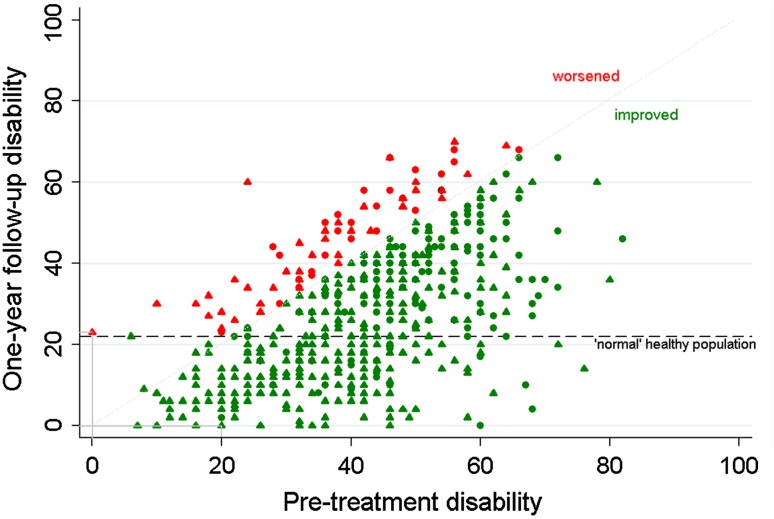
Methods: A prospective cohort of 524 selected consecutive CLBP patients was followed. Potential predictive factors included demographic characteristics, disability, pain and cognitive behavioural factors as measured at pre-treatment assessment. The primary outcome measure was the oswestry disability index (ODI). A successful 1-year follow-up outcome was defined as a functional status equivalent to 'normal' and healthy populations (ODI ≤22). The 2-week residential programme fulfills the recommendations in international guidelines. For statistical analysis we divided the database into two equal samples. A random sample was used to develop a prediction model with multivariate logistic regression. The remaining cases were used to validate this model.
Results: The final predictive model suggested being 'in employment' at pre-treatment [OR 3.61 (95 % CI 1.80-7.26)] and an initial 'disability score' [OR 0.94 (95 % CI 0.92-0.97)] as significant predictive factors for a successful 1-year outcome (R (2) = 22 %; 67 % correctly classified). There was no predictive value from measures of psychological distress.
Conclusion: CLBP patients who are in work and mild to moderately disabled at the start of a CPP programme are most likely to benefit from it and to have a successful treatment outcome. In these patients, the disability score falls to values seen in healthy populations. This small set of factors is easily identified, allowing selection for programme entry and triage to alternative treatment regimes.
Figures
References
-
- Frymoyer JW. Predicting disability from low back pain. Clin Orthop Relat Res. 1992;279:101–109. - PubMed
MeSH terms
LinkOut - more resources
Full Text Sources
Other Literature Sources
Medical
