


The prognosis of self-reported paresthesia and weakness in disc-related sciatica
- PMID: 23771579
- PMCID: PMC3886504
- DOI: 10.1007/s00586-013-2871-9
The prognosis of self-reported paresthesia and weakness in disc-related sciatica
Abstract
Purpose: To explore how patients with sciatica rate the 'bothersomeness' of paresthesia (tingling and numbness) and weakness as compared with leg pain during 2 years of follow-up.
Methods: Observational cohort study including 380 patients with sciatica and lumbar disc herniation referred to secondary care. Using the Sciatica Bothersomeness Index paresthesia, weakness and leg pain were rated on a scale from 0 to 6. A symptom score of 4-6 was defined as bothersome.
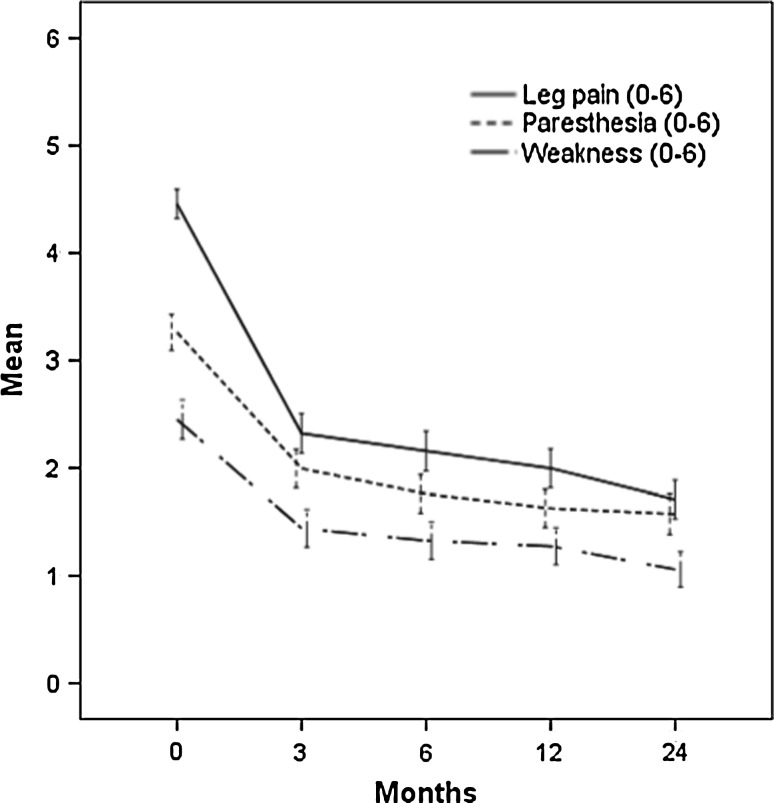
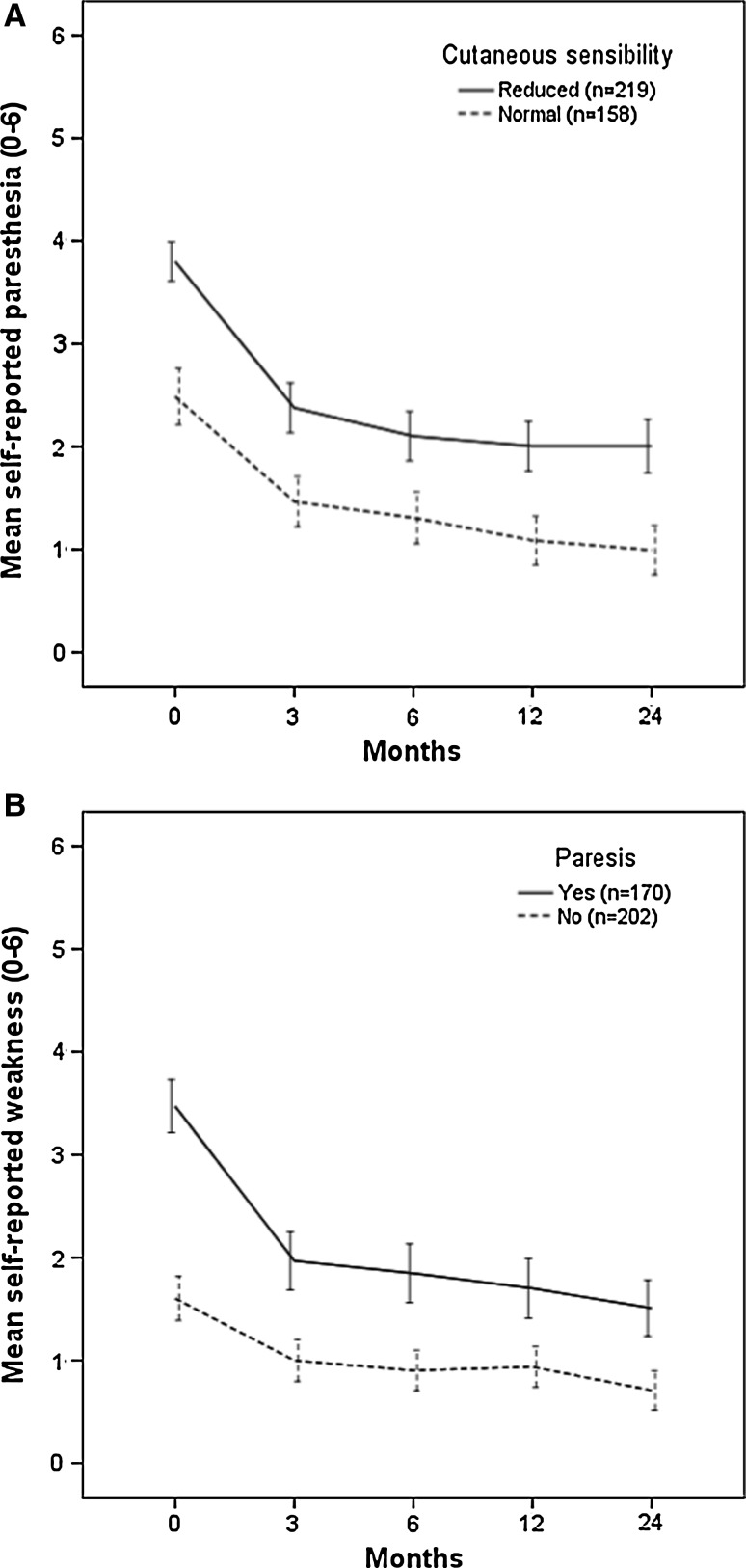
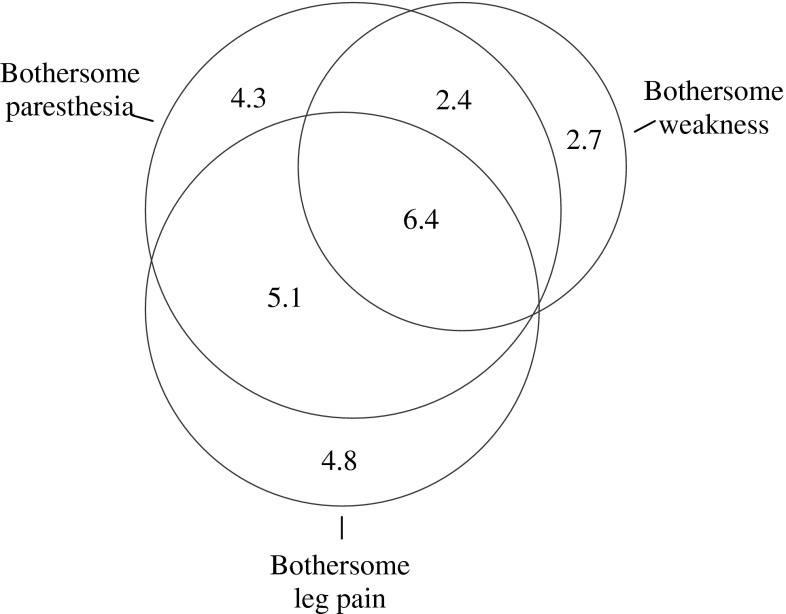
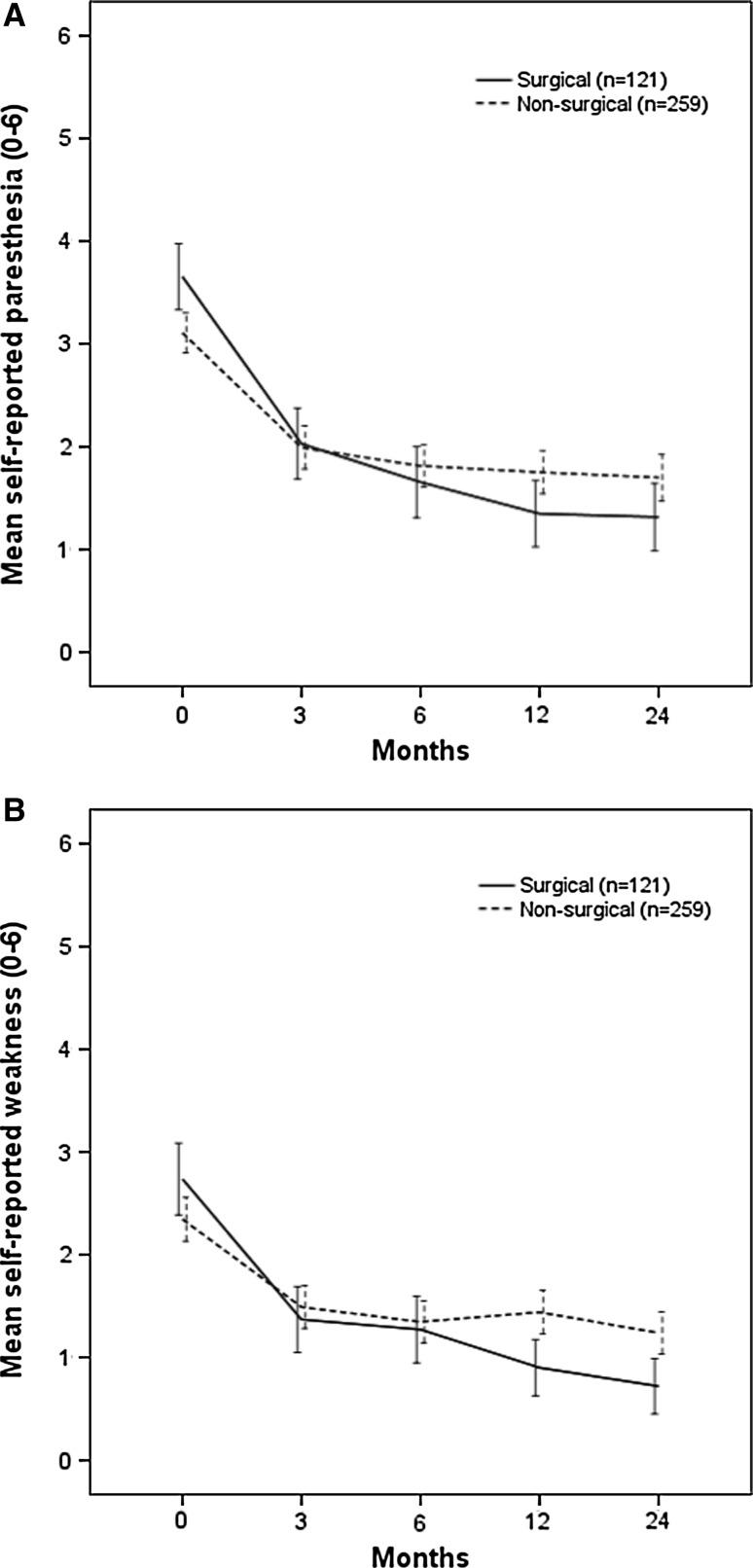
Results: Along with leg pain, the bothersomeness of paresthesia and weakness both improved during follow-up. Those who received surgery (n = 121) reported larger improvements in both symptoms than did those who were treated without surgery. At 2 years, 18.2% of the patients reported bothersome paresthesia, 16.6% reported bothersome leg pain, and 11.5% reported bothersome weakness. Among patients with no or little leg pain, 6.7% reported bothersome paresthesia and 5.1% bothersome weakness.
Conclusion: During 2 years of follow-up, patients considered paresthesia more bothersome than weakness. At 2 years, the percentage of patients who reported bothersome paresthesia was similar to the percentage who reported bothersome leg pain. Based on patients' self-report, paresthesia and weakness are relevant aspects of disc-related sciatica.
Figures
References
-
- Barry MJ, Fowler FJ, Jr, O’Leary MP, Bruskewitz RC, Holtgrewe HL, Mebust WK, Cockett AT. The American Urological Association symptom index for benign prostatic hyperplasia. The Measurement Committee of the American Urological Association. J Urol. 1992;148:1549–1557. - PubMed
-
- Boyd D, Butler M, Carr D, Cohen M, Devor M, Dworkin R, Greenspan J et al (2011) IASP taxonomy. http://www.iasppain.org/Content/NavigationMenu/GeneralResourceLinks/Pain.... Accessed 20 Nov 2012
Publication types
MeSH terms
LinkOut - more resources
Full Text Sources
Other Literature Sources
Medical
