


Differential associations between maternal scaffolding and toddler emotion regulation in toddlers born preterm and full term
- PMID: 23773306
- PMCID: PMC3805124
- DOI: 10.1016/j.earlhumdev.2013.05.003
Differential associations between maternal scaffolding and toddler emotion regulation in toddlers born preterm and full term
Abstract
Background: Parental "scaffolding" behavior has been associated with developmental outcomes in at-risk children.
Aims: Because there are limited empirical data regarding how scaffolding is associated with emotion-based developmental skills, the purpose of this study was to compare associations between maternal verbal scaffolding and toddler emotion regulation, including fewer displays of negative affect and increased contentment and enjoyment during play, in toddlers born preterm and full term.
Study design: This study was a cross-sectional cohort design. Maternal and toddler behavior was assessed during 5 min of videotaped free play with standardized toys.
Subjects: 131 toddlers (18-22 months) and their mothers were included (77 born preterm; 54 born full term).
Outcome measures: Toddler emotion regulation, negative affect, and dyadic mutual enjoyment were coded from videotaped play.
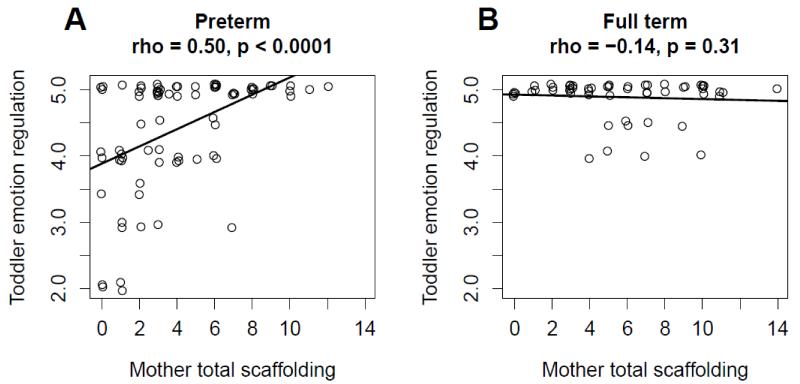
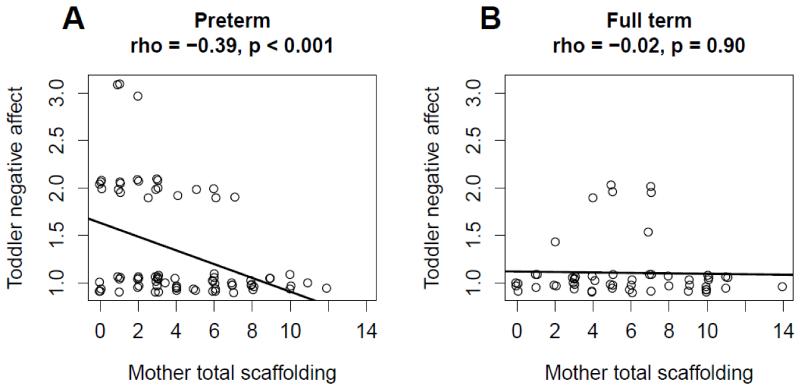
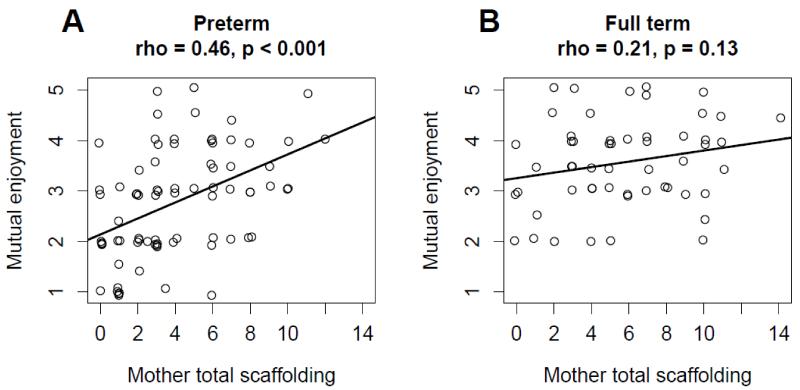
Results: The association between maternal scaffolding and emotion regulation was different for dyads with a toddler born preterm versus full term, wherein the association was positive for toddlers born preterm and non-significant for toddlers born full term. Similarly, the association between maternal scaffolding and negative affect was different for the two groups: negative for toddlers born preterm and non-significant for toddlers born full term. Finally, the association between maternal scaffolding and mutual enjoyment was positive for toddlers born preterm and non-significant for toddlers born full term.
Conclusions: Our findings highlight early differences in mother-child interactive style correlates of children born preterm compared to those born full term. Maternal scaffolding behavior may be uniquely associated with emotion regulation and a positive dyadic encounter for toddlers born preterm.
Keywords: Affect; BSID-II; BSID-III; Bayley Scales of Infant Development 2nd edition; Bayley Scales of Infant Development 3rd edition; C-CARES; Caregiver‐Child Affect, Responsiveness, and Engagement Scale; Emotion regulation; LBW; MDI; Maternal scaffolding; Mental Developmental Index; Mutual enjoyment; Preterm; Toddler communication; VLBW; low birth weight; very low birth weight.
Copyright © 2013 Elsevier Ltd. All rights reserved.
Figures
References
-
- Elgen I, Johansson K, Markestad T, Sommerfelt K. A non-handicapped cohort of low-birthweight children: Growth and general health status at 11 years of age. Acta Paediatr. 2005;94(9):1203–7. - PubMed
-
- Litt J, Taylor G, Klein N, Hack M. Learning disabilities in children with very low birthweight: Prevalence, neuropsychological correlates, and educational interventions. J Learn Disabil. 2005;38:130–141. - PubMed
-
- Mulder H, Pitchford NJ, Hagger MS, Marlow N. Development of executive function and attention in preterm children: A systematic review. Dev Neuropsychol. 2009;34(4):393–421. - PubMed
-
- Aylward G. Cognitive and neuropsychological outcomes: More than IQ scores. Ment Retard Dev D R. 2002;8(4):234–240. - PubMed
-
- Kilbride HW, Thorstad K, Daily DK. Preschool outcome of less than 801-gram preterm infants compared with full-term siblings. Pediatrics. 2004;113(4):742–7. - PubMed
Publication types
MeSH terms
Grants and funding
LinkOut - more resources
Full Text Sources
Other Literature Sources
Medical
