


Understanding psychiatric institutionalization: a conceptual review
- PMID: 23773398
- PMCID: PMC3702490
- DOI: 10.1186/1471-244X-13-169
Understanding psychiatric institutionalization: a conceptual review
Abstract
Background: Since Goffman's seminal work on psychiatric institutions, deinstitutionalization has become a leading term in the psychiatric debate. It described the process of closure or downsizing of large psychiatric hospitals and the establishment of alternative services in the community. Yet, there is a lack of clarity on what exactly the concept of institutionalization means in present-day psychiatry. This review aims to identify the meaning of psychiatric institutionalization since the early 1960s to present-day.
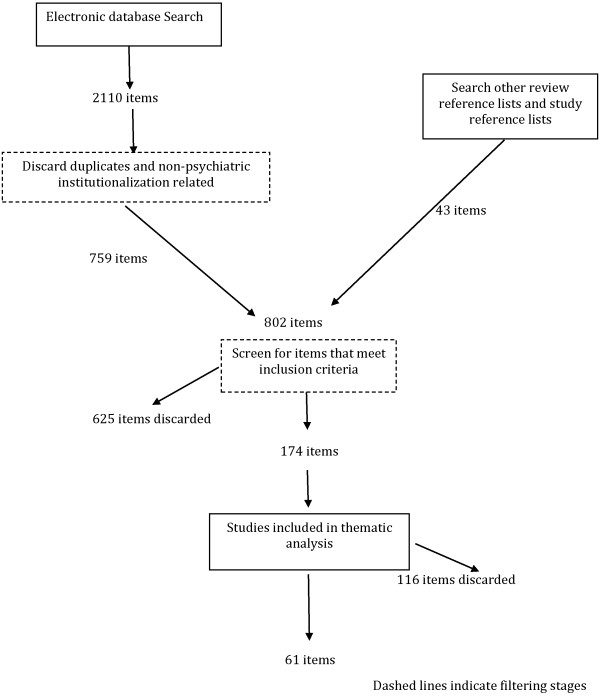
Method: A conceptual review of institutionalization in psychiatry was conducted. Thematic analysis was used to synthesize the findings.
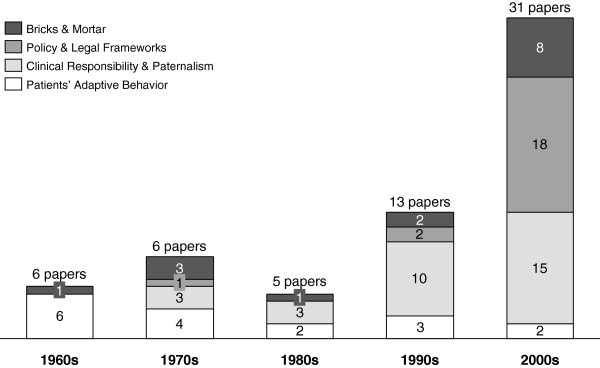
Results: Four main themes were identified in conceptualizing institutionalization: bricks and mortar of care institutions; policy and legal frameworks regulating care; clinical responsibility and paternalism in clinician-patient relationships; and patients' adaptive behavior to institutionalized care.
Conclusions: The concept of institutionalization in psychiatry reflects four distinct themes. All themes have some relevance for the contemporary debate on how psychiatric care should develop and on the role of institutional care in psychiatry.
Figures
References
-
- Goffman E. Asylums; essays on the social situation of mental patients and other inmates. Garden City: Anchor Books; 1961.
-
- Leff J, Trieman N, Knapp M, Carrier J. Mental health. Beyond the asylum. Health Serv J. 1995;105:28–30. - PubMed
Publication types
MeSH terms
LinkOut - more resources
Full Text Sources
Other Literature Sources
Medical
