


The balance of protein expression and degradation: an ESCRTs point of view
- PMID: 23773569
- PMCID: PMC3740199
- DOI: 10.1016/j.ceb.2013.05.003
The balance of protein expression and degradation: an ESCRTs point of view
Abstract
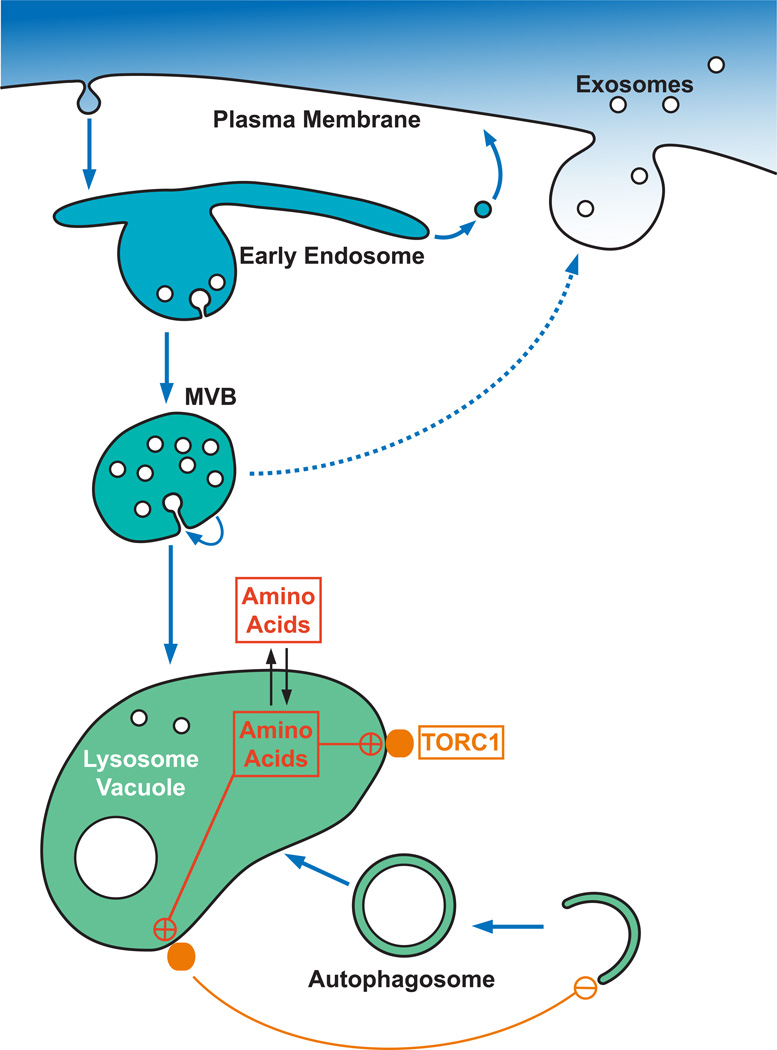
Endosomal sorting complexes required for transport (ESCRTs) execute the biogenesis of late endosomal multivesicular bodies (MVBs). The ESCRT pathway has traditionally been viewed as a means by which transmembrane proteins are degraded in vacuoles/lysosomes. More recent studies aimed at understanding the broader functions of ESCRTs have uncovered unexpected links with pathways that control cellular metabolism. Central to this communication is TORC1, the kinase complex that controls many of the catabolic and anabolic systems. The connection between TORC1 activity and ESCRTs allows cells to quickly adapt to the stress of nutrient limitations until the longer-term autophagic pathway is activated. Increasing evidence also points to ESCRTs regulating RNA interference (RNAi) pathways that control translation.
Copyright © 2013 Elsevier Ltd. All rights reserved.
Figures

References
-
- Henne WM, Buchkovich NJ, Emr SD. The ESCRT pathway. Dev Cell. 2011;21:77–91. - PubMed
-
- Hanson PI, Cashikar A. Multivesicular body morphogenesis. Annu Rev Cell Dev Biol. 2012;28:337–362. - PubMed
-
- Belgareh-Touze N, Leon S, Erpapazoglou Z, Stawiecka-Mirota M, Urban-Grimal D, Haguenauer-Tsapis R. Versatile role of the yeast ubiquitin ligase Rsp5p in intracellular trafficking. Biochem Soc Trans. 2008;36:791–796. - PubMed
Publication types
MeSH terms
Substances
Grants and funding
LinkOut - more resources
Full Text Sources
Other Literature Sources
