


Unique and highly selective anticytomegalovirus activities of artemisinin-derived dimer diphenyl phosphate stem from combination of dimer unit and a diphenyl phosphate moiety
- PMID: 23774439
- PMCID: PMC3754318
- DOI: 10.1128/AAC.00893-13
Unique and highly selective anticytomegalovirus activities of artemisinin-derived dimer diphenyl phosphate stem from combination of dimer unit and a diphenyl phosphate moiety
Abstract
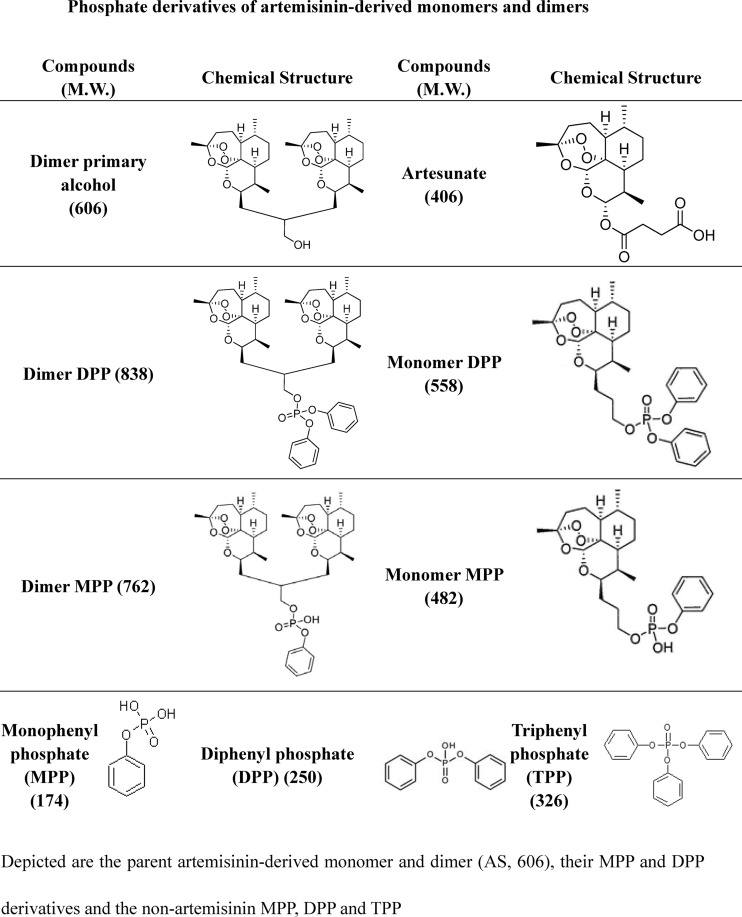
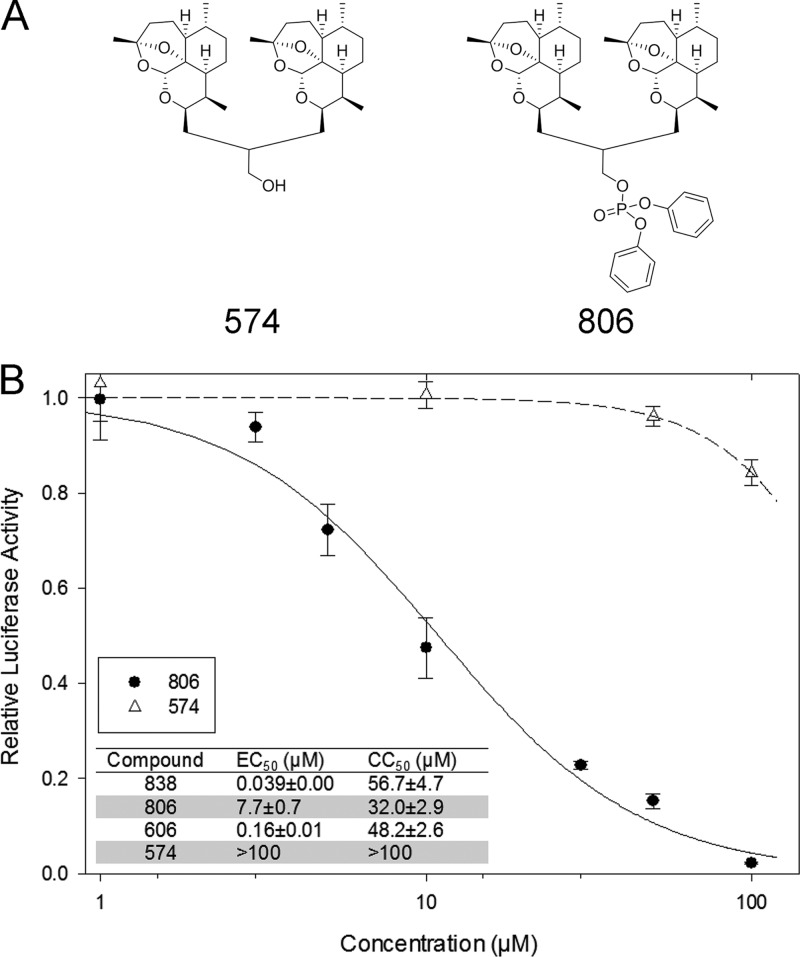
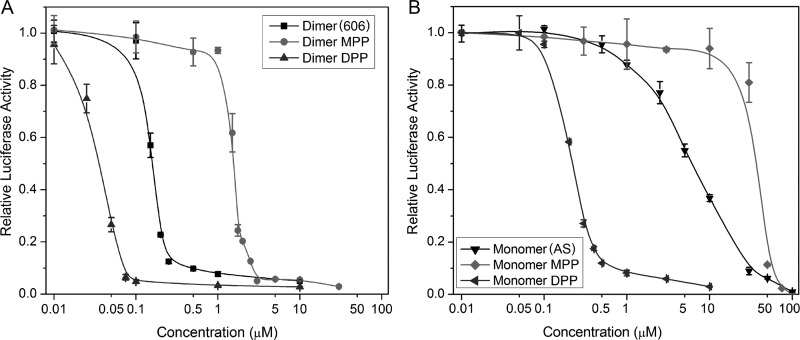
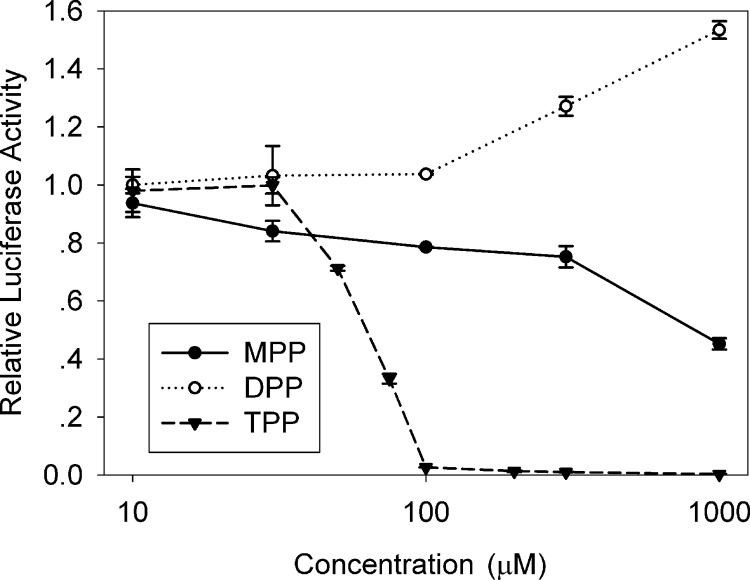
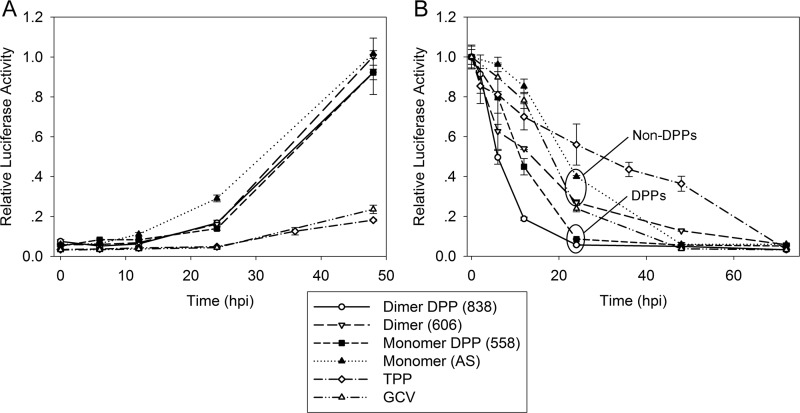
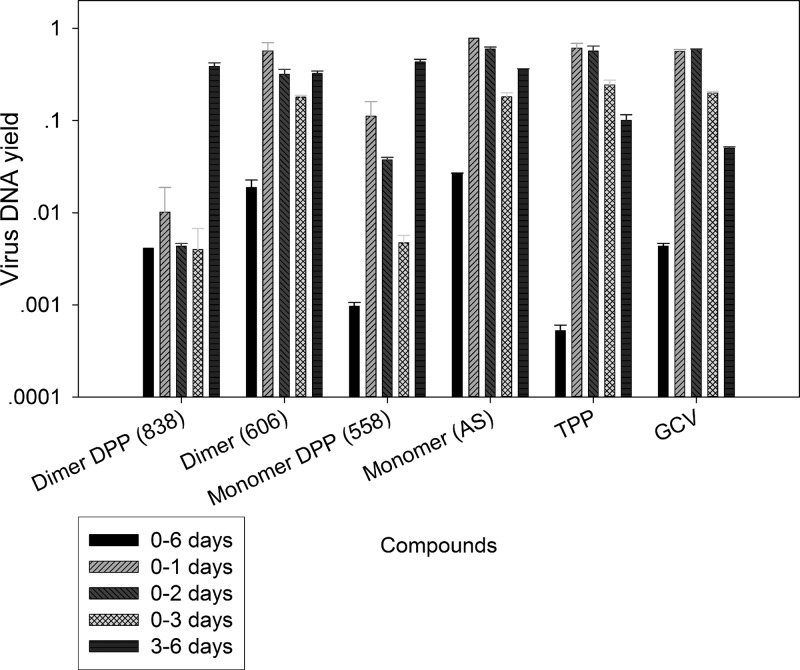
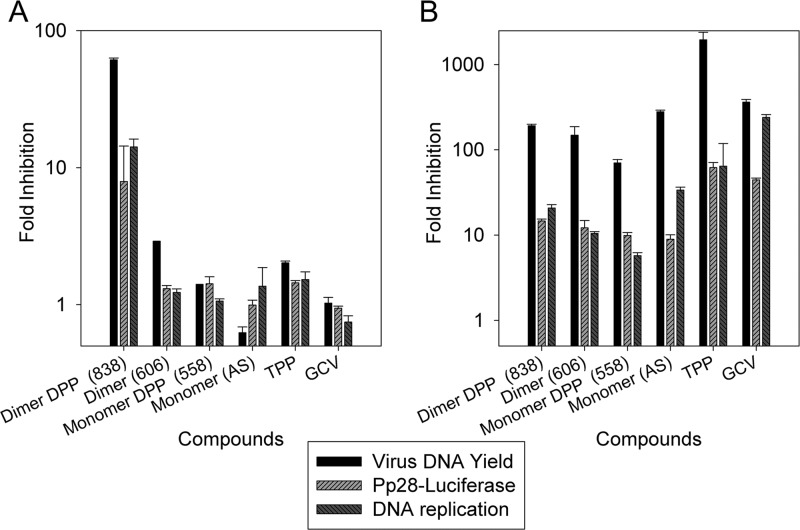
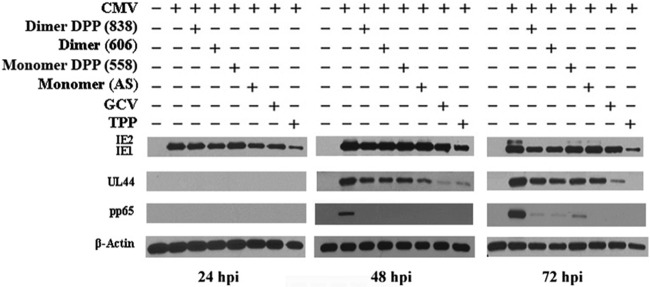
We report that the artemisinin-derived dimer diphenyl phosphate (DPP; dimer 838) is the most selective inhibitor of human cytomegalovirus (CMV) replication among a series of artemisinin-derived monomers and dimers. Dimer 838 was also unique in being an irreversible CMV inhibitor. The peroxide unit within artemisinins' chemical structures is critical to their activities, and its absence results in loss of anti-CMV activities. Surprisingly, the deoxy dimer of 838 retained modest anti-CMV activity, suggesting that the DPP moiety of dimer 838 contributes to its anti-CMV activities. DPP alone did not inhibit CMV replication, but triphenyl phosphate (TPP) had modest CMV inhibition, although its selectivity index was low. Artemisinin DPP derivatives dimer 838 and monomer diphenyl phosphate (compound 558) showed stronger CMV inhibition and a higher selectivity index than their analogs lacking the DPP unit. An add-on and removal assay revealed that removing DPP derivatives (compounds 558 and 838) but not the non-DPP backbones (artesunate and compound 606) at 24 h postinfection (hpi) already resulted in dominant CMV inhibition. CMV inhibition was fully irreversible with 838 and partially irreversible with 558, while non-DPP artemisinins were reversible inhibitors. While all artemisinin derivatives and TPP reduced the expression of the CMV immediate early 2 (IE2), UL44, and pp65 proteins at or after 48 hpi, only TPP inhibited the expression of both IE1 and IE2. Combination of a non-DPP dimer (compound 606) with TPP was synergistic in CMV inhibition, while ganciclovir and TPP were additive. Although TPP shared structural similarity with monomer DPP (compound 558) and dimer DPP (compound 838), its pattern of CMV inhibition was significantly different from the patterns of the artemisinins. These findings demonstrate that the DPP group contributes to the unique activities of compound 838.
Figures
References
-
- Adjuik M, Babiker A, Garner P, Olliaro P, Taylor W, White N. 2004. Artesunate combinations for treatment of malaria: meta-analysis. Lancet 363:9–17 - PubMed
-
- Efferth T, Romero MR, Wolf DG, Stamminger T, Marin JJ, Marschall M. 2008. The antiviral activities of artemisinin and artesunate. Clin. Infect. Dis. 47:804–811 - PubMed
-
- Efferth T, Marschall M, Wang X, Huong SM, Hauber I, Olbrich A, Kronschnabl M, Stamminger T, Huang ES. 2002. Antiviral activity of artesunate towards wild-type, recombinant, and ganciclovir-resistant human cytomegaloviruses. J. Mol. Med. 80:233–242 - PubMed
-
- Kaptein SJ, Efferth T, Leis M, Rechter S, Auerochs S, Kalmer M, Bruggeman CA, Vink C, Stamminger T, Marschall M. 2006. The anti-malaria drug artesunate inhibits replication of cytomegalovirus in vitro and in vivo. Antiviral Res. 69:60–69 - PubMed
-
- Shapira MY, Resnick IB, Chou S, Neumann AU, Lurain NS, Stamminger T, Caplan O, Saleh N, Efferth T, Marschall M, Wolf DG. 2008. Artesunate as a potent antiviral agent in a patient with late drug-resistant cytomegalovirus infection after hematopoietic stem cell transplantation. Clin. Infect. Dis. 46:1455–1457 - PubMed
Publication types
MeSH terms
Substances
Grants and funding
LinkOut - more resources
Full Text Sources
Other Literature Sources
