


Relapse following successful electroconvulsive therapy for major depression: a meta-analysis
- PMID: 23774532
- PMCID: PMC3799066
- DOI: 10.1038/npp.2013.149
Relapse following successful electroconvulsive therapy for major depression: a meta-analysis
Abstract
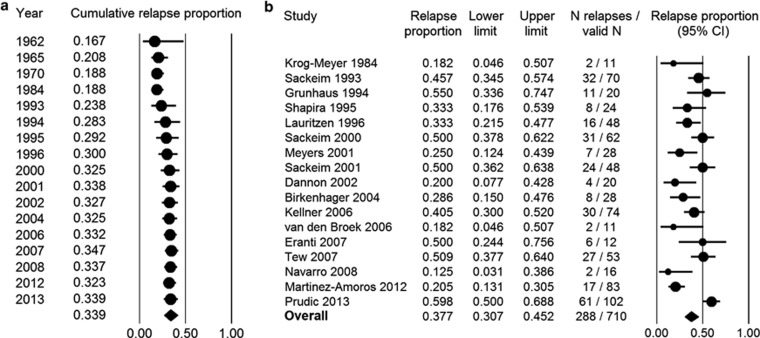
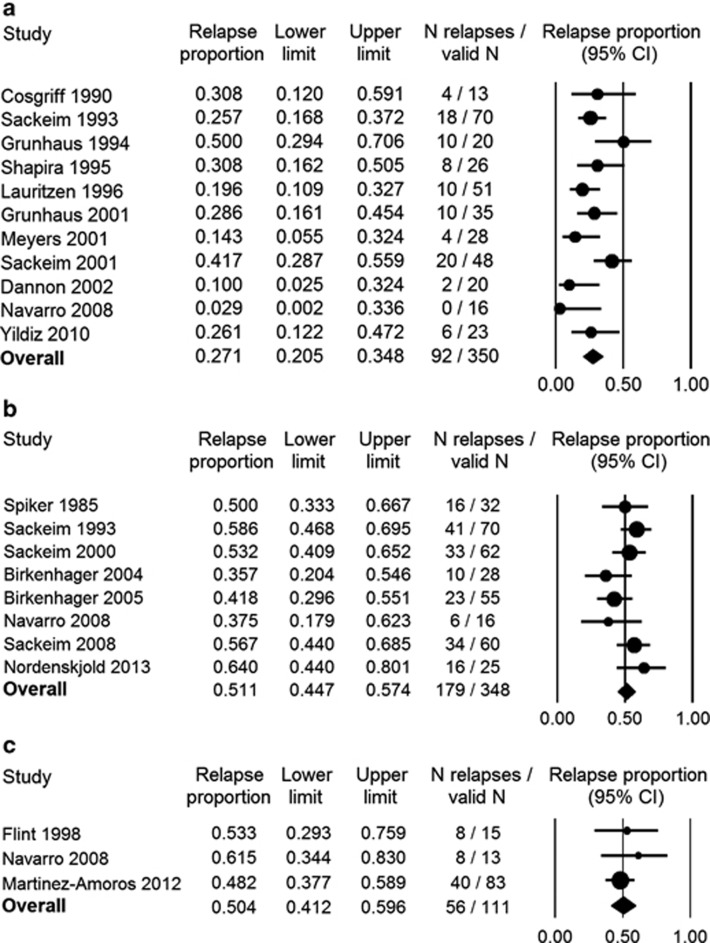
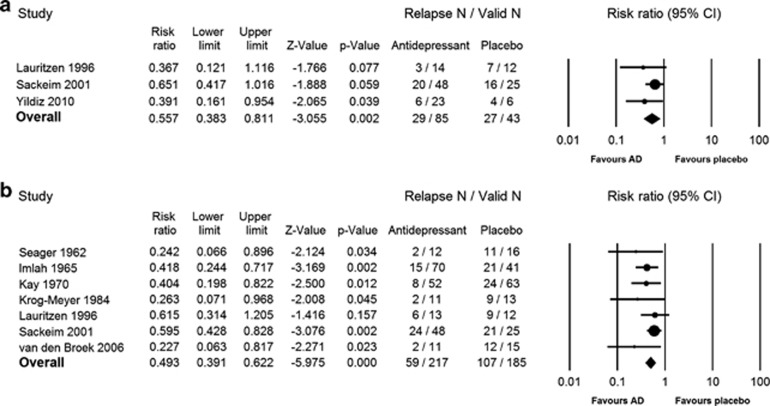
High rates of early relapse following electroconvulsive therapy (ECT) are typically reported in the literature. Current treatment guidelines offer little information to clinicians on the optimal nature of maintenance therapy following ECT. The aim of this study was to provide a systematic overview of the existing evidence regarding post-ECT relapse. A keyword search of electronic databases was performed for studies appearing in the peer-reviewed literature before January 2013 reporting on relapse rates in responders to an acute course of ECT administered for a major depressive episode. Meta-analyses were performed where appropriate. Thirty-two studies with up to 2 years' duration of follow-up were included. In modern era studies of continuation pharmacotherapy, 51.1% (95% CI=44.7-57.4%) of patients relapsed by 12 months following successful initial treatment with ECT, with the majority (37.7%, 95% CI=30.7-45.2%) relapsing within the first 6 months. The 6-month relapse rate was similar in patients treated with continuation ECT (37.2%, 95% CI=23.4-53.5%). In randomized controlled trials, antidepressant medication halved the risk of relapse compared with placebo in the first 6 months (risk ratio=0.49, 95% CI=0.39-0.62, p<0.0001, number needed to treat=3.3). Despite continuation therapy, the risk of relapse within the first year following ECT is substantial, with the period of greatest risk being the first 6 months. The largest evidence base for efficacy in post-ECT relapse prevention exists for tricyclic antidepressants. Published evidence is limited or non-existent for commonly used newer antidepressants or popular augmentation strategies. Maintenance of well-being following successful ECT needs to be improved.
Figures
Comment in
-
Review: maintenance antidepressants reduce risk of relapse in the 6 months following ECT in people with major depression.Evid Based Ment Health. 2014 Feb;17(1):8. doi: 10.1136/eb-2013-101663. Epub 2014 Jan 13. Evid Based Ment Health. 2014. PMID: 24419098 No abstract available.
References
-
- American Psychiatric Association 2001The Practice of Electroconvulsive Therapy: Recommendations for Treatment, Training, and Privileging. A Task Force Report of the American Psychiatric Association2nd edn.American Psychiatric Association: Washington, DC, USA
-
- Arfwidsson L, Arn L, Beskow J. Chlorpromazine and the anti-depressive efficacy of electroconvulsive therapy. Acta Psychiatr Scand. 1973;49:580–587. - PubMed
-
- Barton JL, Mehta S, Snaith RP. The prophylactic value of extra ECT in depressive illness. Acta Psychiatr Scand. 1973;49:386–392. - PubMed
-
- Borenstein M, Hedges L, Higgins J, Rothstein H.2011. Comprehensive Meta Analysis Version 2.2.064, Biostat: Engelwood, NJ, USA.
-
- Bruce EM, Crone N, Fitzpatrick G, Frewin SJ, Gillis A, Lascelles CF, et al. A comparative trial of ECT and Tofranil. Am J Psychiatry. 1960;117:76. - PubMed
Publication types
MeSH terms
Substances
LinkOut - more resources
Full Text Sources
Other Literature Sources
Medical
