The mechanism and physiological function of macroautophagy
- PMID: 23774579
- PMCID: PMC6741458
- DOI: 10.1159/000351979
The mechanism and physiological function of macroautophagy
Abstract
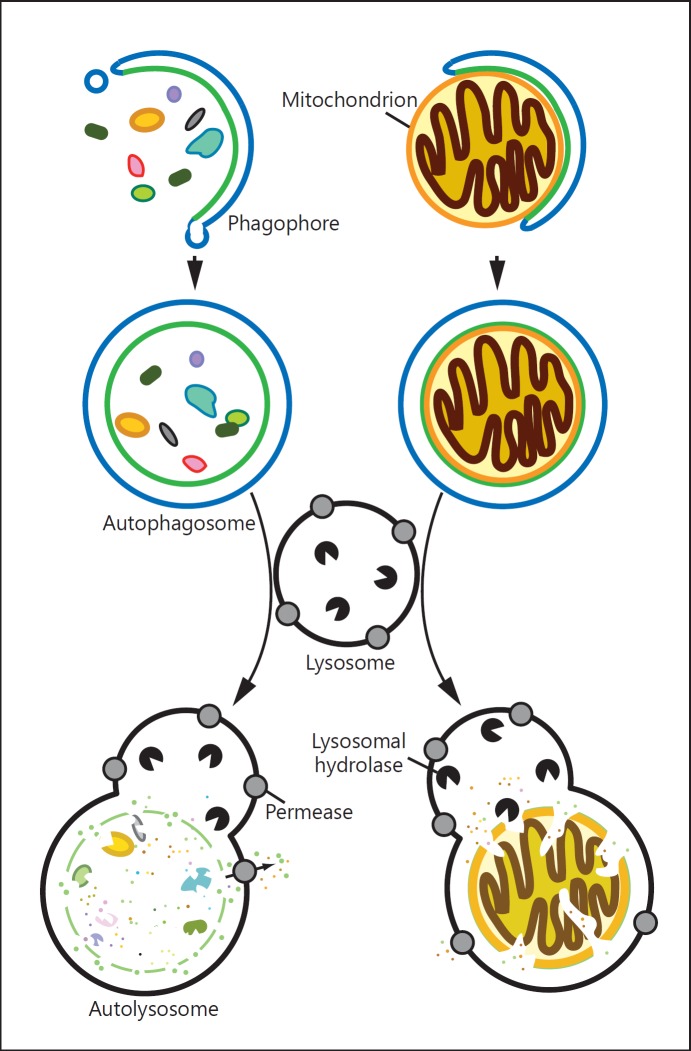
With regard to cell biology, one area of focus that has shifted back and forth over the years has been the relative emphasis on catabolic versus anabolic processes: the breakdown of glucose, the synthesis of DNA, the oxidation of pyruvate, the biogenesis of membranes, protein degradation, and protein synthesis. Historically, the majority of studies concerned with degradation dealt with the production of energy; however, the analysis of the ubiquitin-proteasome system revealed the importance of protein degradation for controlling various aspects of cell physiology. The ubiquitin-proteasome system is limited primarily to targeting individual proteins for destruction, but cells also have to deal with larger structures that are damaged, potentially toxic or superfluous, and these substrates, including entire organelles, are the purview of autophagy. As a general definition, autophagy encompasses a range of processes in which the cell degrades parts of itself within the lysosome (or the analogous organelle, the vacuole, in yeast and plants), followed by the release and reuse of the breakdown products. Thus, autophagy is in part a mechanism for cellular recycling, but such a definition belies the importance of the different autophagic processes in cell and organismal function and homeostasis. Indeed, defects in autophagy are associated with many human diseases and metabolic disorders. Here, we provide a brief overview of the mechanism of autophagy and some of the physiological roles in which this process is involved.
Copyright © 2013 S. Karger AG, Basel.
Figures
References
-
- Eskelinen E-L, Reggiori F, Baba M, Kovacs AL, Seglen PO. Seeing is believing: the impact of electron microscopy on autophagy research. Autophagy. 2011;7:935–956. - PubMed
Publication types
MeSH terms
Substances
Grants and funding
LinkOut - more resources
Full Text Sources
Other Literature Sources
Medical
Molecular Biology Databases
Research Materials