. 2013 Jun 11;8(6):e65342.
doi: 10.1371/journal.pone.0065342. Print 2013.

Population structure and evolution of non-O1/non-O139 Vibrio cholerae by multilocus sequence typing

Affiliations

Population structure and evolution of non-O1/non-O139 Vibrio cholerae by multilocus sequence typing

Sophie Octavia et al. PLoS One. .

Abstract

Pathogenic non-O1/non-O139 Vibrio cholerae strains can cause sporadic outbreaks of cholera worldwide. In this study, multilocus sequence typing (MLST) of seven housekeeping genes was applied to 55 non-O1/non-O139 isolates from clinical and environmental sources. Data from five published O1 isolates and 17 genomes were also included, giving a total of 77 isolates available for analysis. There were 66 sequence types (STs), with the majority being unique, and only three clonal complexes. The V. cholerae strains can be divided into four subpopulations with evidence of recombination among the subpopulations. Subpopulations I and III contained predominantly clinical strains. PCR screening for virulence factors including Vibrio pathogenicity island (VPI), cholera toxin prophage (CTXΦ), type III secretion system (T3SS), and enterotoxin genes (rtxA and sto/stn) showed that combinations of these factors were present in the clinical isolates with 85.7% having rtxA, 51.4% T3SS, 31.4% VPI, 31.4% sto/stn (NAG-ST) and 11.4% CTXΦ. These factors were also present in environmental isolates but at a lower frequency. Five strains previously mis-identified as V. cholerae serogroups O114 to O117 were also analysed and formed a separate population with V. mimicus. The MLST scheme developed in this study provides a framework to identify sporadic cholera isolates by genetic identity.


Conflict of interest statement

Competing Interests: The authors have declared that no competing interests exist.

Figures

Figure 1
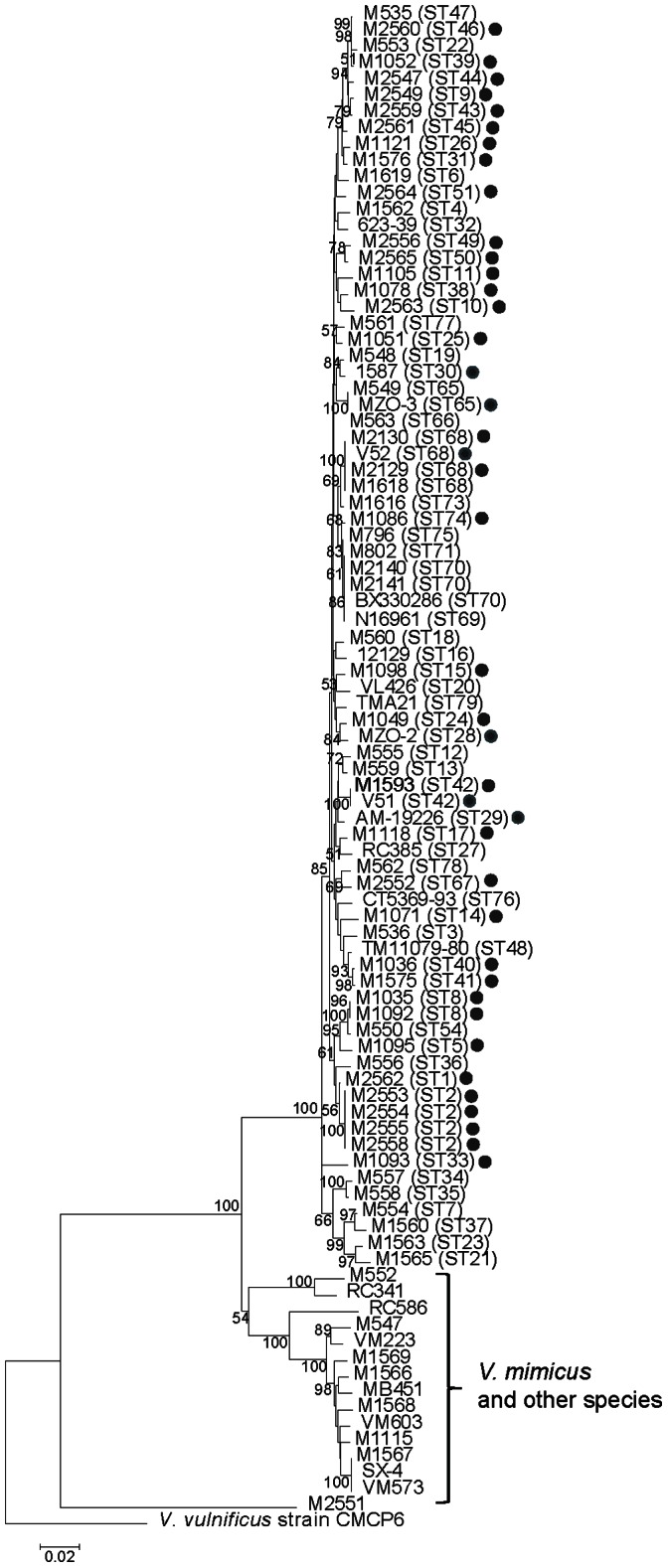
Figure 1. Phylogenetic relationships of Vibrio cholerae isolates based on neighbour-joining tree. ST is indicated in bracket after strain name for V. cholerae.
Non-O1/non-O139 V. cholerae strains from clinical sources are marked with a dot. Vibrio vulnificus strain CMCP6 was used as an outgroup. Bootstrap values, if greater than 50%, are presented at nodes of the neighbour joining trees.
Figure 2
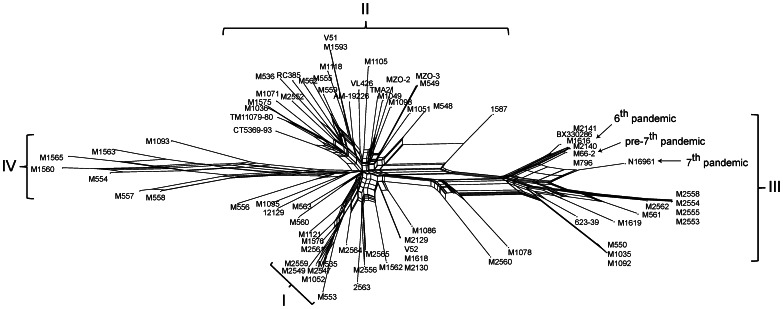
Figure 2. Neighbour-net network of Vibrio cholerae isolates analysed in this study.
Four subpopulations (I to IV) as determined by STRUCTURE analysis are indicated with curly brackets. Isolates associated with 6th, pre-7th and 7th pandemics are indicated with an arrow.
Figure 3
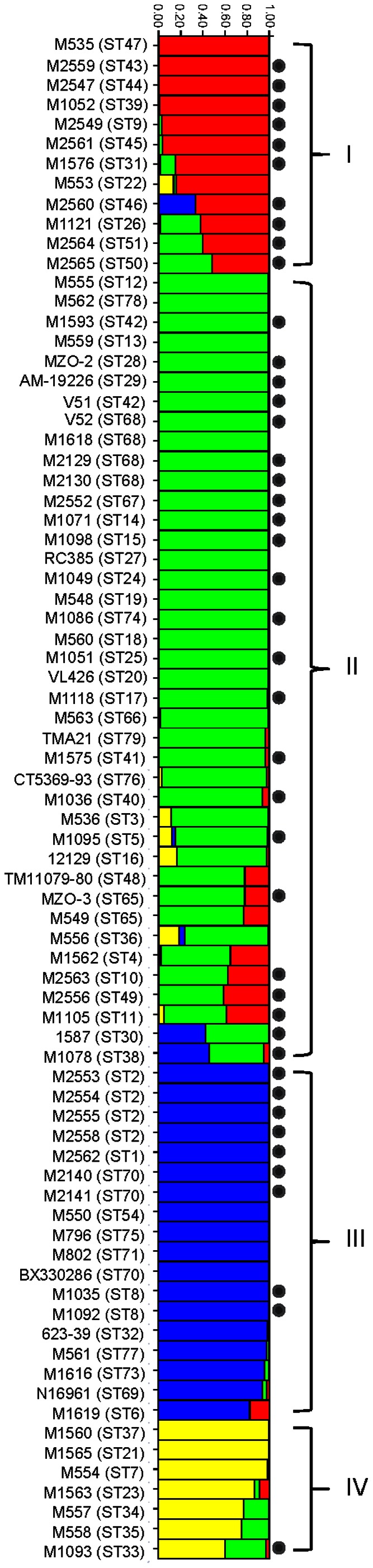
Figure 3. STRUCTURE analysis of Vibrio cholerae isolates including genome strains.
The four subpopulations are colour-coded with red, green, blue and yellow for subpopulation I, II, III and IV respectively. Each isolate has been allocated to a subpopulation. Isolates were identified by strain name with ST in brackets on the left. Mosaic colours for an isolate indicate mixed population origin from respective populations of matching colour. Y-axis represents percentage of population assignment. Non-O1/non-O139 V. cholerae strains from clinical sources are marked with a dot.
Figure 4
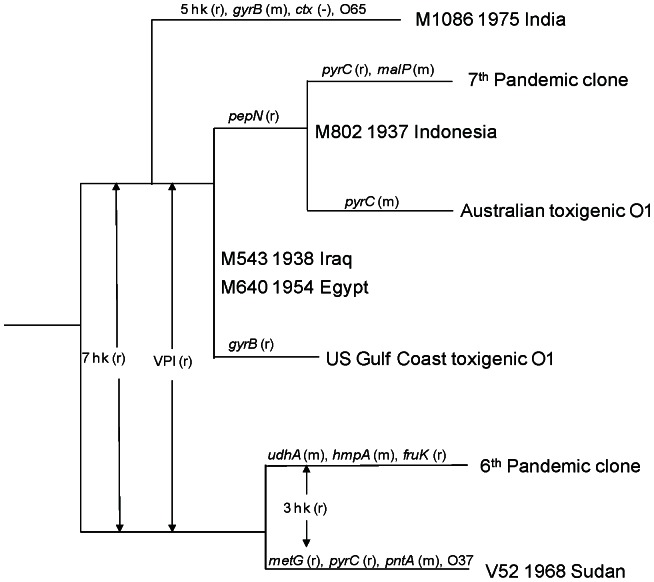
Figure 4. Relationships of M1086 and pandemic related strains based on minimum spanning tree (MST).
MST was constructed using allelic difference of 26 housekeeping (hk) genes which are either resulted from recombination (r) or mutation (m). Events were marked on the branches with gene symbol (r or m) or for multiple genes as number of hk genes affected. M1086 and V52 were analysed in this study. See Salim et al. for details of others. Changes of Vibrio pathogenicity island (VPI) and cholera toxin (CTX) are also indicated. Sequence data were M1086 from this study, V52 from Chun et al. and others from Salim et al. . Strain names, year of isolation and place of isolation were shown except for the pandemic strains and Australian and US Gulf toxigenic isolates.

References

    1. Chin CS, Sorenson J, Harris JB, Robins WP, Charles RC, et al. (2011) The origin of the Haitian cholera outbreak strain. N Engl J Med 364: 33–42. - PMC - PubMed
    1. Talkington D, Bopp C, Tarr C, Parsons MB, Dahourou G, et al. (2011) Characterization of toxigenic Vibrio cholerae from Haiti, 2010–2011. Emerging Infect Dis 17: 2122–2129. - PMC - PubMed
    1. Reeves PR, Lan R (1998) Cholera in the 1990's. Br Med Bull 54: 611–623. - PubMed
    1. Safa A, Nair GB, Kong RY (2010) Evolution of new variants of Vibrio cholerae O1. Trends Microbiol 18: 46–54. - PubMed
    1. Dalsgaard A, Albert MJ, Taylor DN, Shimada T, Meza R, et al. (1995) Characterization of Vibrio cholerae non-O1 serogroups obtained from an outbreak of diarrhea in Lima, Peru. J Clin Microbiol 33: 2715–2722. - PMC - PubMed

Publication types

LinkOut - more resources