. 2013 Jun 12;8(6):e65779.
doi: 10.1371/journal.pone.0065779. Print 2013.

Discovery and validation of a new class of small molecule Toll-like receptor 4 (TLR4) inhibitors

Affiliations

Discovery and validation of a new class of small molecule Toll-like receptor 4 (TLR4) inhibitors

Matthew D Neal et al. PLoS One. .

Abstract

Many inflammatory diseases may be linked to pathologically elevated signaling via the receptor for lipopolysaccharide (LPS), toll-like receptor 4 (TLR4). There has thus been great interest in the discovery of TLR4 inhibitors as potential anti-inflammatory agents. Recently, the structure of TLR4 bound to the inhibitor E5564 was solved, raising the possibility that novel TLR4 inhibitors that target the E5564-binding domain could be designed. We utilized a similarity search algorithm in conjunction with a limited screening approach of small molecule libraries to identify compounds that bind to the E5564 site and inhibit TLR4. Our lead compound, C34, is a 2-acetamidopyranoside (MW 389) with the formula C17H27NO9, which inhibited TLR4 in enterocytes and macrophages in vitro, and reduced systemic inflammation in mouse models of endotoxemia and necrotizing enterocolitis. Molecular docking of C34 to the hydrophobic internal pocket of the TLR4 co-receptor MD-2 demonstrated a tight fit, embedding the pyran ring deep inside the pocket. Strikingly, C34 inhibited LPS signaling ex-vivo in human ileum that was resected from infants with necrotizing enterocolitis. These findings identify C34 and the β-anomeric cyclohexyl analog C35 as novel leads for small molecule TLR4 inhibitors that have potential therapeutic benefit for TLR4-mediated inflammatory diseases.


Conflict of interest statement

Competing Interests: The authors have declared that no competing interests exist.

Figures

Figure 1
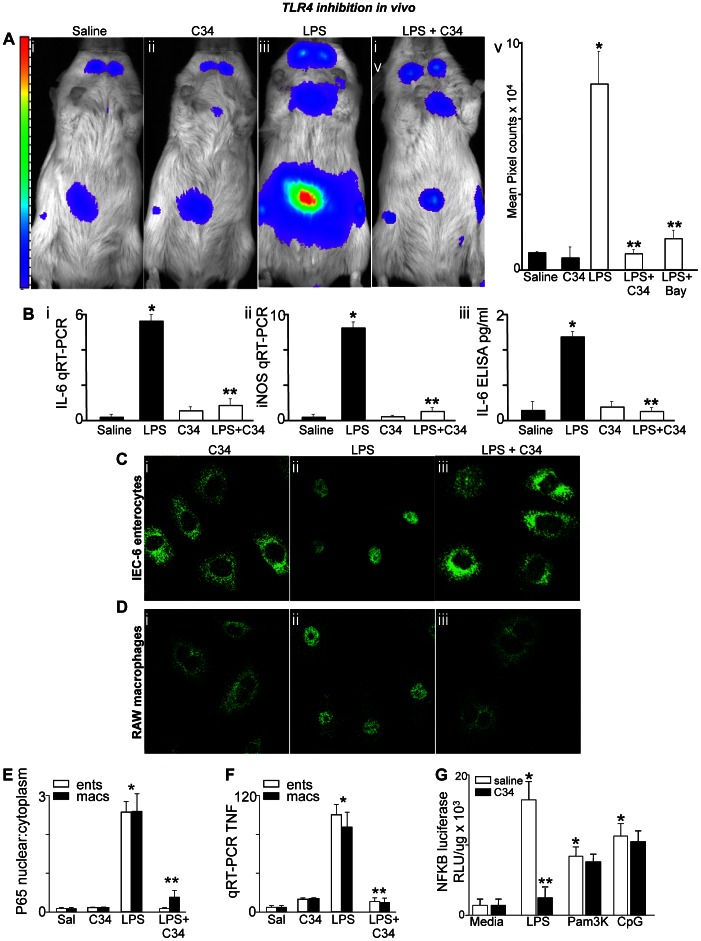
Figure 1. The novel inhibitor C34 blocks TLR4 signaling in vitro and in vivo.
A: Pseudocolor images showing whole animal emission corresponding to NFκB-luciferase activity in mice that were treated with either saline (i), C34 (1 mg/kg) (ii), LPS (3 mg/kg, iii), and LPS after the pre-treatment with C34 (1 mg/kg, iv) 30 minutes prior; quantification (mean±SEM) is shown in v in which *p<0.05 LPS versus saline or C34 alone; **p<0.005 LPS vs LPS+C34 or LPS+Bay11 (20 mg/kg); summary of 4 separate experiments with over 5 mice per group. B: qRT-PCR for IL-6 (i) and iNOS (ii) in the small intestinal mucosa and IL-6 ELISA (iii) from the serum obtained from mice that were injected with either saline, LPS (3 mg/kg), C34 (1 mg/kg) or LPS 30 minutes after pre-treatment with C34. In each graph, data are mean±SEM in which *p<0.05 LPS vs saline; **p<0.05 LPS vs LPS+C34. Representative of 4 separate experiments with over 5 mice per group. C–D: Representative confocal micrographs showing the staining of p65-NFκB subunit in either IEC-6 cells (C) or RAW 264.7 macrophages (D) that were treated with C34 (i, 10 uM), LPS (ii, 10 ug/mL for IEC-6, 10 ng/mL for RAW 264.7), or LPS+C34 (iii). E: Quantification (mean±SEM) of NFκB translocation corresponding to experiments shown in Panels C and D for IEC-6 (white bars) and RAW 264.7 (black bars) under the conditions indicated. F: qRT-PCR (mean±SEM) of TNFα in IEC-6 (white) and RAW (black) cells under the conditions indicated; for E and F: *p<0.05 LPS vs saline or C34; **p<0.05 LPS vs LPS +C34 alone; G: luciferase activity in NFκB-luciferase transformed RAW 264.7 cells that were treated with either saline (white bars) or C34 (black bars) then with either media alone or LPS, Pam3K or CpG-DNA as indicated. Representative of 3 separate experiments; shown are mean±SEM. *p<0.05 LPS vs media; **p<0.05 LPS+saline vs LPS+C34 (C34 did not inhibit either Pam3K or CpG-DNA treated cells). C34 was administered both in vivo and in vitro 30 minutes prior to LPS in all cases. The y axes in panels B and F indicate the fold increase of the indicated gene relative to the housekeeping gene GAPDH.
Figure 2
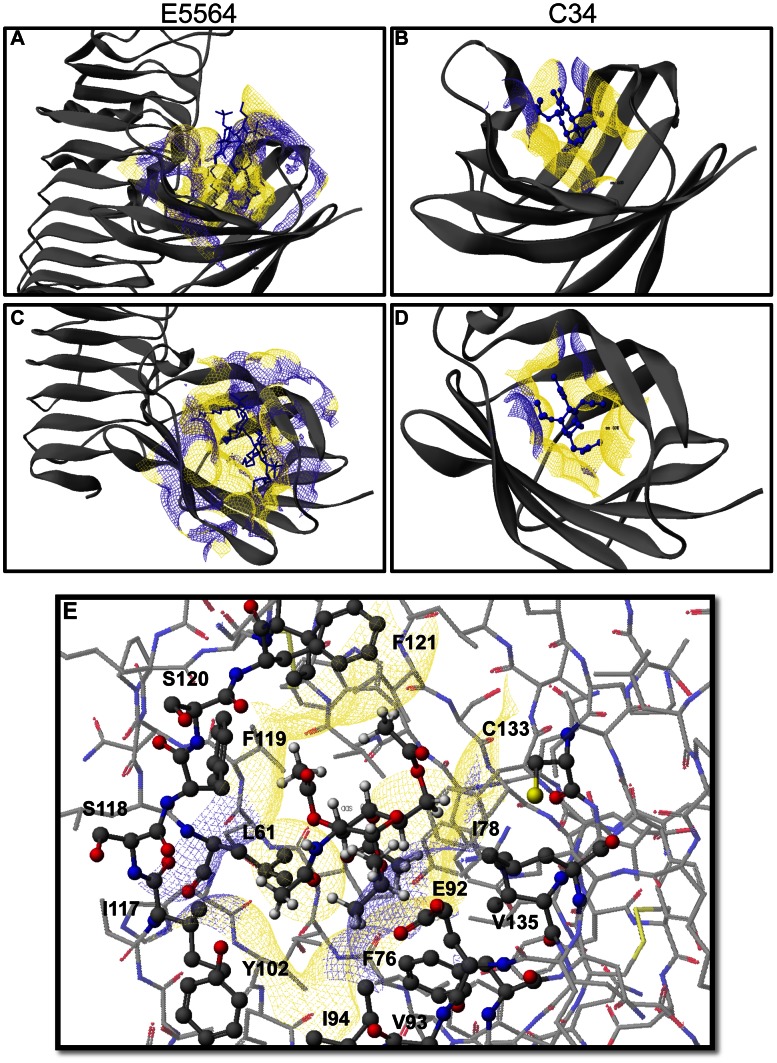
Figure 2. Molecular interactions of C34 with the TLR4-MD2 complex.
X-ray structure of E5564 (A and C) and docking model of C34 (B and D) with the TLR4-MD2 complex, illustrating the interaction of E5563 and C34, respectively, with the hydrophobic groove of MD-2. Panel E displays the amino acid residues on hMD2 within a 5 Å contact radius of C34. See Results for additional details.
Figure 3
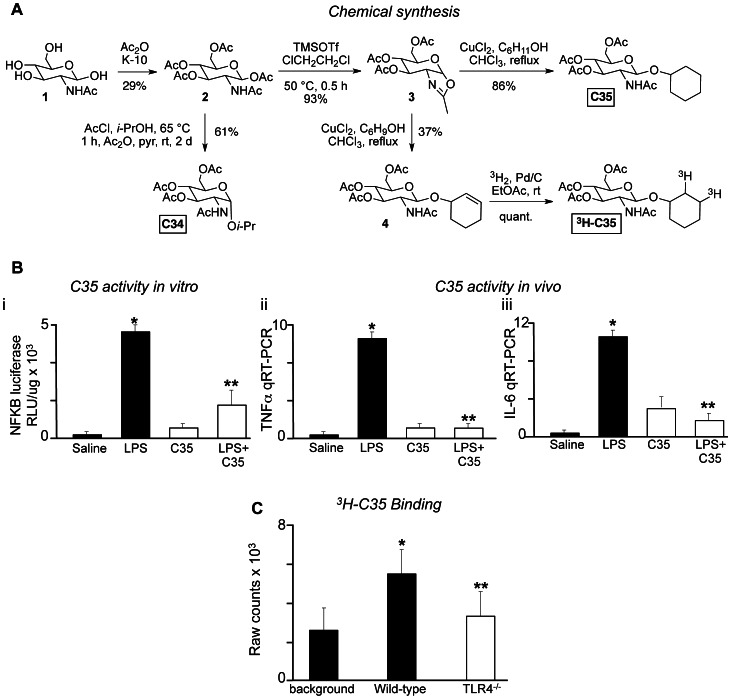
Figure 3. The C34 analog C35 inhibits TLR4 via direct binding.
A: Synthesis of C34, its β-anomeric cyclohexyl analog C35 as well as the corresponding tritiated derivative (3H-C35). B: i: Luciferase activity in NFκB-luciferase-transduced RAW 264.7 macrophages exposed to saline, LPS (10 ng/ml), C35 (100 uM) or LPS 30 minutes after treatment with C35 as indicated. ii–iii: qRT-PCR showing the expression of TNFα (ii) and IL-6 (iii) in the small intestinal mucosa of mice that were injected with saline, LPS (3 mg/kg), C35 (1 mg/kg) or LPS 30 minutes after treatment with C35. In panels i–iii, *p<0.05 LPS vs saline treated mice or cells; **p<0.05 LPS vs LPS+C35 vs treated mice or cells. Representative of 3 separate experiments with at least 3 mice per group. Data are mean±SEM. C: Raw radiation counts×103 from macrophages obtained from either wild-type or TLR4−/− mice that had been treated with 50 µCi of 3H-C35, as described in Methods. The background emission is shown. Data are mean±SEM from 3 individual experiments. *p<0.05 wild-type vs background; **p<0.05 TLR4−/− versus wild-type.
Figure 4
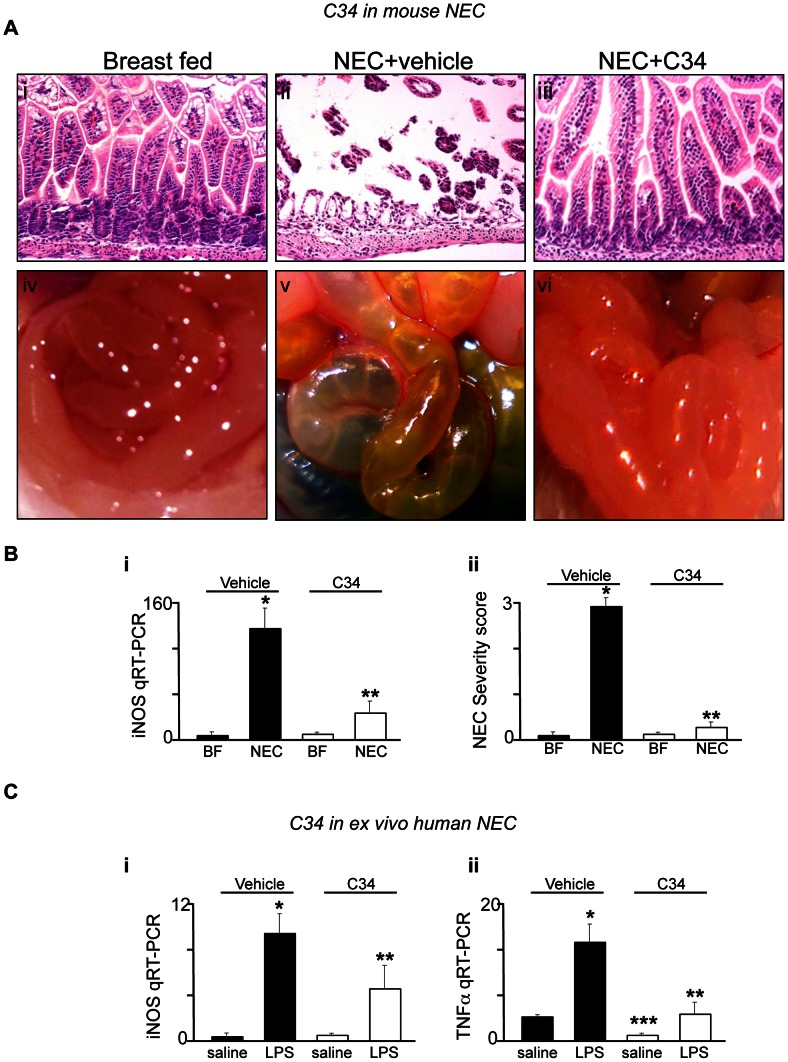
Figure 4. C34 attenuates intestinal inflammation in mouse and human NEC.
A. Representative photomicrographs (i–iii) and gross images (iv–vi) of the ileum from neonatal mice that were either breast fed (i, iv), induced to develop NEC along with vehicle (ii, v), or induced to develop NEC in the presence of C34 (1 mg/kg daily) as described in Methods. B: qRT-PCR showing the expression of iNOS in the intestinal mucosa (i) and NEC severity score (ii) of newborn mice that were either breast fed (“BF”) or induced to develop NEC in the absence (black bars) or presence (white bars) of C34 (1 mg/kg/day). Shown are mean±SEM. *p<0.05 vehicle NEC vs breast fed; **p<0.05 NEC+34 vs NEC+vehicle. Representative of 5 separate experiments with over 5 neonatal mice per group. C: qRT-PCR showing expression of iNOS (i) and TNFα (ii) in the resected ileal tissue from neonates with NEC that was subsequently treated with saline or LPS in the presence of vehicle or C34 for 3 hours. Shown is mean±SEM from 3 separate specimens; *p<0.05 LPS vs saline; ***p<0.05 LPS+vehicle vs C34+ saline; **p<0.05 LPS+vehicle versus LPS+C34. The y axes in panels B and C indicate the fold increase of the indicated gene relative to the housekeeping gene GAPDH.

References

    1. Bortoluci KR, Medzhitov R (2010) Control of infection by pyroptosis and autophagy: role of TLR and NLR. Cell Mol Life Sci 67: 1643–1651. - PMC - PubMed
    1. Medzhitov R, Schneider DS, Soares MP (2012) Disease tolerance as a defense strategy. Science 335: 936–941. - PMC - PubMed
    1. Sodhi CP, Neal MD, Siggers R, Sho S, Ma C, et al.. (2012) Intestinal epithelial Toll-like receptor 4 regulates goblet cell development and is required for necrotizing enterocolitis in mice. Gastroenterology 143: 708–718 e701–705. - PMC - PubMed
    1. Souza-Fonseca-Guimaraes F, Parlato M, Philippart F, Misset B, Cavaillon JM, et al. (2012) Toll-like receptors expression and interferon-gamma production by NK cells in human sepsis. Crit Care 16: R206. - PMC - PubMed
    1. Yuan FF, Marks K, Wong M, Watson S, de Leon E, et al. (2008) Clinical relevance of TLR2, TLR4, CD14 and FcgammaRIIA gene polymorphisms in Streptococcus pneumoniae infection. Immunol Cell Biol 86: 268–270. - PubMed

Publication types

MeSH terms