


A new-generation continuous glucose monitoring system: improved accuracy and reliability compared with a previous-generation system
- PMID: 23777402
- PMCID: PMC3781114
- DOI: 10.1089/dia.2013.0077
A new-generation continuous glucose monitoring system: improved accuracy and reliability compared with a previous-generation system
Abstract
Background: Use of continuous glucose monitoring (CGM) systems can improve glycemic control, but widespread adoption of CGM utilization has been limited, in part because of real and perceived problems with accuracy and reliability. This study compared accuracy and performance metrics for a new-generation CGM system with those of a previous-generation device.
Subjects and methods: Subjects were enrolled in a 7-day, open-label, multicenter pivotal study. Sensor readings were compared with venous YSI measurements (blood glucose analyzer from YSI Inc., Yellow Springs, OH) every 15 min (±5 min) during in-clinic visits. The aggregate and individual sensor accuracy and reliability of a new CGM system, the Dexcom(®) (San Diego, CA) G4™ PLATINUM (DG4P), were compared with those of the previous CGM system, the Dexcom SEVEN(®) PLUS (DSP).
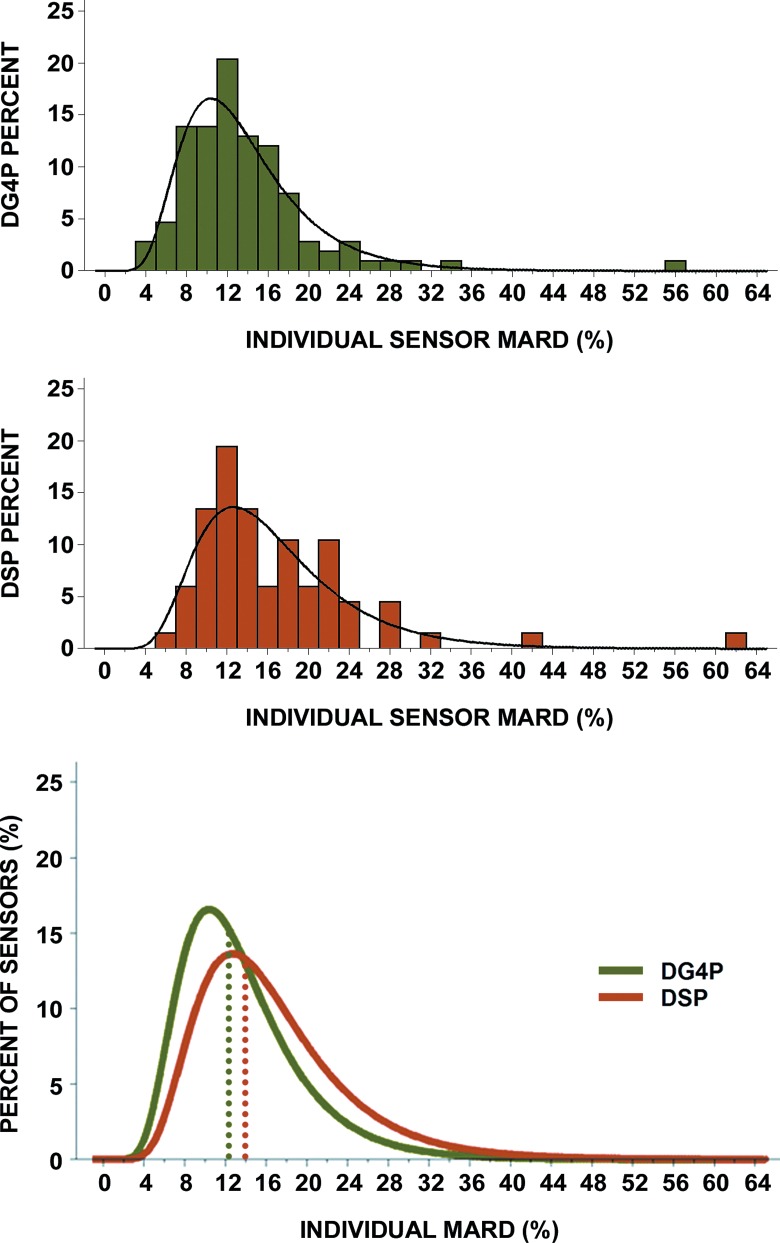
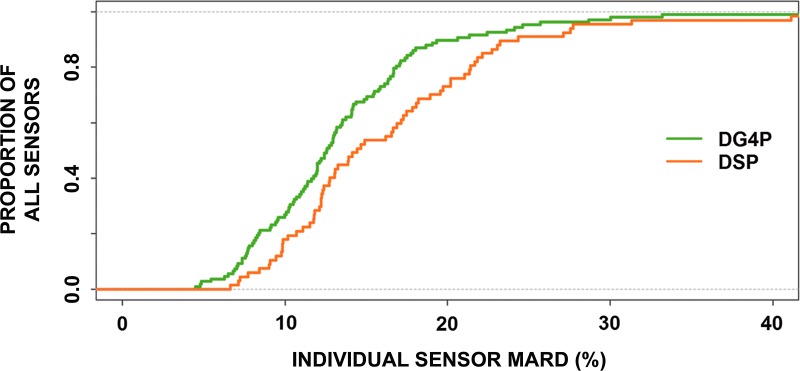
Results: Both study design and subject characteristics were similar. The aggregate mean absolute relative difference (MARD) for DG4P was 13% compared with 16% for DSP (P<0.0001), and 82% of DG4P readings were within ± 20 mg/dL (for YSI ≤ 80 mg/dL) or 20% of YSI values (for YSI >80 mg/dL) compared with 76% for DSP (P<0.001). Ninety percent of the DG4P sensors had an individual MARD ≤ 20% compared with only 76% of DSP sensors (P=0.015). Half of DG4P sensors had a MARD less than 12.5% compared with 14% for the DSP sensors (P=0.028). The mean absolute difference for biochemical hypoglycemia (YSI <70 mg/dL) for DG4P was 11 mg/dL compared with 16 mg/dL for DSP (P<0.001).
Conclusions: The performance of DG4P was significantly improved compared with that of DSP, which may increase routine clinical use of CGM and improve patient outcomes.
Figures
References
-
- Phillip M. Battelino T. Rodriguez H. Danne T. Kaufman F. Use of insulin pump therapy in the pediatric age-group: consensus statement from the European Society for Paediatric Endocrinology, the Lawson Wilkins Pediatric Endocrine Society, and the International Society for Pediatric and Adolescent Diabetes, endorsed by the American Diabetes Association and the European Association for the Study of Diabetes. Diabetes Care. 2007;30:1653–1662. - PubMed
-
- Blevins TC. Bode BW. Garg SK. Grunberger G. Hirsch IB. Jovanovic L. Nardacci E. Orzeck EA. Roberts VL. Tamborlane WV. Rothermel C. Statement by the American Association of Clinical Endocrinologists Consensus Panel on Continuous Glucose Monitoring. Endocr Pract. 2010;16:730–745. - PubMed
-
- Klonoff DC. Buckingham B. Christiansen JS. Montori VM. Tamborlane WV. Vigersky RA. Wolpert H. Continuous glucose monitoring: an Endocrine Society clinical practice guideline. J Clin Endocrinol Metab. 2011;96:2968–2979. - PubMed
-
- The Juvenile Diabetes Research Foundation Continuous Glucose Monitoring Study Group. Continuous glucose monitoring and intensive treatment of type 1 diabetes. N Engl J Med. 2008;359:1464–1476. - PubMed
Publication types
MeSH terms
LinkOut - more resources
Full Text Sources
Other Literature Sources
Medical
Miscellaneous
