


Modeling the mechanics of cancer: effect of changes in cellular and extra-cellular mechanical properties
- PMID: 23781492
- PMCID: PMC3678107
- DOI: 10.3389/fonc.2013.00145
Modeling the mechanics of cancer: effect of changes in cellular and extra-cellular mechanical properties
Abstract
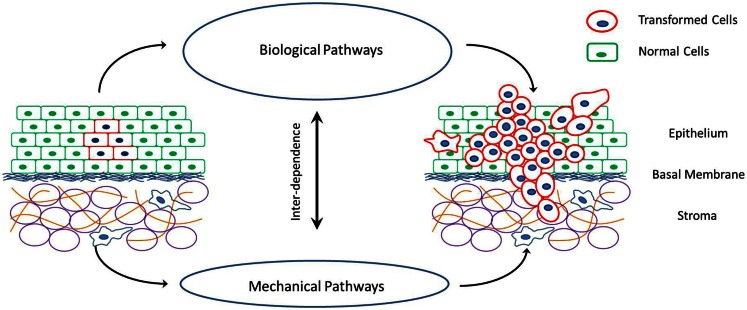
Malignant transformation, though primarily driven by genetic mutations in cells, is also accompanied by specific changes in cellular and extra-cellular mechanical properties such as stiffness and adhesivity. As the transformed cells grow into tumors, they interact with their surroundings via physical contacts and the application of forces. These forces can lead to changes in the mechanical regulation of cell fate based on the mechanical properties of the cells and their surrounding environment. A comprehensive understanding of cancer progression requires the study of how specific changes in mechanical properties influences collective cell behavior during tumor growth and metastasis. Here we review some key results from computational models describing the effect of changes in cellular and extra-cellular mechanical properties and identify mechanistic pathways for cancer progression that can be targeted for the prediction, treatment, and prevention of cancer.
Keywords: cancer modeling; cell-material interactions; cell–cell interaction; mechanical forces; review.
Figures
References
-
- Alini M., Losa G. A. (1991). Partial characterization of proteoglycans isolated from neoplastic and nonneoplastic human breast tissues. Cancer Res. 51, 1443–1447 - PubMed
Grants and funding
LinkOut - more resources
Full Text Sources
Other Literature Sources
Research Materials
