


Potential for plant growth promotion of rhizobacteria associated with Salicornia growing in Tunisian hypersaline soils
- PMID: 23781499
- PMCID: PMC3679824
- DOI: 10.1155/2013/248078
Potential for plant growth promotion of rhizobacteria associated with Salicornia growing in Tunisian hypersaline soils
Abstract
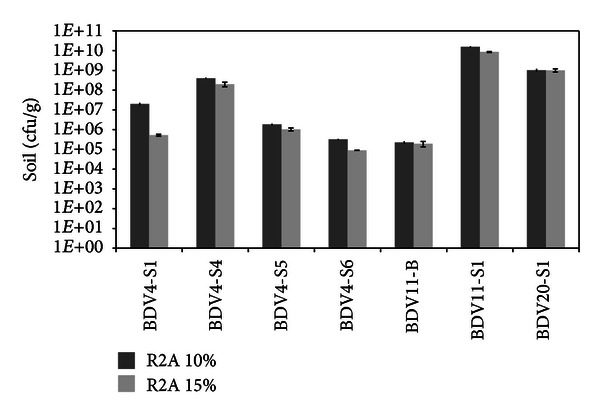
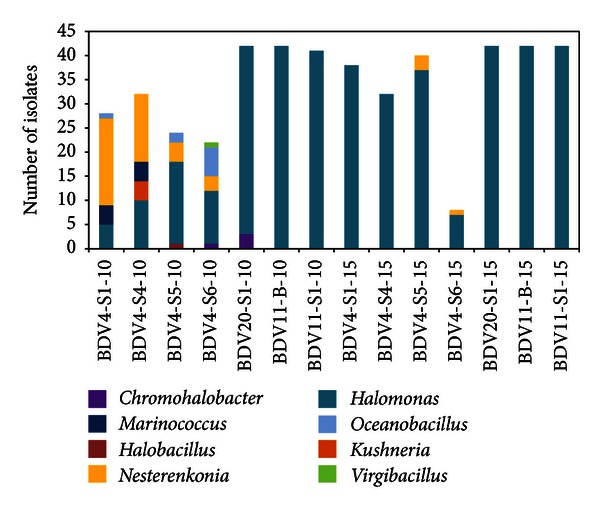
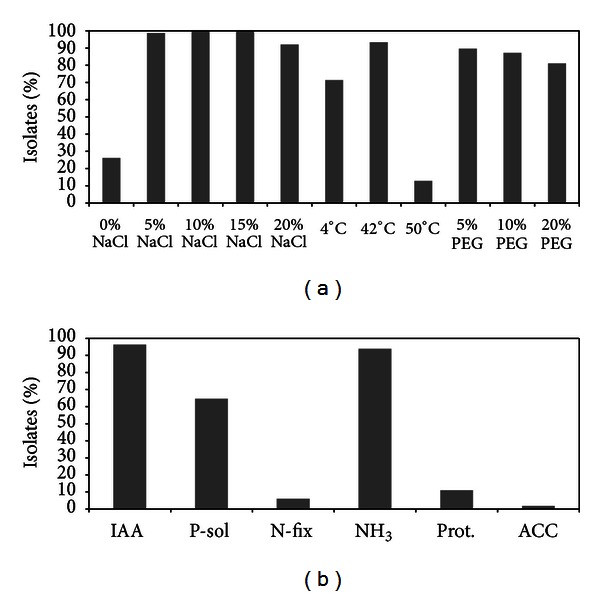
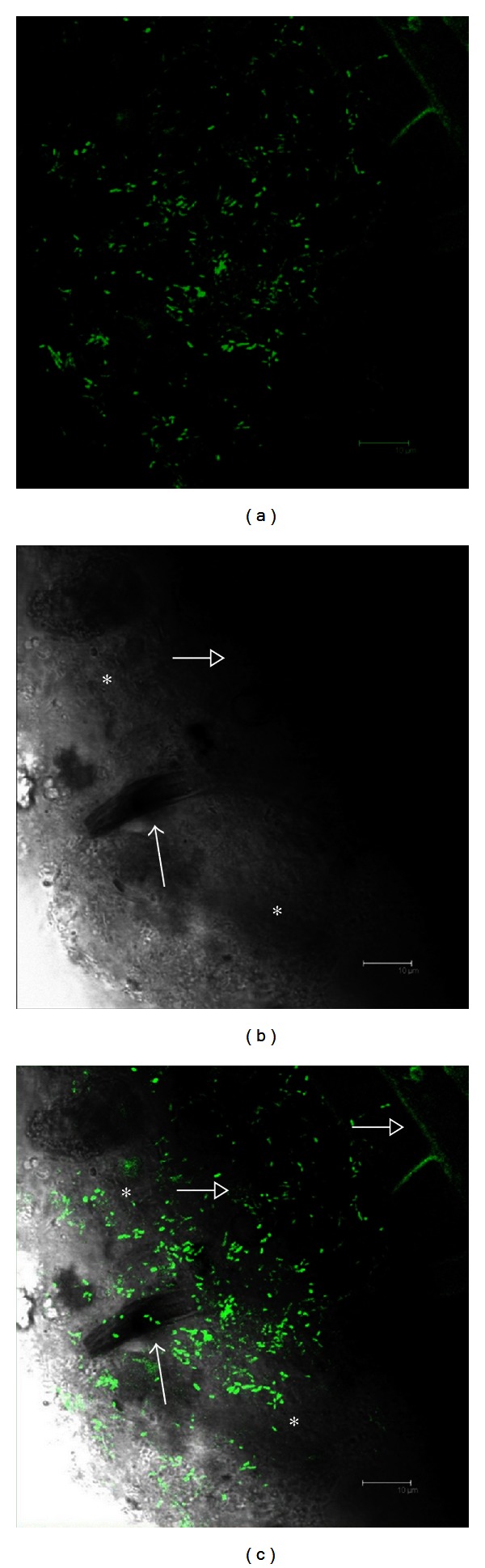
Soil salinity and drought are among the environmental stresses that most severely affect plant growth and production around the world. In this study the rhizospheres of Salicornia plants and bulk soils were collected from Sebkhet and Chott hypersaline ecosystems in Tunisia. Depiction of bacterial microbiome composition by Denaturing Gradient Gel Electrophoresis unveiled the occurrence of a high bacterial diversity associated with Salicornia root system. A large collection of 475 halophilic and halotolerant bacteria was established from Salicornia rhizosphere and the surrounding bulk soil, and the bacteria were characterized for the resistance to temperature, osmotic and saline stresses, and plant growth promotion (PGP) features. Twenty Halomonas strains showed resistance to a wide set of abiotic stresses and were able to perform different PGP activities in vitro at 5% NaCl, including ammonia and indole-3-acetic acid production, phosphate solubilisation, and potential nitrogen fixation. By using a gfp-labelled strain it was possible to demonstrate that Halomonas is capable of successfully colonising Salicornia roots in the laboratory conditions. Our results indicated that the culturable halophilic/halotolerant bacteria inhabiting salty and arid ecosystems have a potential to contribute to promoting plant growth under the harsh salinity and drought conditions. These halophilic/halotolerant strains could be exploited in biofertilizer formulates to sustain crop production in degraded and arid lands.
Figures

References
-
- Balloi A, Rolli E, Marasco R, et al. The role of microorganisms in bioremediation and phytoremediation of polluted and stressed soils. Agrochimica. 2010;54(6):353–369.
-
- Egamberdieva D, Kamilova F, Validov S, Gafurova L, Kucharova Z, Lugtenberg B. High incidence of plant growth-stimulating bacteria associated with the rhizosphere of wheat grown on salinated soil in Uzbekistan. Environmental Microbiology. 2008;10(1):1–9. - PubMed
-
- Hayat R, Ali S, Amara U, Khalid R, Ahmed I. Soil beneficial bacteria and their role in plant growth promotion: a review. Annals of Microbiology. 2010;60(4):579–598.
Publication types
MeSH terms
Substances
Associated data
- Actions
- Actions
- Actions
- Actions
- Actions
- Actions
- Actions
- Actions
- Actions
- Actions
- Actions
- Actions
- Actions
- Actions
- Actions
- Actions
- Actions
- Actions
- Actions
- Actions
- Actions
- Actions
- Actions
- Actions
- Actions
- Actions
- Actions
- Actions
- Actions
- Actions
- Actions
- Actions
- Actions
- Actions
- Actions
- Actions
- Actions
- Actions
- Actions
- Actions
- Actions
- Actions
- Actions
- Actions
- Actions
- Actions
- Actions
- Actions
- Actions
- Actions
- Actions
- Actions
- Actions
- Actions
- Actions
- Actions
- Actions
- Actions
- Actions
- Actions
- Actions
- Actions
- Actions
- Actions
- Actions
- Actions
- Actions
- Actions
- Actions
- Actions
- Actions
- Actions
- Actions
- Actions
- Actions
- Actions
- Actions
- Actions
- Actions
- Actions
- Actions
- Actions
- Actions
- Actions
- Actions
- Actions
- Actions
- Actions
- Actions
- Actions
- Actions
- Actions
- Actions
- Actions
- Actions
- Actions
- Actions
- Actions
- Actions
- Actions
- Actions
- Actions
- Actions
- Actions
- Actions
- Actions
- Actions
- Actions
- Actions
- Actions
- Actions
- Actions
- Actions
- Actions
- Actions
- Actions
- Actions
- Actions
- Actions
- Actions
- Actions
- Actions
- Actions
- Actions
- Actions
- Actions
- Actions
- Actions
- Actions
- Actions
- Actions
- Actions
- Actions
- Actions
- Actions
- Actions
- Actions
- Actions
- Actions
- Actions
- Actions
- Actions
- Actions
- Actions
- Actions
- Actions
- Actions
- Actions
- Actions
- Actions
- Actions
- Actions
- Actions
- Actions
- Actions
- Actions
- Actions
- Actions
- Actions
- Actions
- Actions
- Actions
- Actions
- Actions
- Actions
- Actions
- Actions
- Actions
- Actions
- Actions
- Actions
- Actions
- Actions
- Actions
- Actions
- Actions
- Actions
- Actions
- Actions
- Actions
- Actions
- Actions
- Actions
- Actions
- Actions
- Actions
- Actions
- Actions
- Actions
- Actions
- Actions
- Actions
- Actions
- Actions
- Actions
- Actions
- Actions
- Actions
- Actions
- Actions
- Actions
- Actions
- Actions
- Actions
- Actions
- Actions
- Actions
- Actions
- Actions
- Actions
- Actions
- Actions
- Actions
- Actions
LinkOut - more resources
Full Text Sources
Other Literature Sources
Miscellaneous
