


Familial transmission of human T-cell lymphotrophic virus: silent dissemination of an emerging but neglected infection
- PMID: 23785534
- PMCID: PMC3681619
- DOI: 10.1371/journal.pntd.0002272
Familial transmission of human T-cell lymphotrophic virus: silent dissemination of an emerging but neglected infection
Abstract
Background: HTLV-1 is a retrovirus that causes lymphoproliferative disorders and inflammatory and degenerative diseases of the central nervous system in humans. The prevalence of this infection is high in parts of Brazil and there is a general lack of public health care programs. As a consequence, official data on the transmission routes of this virus are scarce.
Objective: To demonstrate familial aggregation of HTLV infections in the metropolitan region of Belém, Pará, Brazil.
Method: A cross-sectional study involving 85 HTLV carriers treated at an outpatient clinic and other family members. The subjects were tested by ELISA and molecular methods between February 2007 and December 2010.
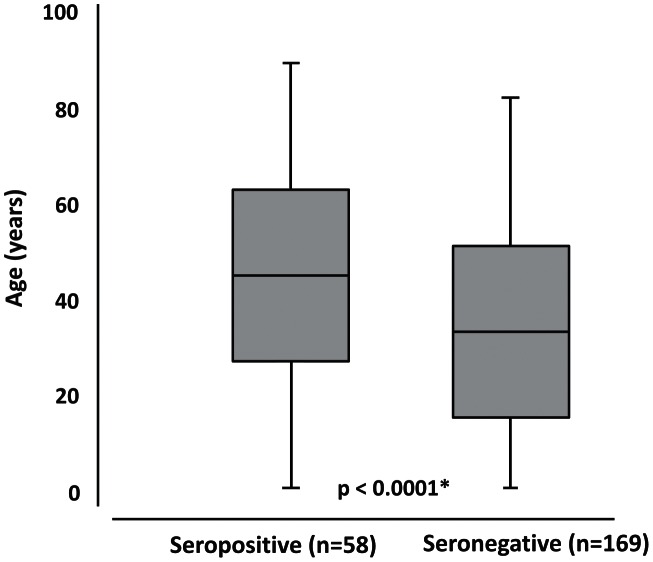
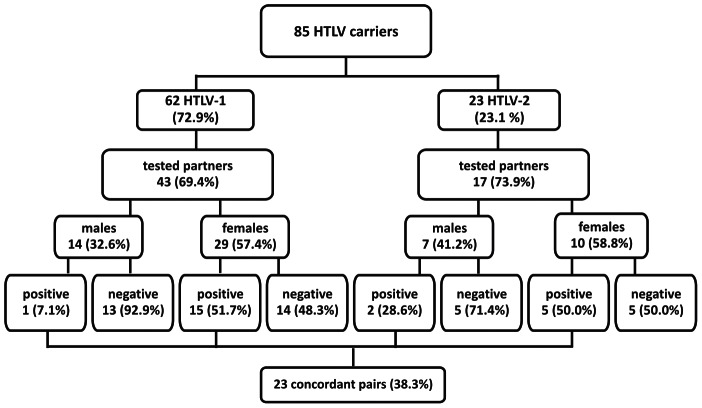
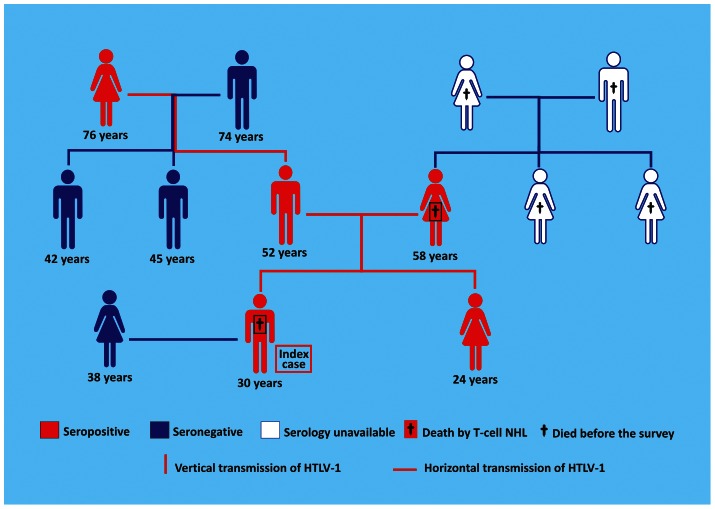
Results: The prevalence of HTLV was 43.5% (37/85) for families and 25.6% (58/227) for the family members tested (95% CI: 1.33 to 3.79, P = 0.0033). Sexual and vertical transmission was likely in 38.3% (23/60) and 20.4% (29/142) of pairs, respectively (95% CI: 1.25 to 4.69, P = 0.0130). Positivity was 51.3% (20/39) and 14.3% (3/21) in wives and husbands, respectively (95% CI: 0.04 to 0.63, P = 0.0057). By age group, seropositivity was 8.0% (7/88) in subjects <30 years of age and 36.7% (51/139) in those of over 30 years (95% CI: 0.06 to 0.34, P<0.0001). Positivity was 24.1% (7/29) in the children of patients infected with HTLV-2, as against only 5.8% (4/69) of those infected with HTLV-1 (95% CI: 0.05 to 0.72, P = 0.0143).
Conclusion: The results of this study indicate the existence of familial aggregations of HTLV characterized by a higher prevalence of infection among wives and subjects older than 30 years. Horizontal transmission between spouses was more frequent than vertical transmission. The higher rate of infection in children of HTLV-2 carriers suggests an increase in the prevalence of this virus type in the metropolitan region of Belém.
Conflict of interest statement
The authors have declared that no competing interests exist.
Figures
References
-
- Barmak K, Harhaj E, Grant C, Alefantis T, Wigdahl B (2003) Human T cell leukemia virus type I-induced disease: pathways to cancer and neurodegeneration. Virology 308: 1–12. - PubMed
-
- Hall WW, Ishak R, Zhu SW, Novoa P, Eiraku N, et al. (1996) Human T lymphotropic virus type II (HTLV-II): epidemiology, molecular properties, and clinical features of infection. J Acquir Immune Defic Syndr Hum Retrovirol 13: 204–214. - PubMed
Publication types
MeSH terms
LinkOut - more resources
Full Text Sources
Other Literature Sources
