. 2013 Sep;74(3):252-8.
doi: 10.1038/pr.2013.106. Epub 2013 Jun 20.

Postweaning exposure to a high-fat diet is associated with alterations to the hepatic histone code in Japanese macaques

Affiliations

Postweaning exposure to a high-fat diet is associated with alterations to the hepatic histone code in Japanese macaques

Melissa A Suter et al. Pediatr Res. 2013 Sep.

Abstract

Background: Expression of circadian gene, Npas2, is altered in fetal life with maternal high-fat (HF) diet exposure by virtue of alterations in the fetal histone code. We postulated that these disruptions would persist postnatally.

Methods: Pregnant macaques were fed a control (CTR) or HF diet and delivered at term. When offspring were weaned, they were placed on either CTR or HF diet for a period of 5 mo to yield four exposure models (in utero diet/postweaning diet: CTR/CTR n = 5; CTR/HF n = 4; HF/CTR n = 4; and HF/HF n = 5). Liver specimens were obtained at necropsy at 1 y of age.

Results: Hepatic trimethylation of lysine 4 of histone H3 is decreased (CTR/HF 0.87-fold, P = 0.038; HF/CTR 0.84-fold, P = 0.038), whereas hepatic methyltransferase activity increased by virtue of diet exposure (HF/HF 1.3-fold, P = 0.019). Using chromatin immunoprecipitation to determine Npas2 promoter occupancy, we found alterations of both repressive and permissive histone modifications specifically with postweaning HF diet exposure.

Conclusion: We found that altered Npas2 expression corresponds with a change in the histone code within the Npas2 promoter.


Conflict of interest statement

The authors have neither conflicts of interest nor financial disclosures.

Figures
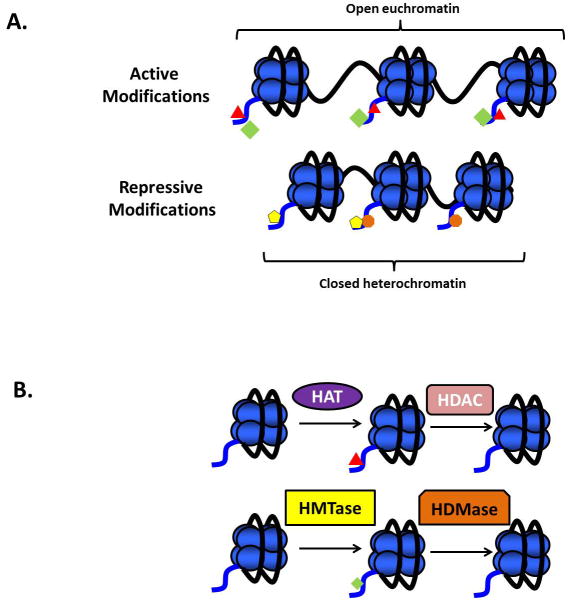
Figure 1
Figure 1. Histone modifications are associated with different chromatin states
(A) The histone modifications H3K14ac and H3K4me3 are both associated with actively transcribed, open euchromatin. Both H3K9me3 and H3K27me3 are associated with transcriptionally repressed, closed heterochromatin. Green diamond = H3K4me3; red triangle = H3K14ac; yellow pentagon = H3K9me3; orange octagon = H3K27me3. (B) Addition of an acetyl group to the N-terminal histone domain is achieved through the enzymatic activity of histone acetyltransferases (HATs). These modifications can be removed by histone deacetylases (HDACs). Similarly, the enzymatic activity of histone methyltransferases (HMTases) can add mono-, di- or tri-methyl groups to the histone proteins, and these modifications can be removed by histone demethylases (HDMases).
Figure 2
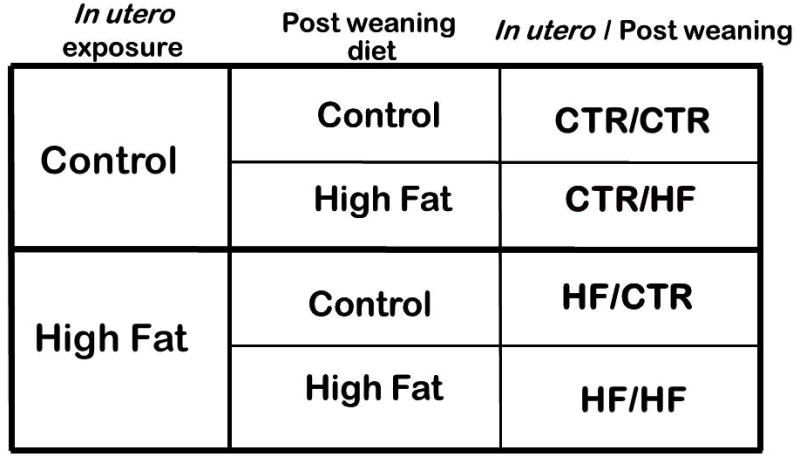
Figure 2. Model of in utero and postweaning diet exposure in Japanese macaques
Animals were exposed to either a control or high fat diet in utero. Animals were delivered at term, and were placed on one of two postweaning diets, either control or high fat. This model yielded four cohorts of diet exposure, depending on the combination of in utero and postweaning diet exposures; designated as in utero/ postweaning.
Figure 3
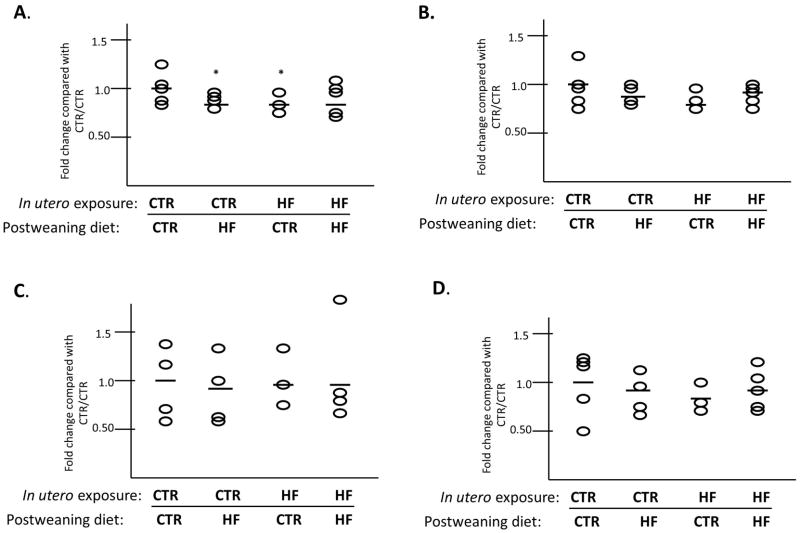
Figure 3. H3K4me3 methylation in the juvenile liver is altered by virtue of diet exposure
Using Western blotting of extracted hepatic histones, we found that H3K4me3 (A) is decreased in two exposure models (CTR/HF (p=0.038) and HF/CTR (p=0.038)). Levels of H3K14ac (B), H3K9me3 (C) and H3K27me3 (D) do not change in any of the groups tested. Horizontal bars indicate the fold-change compared to CTR/CTR for each group analyzed.
Figure 4
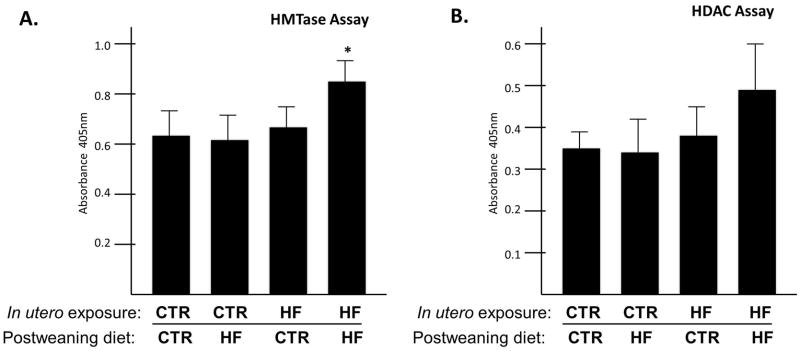
Figure 4. Juvenile hepatic histone methyltransferase activity is increased in HF/HF exposed animals
Using a commercially available kit, we measured histone H3 K4 trimethylase activity. (A) We found that HMTase activity is increased in the HF/HF exposed group (p=0.019). (B) HDAC activity in juvenile animals did not change by virtue of diet exposure.
Figure 5
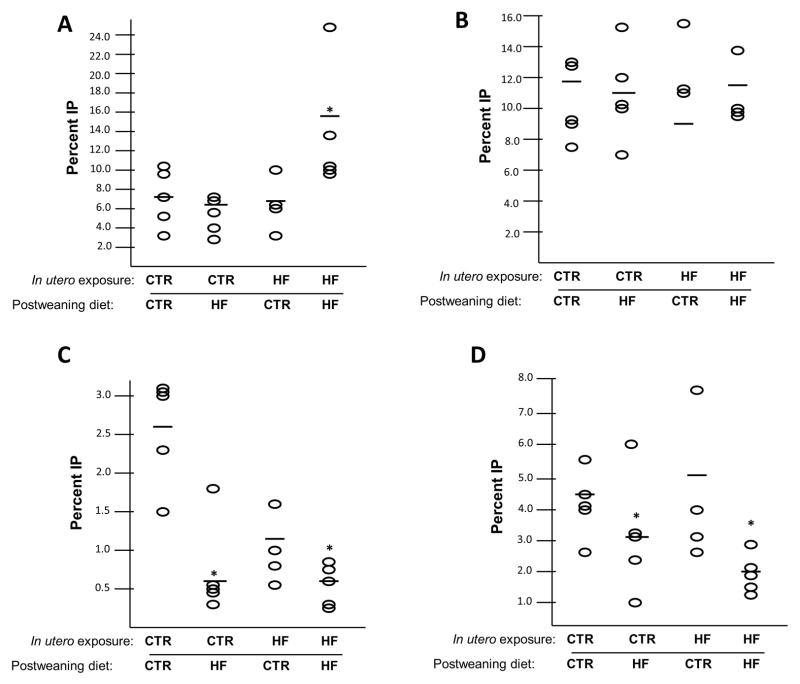
Figure 5. The RORE of Npas2 is depleted for repressive modifications with postweaning exposure to a HF diet
Using ChIP for various histone modifications, we interrogated the occupancy of the RORE of Npas2 in juvenile liver. (A) We found that H3K4me3 is enriched in the RORE of the HF/HF exposed animals (p=0.016). (B) H3K14ac levels are not altered with any diet condition. H3K9me3 (C) is depleted in CTR/HF (p=0.001) and HF/HF (p<0.01). H3K27me3 (D) is similarly depleted in CTR/HF (p=0.021) and HF/HF (p<0.01). Horizontal bars indicate the fold change for each group compared with CTR/CTR.

References

    1. Gluckman PD, Hanson MA, Cooper C, Thornburg KL. Effect of in utero and early-life conditions on adult health and disease. N Engl J Med. 2008;359:61–73. - PMC - PubMed
    1. Suter MA, Aagaard-Tillery KM. Environmental influences on epigenetic profiles. Semin Reprod Med. 2009;27:380–90. - PMC - PubMed
    1. Nakayama J, Rice JC, Strahl BD, Allis CD, Grewal SI. Role of histone H3 lysine 9 methylation in epigenetic control of heterochromatin assembly. Science. 2001;292:110–3. - PubMed
    1. Ruthenburg AJ, Allis CD, Wysocka J. Methylation of lysine 4 on histone H3: intricacy of writing and reading a single epigenetic mark. Mol Cell. 2007;25:15–30. - PubMed
    1. Wang Z, Schones DE, Zhao K. Characterization of human epigenomes. Curr Opin Genet Dev. 2009;19:127–34. - PMC - PubMed

Publication types