


Break-induced replication: functions and molecular mechanism
- PMID: 23790415
- PMCID: PMC3915057
- DOI: 10.1016/j.gde.2013.05.007
Break-induced replication: functions and molecular mechanism
Abstract
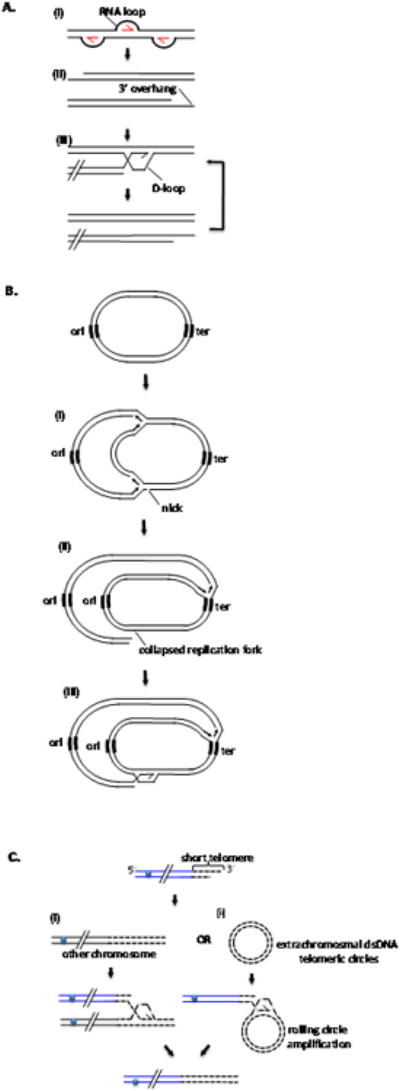
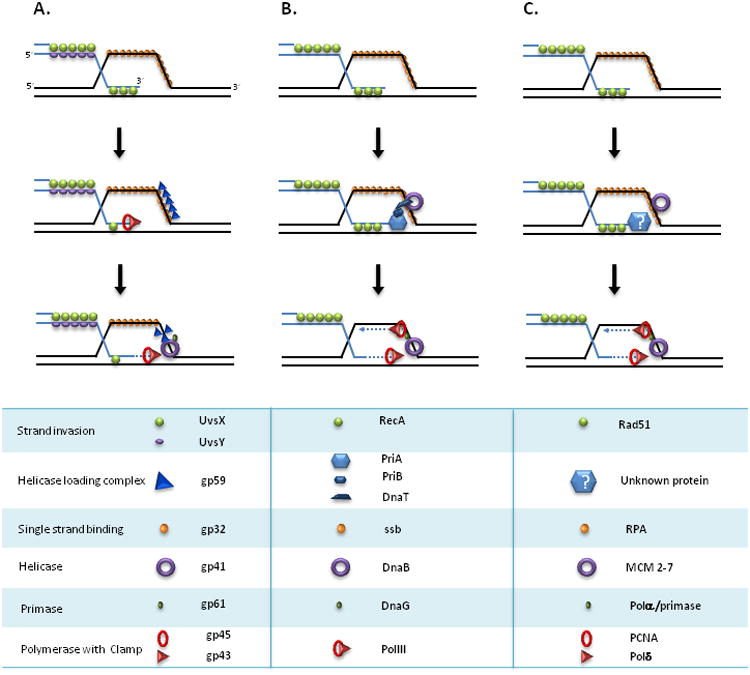
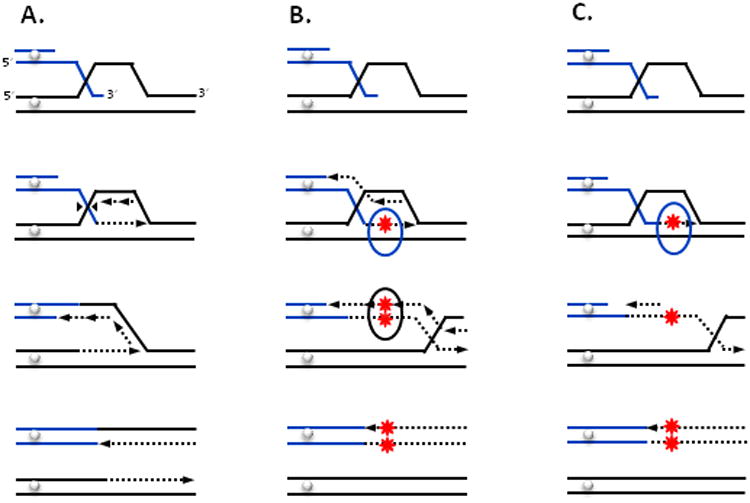
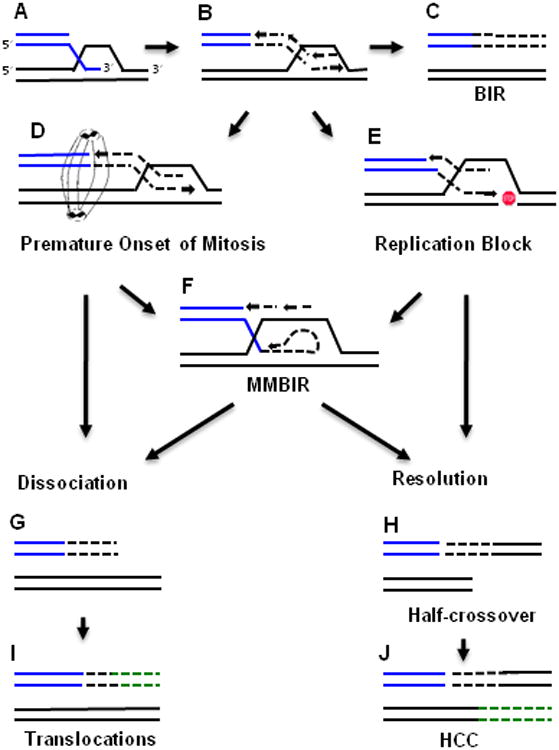
Break-induced replication (BIR) is the pathway of homologous recombination (HR) conserved from phages to eukaryotes that serves to repair DNA breaks that have only one end. BIR contributes to the repair of broken replication forks and allows telomere lengthening in the absence of telomerase. Nonallelic BIR may lead to translocations and other chromosomal rearrangements. In addition, BIR initiated at sites of microhomology can generate copy number variations (CNVs) and complex chromosomal changes. The level of mutagenesis associated with DNA synthesis in BIR is significantly higher than during normal replication. These features make BIR a likely pathway to promote bursts of genetic changes that fuel cancer progression and evolution.
Copyright © 2013 Elsevier Ltd. All rights reserved.
Figures
References
-
- Llorente B, Smith CE, Symington LS. Break-induced replication: what is it and what is it for? Cell Cycle. 2008;7:859–864. - PubMed
-
- McEachern MJ, Haber JE. Break-induced replication and recombinational telomere elongation in yeast. Annu Rev Biochem. 2006;75:111–135. - PubMed
-
- Marians KJ. PriA-directed replication fork restart in Escherichia coli. Trends in biochemical sciences. 2000;25:185–189. - PubMed
Publication types
MeSH terms
Grants and funding
LinkOut - more resources
Full Text Sources
Other Literature Sources
