


Effects of food formulation and thermal processing on flavones in celery and chamomile
- PMID: 23790931
- PMCID: PMC3850025
- DOI: 10.1016/j.foodchem.2013.04.051
Effects of food formulation and thermal processing on flavones in celery and chamomile
Abstract
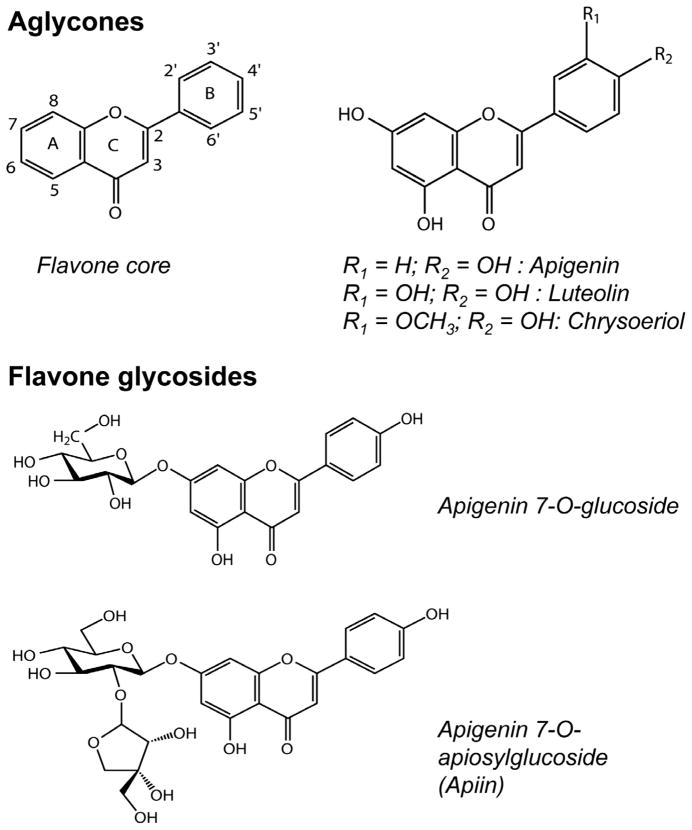
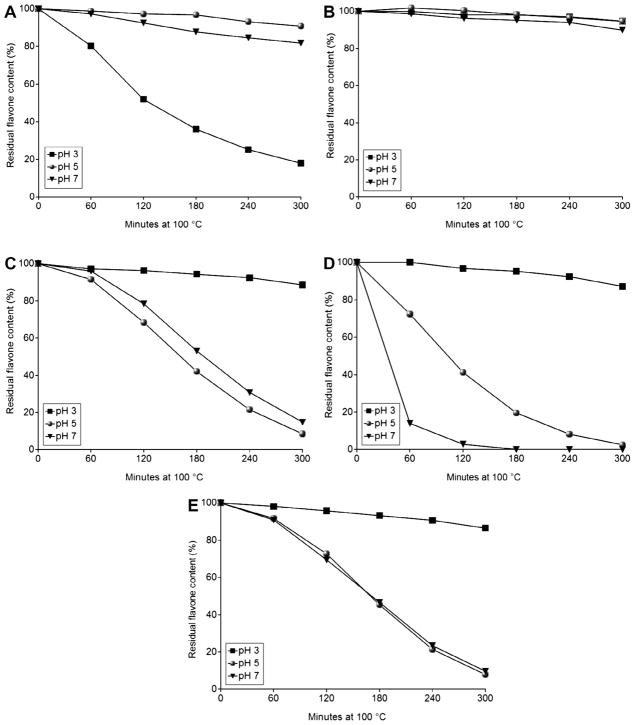
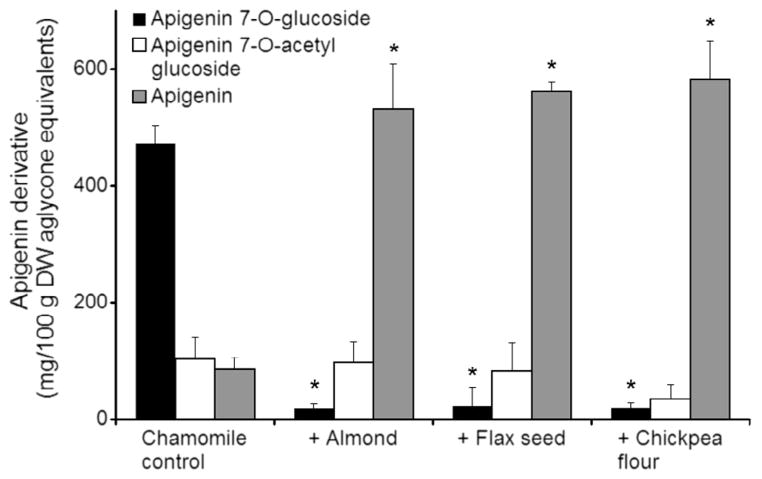
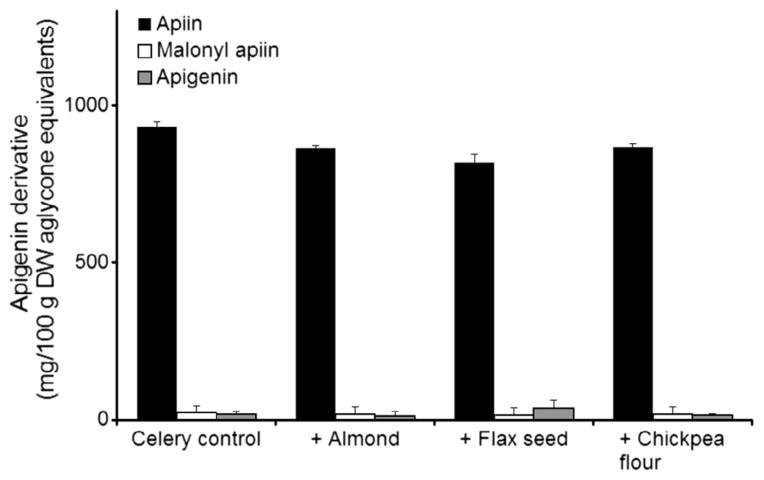
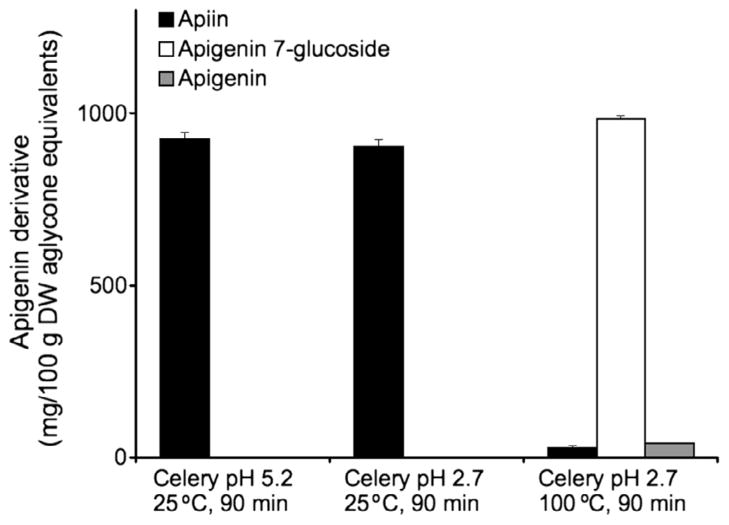
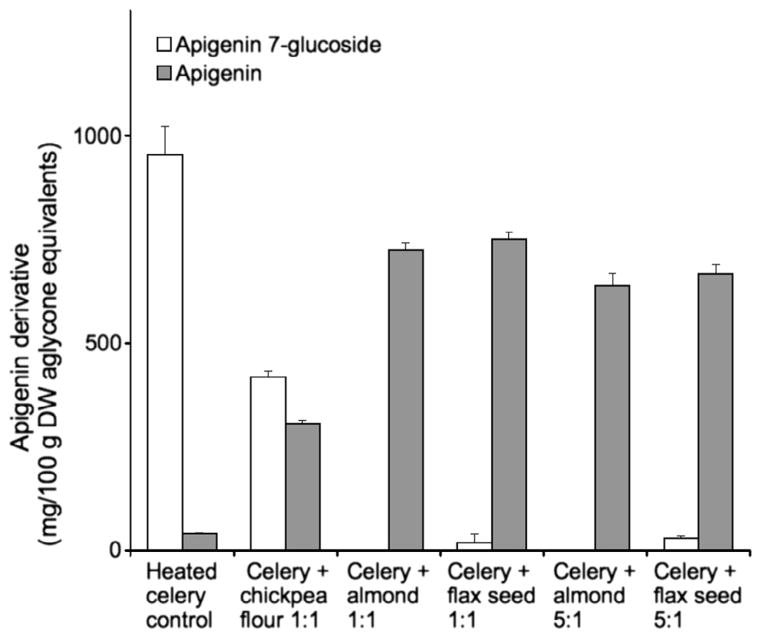
Flavones isolated from celery varied in their stability and susceptibility to deglycosylation during thermal processing at pH 3, 5, or 7. Apigenin 7-O-apiosylglucoside was converted to apigenin 7-O-glucoside when heated at pH 3 and 100°C. Apigenin 7-O-glucoside showed little conversion or degradation at any pH after 5h at 100°C. Apigenin, luteolin, and chrysoeriol were most stable at pH 3 but progressively degraded at pH 5 or 7. Chamomile and celery were used to test the effects of glycosidase-rich foods and thermal processing on the stability of flavone glycosides. Apigenin 7-O-glucoside in chamomile extract was readily converted to apigenin aglycone after combination with almond, flax seed, or chickpea flour. Apigenin 7-O-apiosylglucoside in celery leaves was resistant to conversion by β-glucosidase-rich ingredients, but was converted to apigenin 7-O-glucoside at pH 2.7 when processed at 100°C for 90min and could then be further deglycosylated when mixed with almond or flax seed. Thus, combinations of acid hydrolysis and glycosidase enzymes in almond and flax seed were most effective for developing a flavone-rich, high aglycone food ingredient from celery.
Copyright © 2013 Elsevier Ltd. All rights reserved.
Figures
References
-
- Azzini E, Bugianesi R, Romano F, Di Venere D, Miccadei S, Durazzo A, et al. Absorption and metabolism of bioactive molecules after oral consumption of cooked edible heads of Cynara scolymus L. (cultivar Violetto di Provenza) in human subjects: A pilot study. The British Journal of Nutrition. 2007;97:963–969. - PubMed
-
- Buchner N, Krumbein A, Rohn S, Kroh LW. Effect of thermal processing on the flavonols rutin and quercetin. Rapid Communications in Mass Spectrometry: RCM. 2006;20:3229–3235. - PubMed
-
- Cao J, Zhang Y, Chen W, Zhao X. The relationship between fasting plasma concentrations of selected flavonoids and their ordinary dietary intake. The British Journal of Nutrition. 2010;103:249–255. - PubMed
-
- Cavalcanti RN, Santos DT, Meireles MAA. Non-thermal stabilization mechanisms of anthocyanins in model and food systems – An overview. Food Research International. 2011;44:499–509.
-
- Daravingas G, Cain R. Thermal degradation of black raspberry anthocyanin pigments in model systems. Journal of Food Science. 1968;33:138–142.
Publication types
MeSH terms
Substances
Grants and funding
LinkOut - more resources
Full Text Sources
Other Literature Sources
