


Burden and Determinants of Severe Anemia among HIV-Infected Adults: Results from a Large Urban HIV Program in Tanzania, East Africa
- PMID: 23792708
- PMCID: PMC5523957
- DOI: 10.1177/2325957413488195
Burden and Determinants of Severe Anemia among HIV-Infected Adults: Results from a Large Urban HIV Program in Tanzania, East Africa
Abstract
Background and methods: This cross-sectional study aimed at determining the prevalence and risk factors for severe anemia, severe microcytic anemia, and severe normocytic anemia among HIV-infected individuals aged >15 years. Univariate and multivariate analyses were performed to identify the risk factors for anemia.
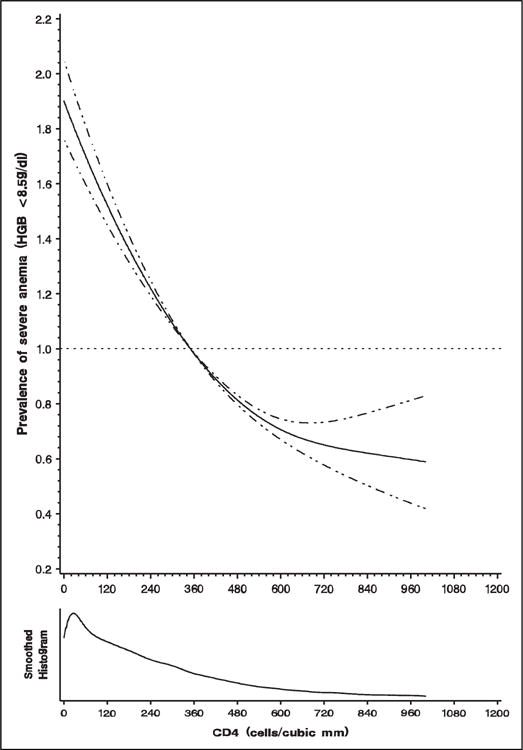
Results: Data from 40 408 patients were analyzed, showing an overall prevalence of 22% for severe anemia. The risk of developing severe anemia increased by 49% among patients with a body mass index of <18.5 kg/m(2), by approximately 2-fold among patients with the World Health Organization (WHO) stage III, and by 3-fold among patients with WHO stage IV illness. Severe normocytic anemia was uniquely increased among patients aged ≥50 years, among those with chronic diarrhea and Kaposi's sarcoma, and those taking cotrimoxazole.
Conclusion: There was a high prevalence of severe anemia among adults infected with HIV. Focused identification of anemia should be based on the hemoglobin and mean corpuscular volume measurements.
Keywords: HIV; adults; burden; determinants; severe anemia.
© The Author(s) 2013.
Conflict of interest statement
The author(s) declared no potential conflicts of interest with respect to the research, authorship, and/or publication of this article.
Figures
References
-
- Fangman JJ, Scadden DT. Anemia in HIV-infected adults: epidemiology, pathogenesis and clinical management. Curr Hematol Rep. 2005;4(2):95–96. - PubMed
-
- O’Brien ME, Kupka R, Msamanga GI, Saathoff E, Hunter DJ, Fawzi WW. Anemia is an independent predictor of mortality and immunological progression of disease among women with HIV in Tanzania. J Acquir Immune Defic Syndr. 2005;40(2):219–220. - PubMed
-
- Volberding PA, Levine AM, Dieterich D, Mildvan D, Mitsuyasu R, Saag M. Anemia in HIV Infection: Clinical Impact and evidence-based management strategies. Clin Infect Dis. 2004;38(10):1454–1457. - PubMed
-
- Sullivan PS, Hanson DL, Chu SY, Jones JL, Ward JW. Epidemiology of anemia in human immunodeficiency virus (HIV)-infected persons: results from the multistate adult and adolescent spectrum of HIV disease surveillance project. Blood. 1998;91(1):301–308. - PubMed
Publication types
MeSH terms
Grants and funding
LinkOut - more resources
Full Text Sources
Other Literature Sources
Medical
