


What can qualitative research do for randomised controlled trials? A systematic mapping review
- PMID: 23794542
- PMCID: PMC3669723
- DOI: 10.1136/bmjopen-2013-002889
What can qualitative research do for randomised controlled trials? A systematic mapping review
Abstract
Objective: To develop an empirically based framework of the aspects of randomised controlled trials addressed by qualitative research.
Design: Systematic mapping review of qualitative research undertaken with randomised controlled trials and published in peer-reviewed journals.
Data sources: MEDLINE, PreMEDLINE, EMBASE, the Cochrane Library, Health Technology Assessment, PsycINFO, CINAHL, British Nursing Index, Social Sciences Citation Index and ASSIA.
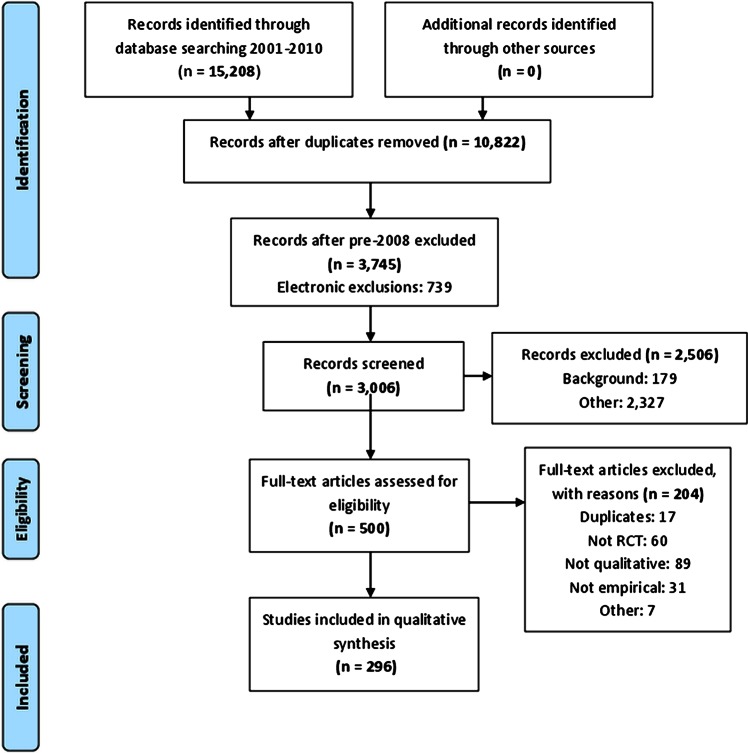
Eligibility criteria: Articles reporting qualitative research undertaken with trials published between 2008 and September 2010; health research, reported in English.
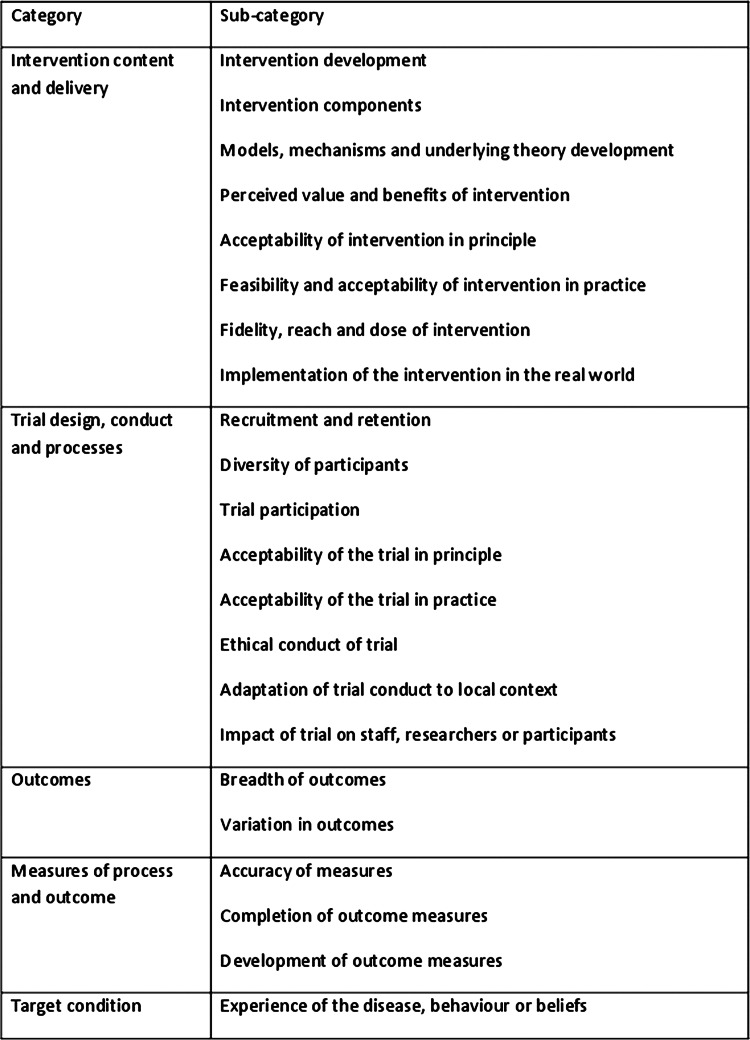
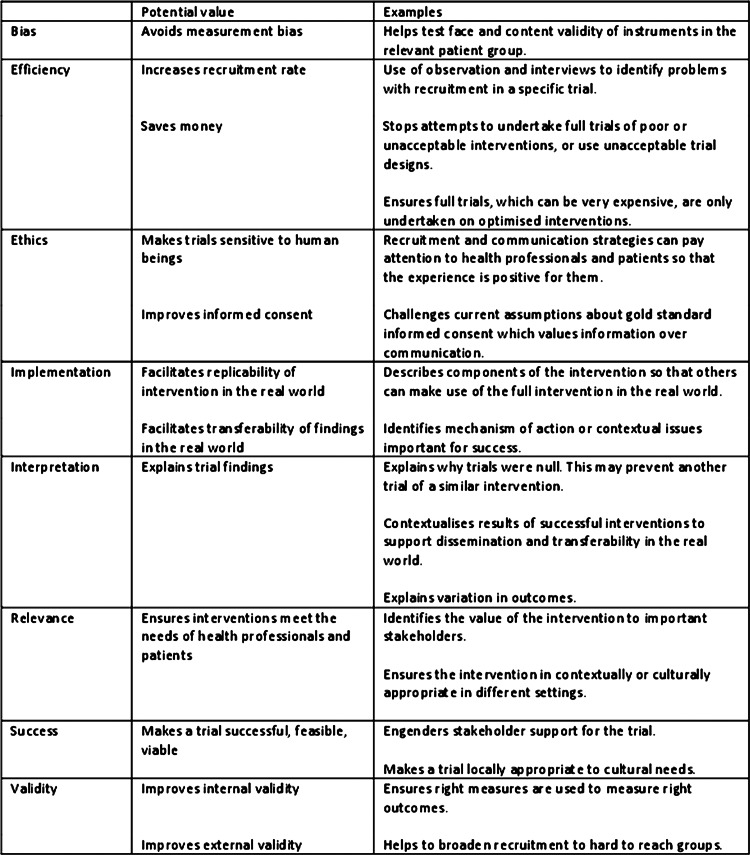
Results: 296 articles met the inclusion criteria. Articles focused on 22 aspects of the trial within five broad categories. Some articles focused on more than one aspect of the trial, totalling 356 examples. The qualitative research focused on the intervention being trialled (71%, 254/356); the design, process and conduct of the trial (15%, 54/356); the outcomes of the trial (1%, 5/356); the measures used in the trial (3%, 10/356); and the target condition for the trial (9%, 33/356). A minority of the qualitative research was undertaken at the pretrial stage (28%, 82/296). The value of the qualitative research to the trial itself was not always made explicit within the articles. The potential value included optimising the intervention and trial conduct, facilitating interpretation of the trial findings, helping trialists to be sensitive to the human beings involved in trials, and saving money by steering researchers towards interventions more likely to be effective in future trials.
Conclusions: A large amount of qualitative research undertaken with specific trials has been published, addressing a wide range of aspects of trials, with the potential to improve the endeavour of generating evidence of effectiveness of health interventions. Researchers can increase the impact of this work on trials by undertaking more of it at the pretrial stage and being explicit within their articles about the learning for trials and evidence-based practice.
Keywords: Clinical trials < THERAPEUTICS; QUALITATIVE RESEARCH; STATISTICS & RESEARCH METHODS.
Figures
References
Grants and funding
LinkOut - more resources
Full Text Sources
Other Literature Sources
Miscellaneous
