


Incorporating direct-to-consumer genomic information into patient care: attitudes and experiences of primary care physicians
- PMID: 23795206
- PMCID: PMC3684987
- DOI: 10.2217/pme.12.80
Incorporating direct-to-consumer genomic information into patient care: attitudes and experiences of primary care physicians
Abstract
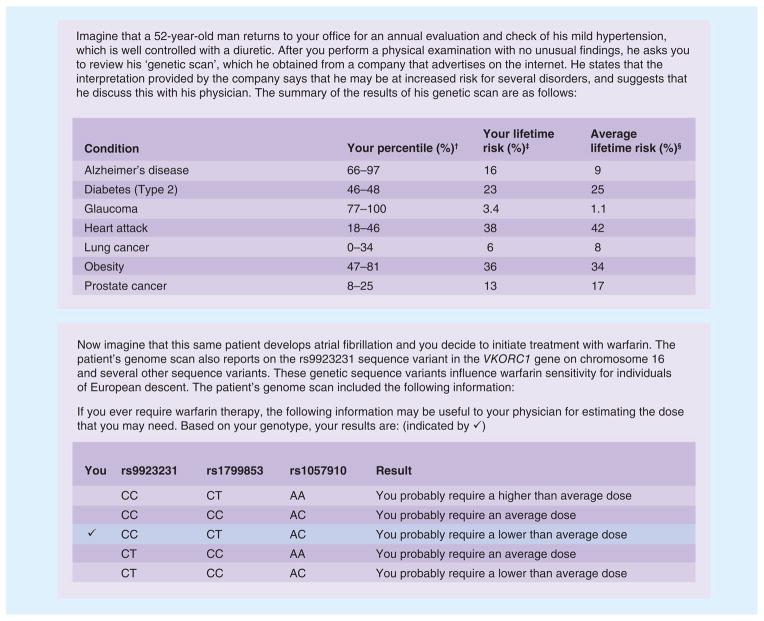
Aim: Despite predictions of increased clinical applications, little is known about primary care providers' (PCPs') readiness to apply genomics to patient care. The aim was to assess PCPs' current experience with genetic testing, their assessment of the understandability and clinical utility of information in sample direct-to-consumer reports for genomic assessment of disease risk and warfarin dosing and attitudes toward genomic medicine.
Materials & methods: A web-based survey of PCPs who are members of Knowledge Networks' Physician Consulting Network was conducted.
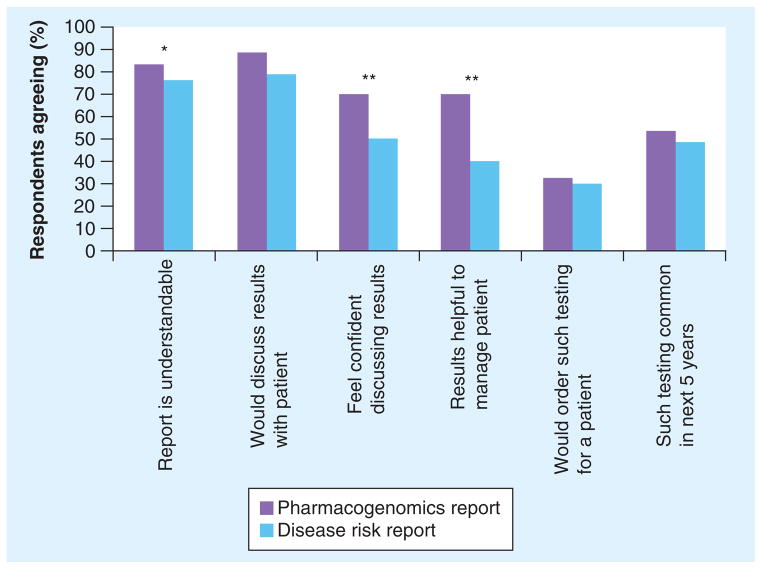
Results: Of the 502 respondents (23.3% response rate), most ordered genetic tests infrequently. When presented with the direct-to-consumer genomic testing reports, most believed the reports were understandable, and would be willing to review results with a patient, and many believed the results would be helpful in patient management.
Conclusion: Despite limited experience with genetic tests, PCPs are open to helping patients understand genomic information. However, additional physician education is needed.
Keywords: genetic testing; genetics; genomics; pharmacogenomics; physician experience; physician readiness.
Figures
References
-
- Greendale K, Pyeritz RE. Empowering primary care health professionals in medical genetics: how soon? How fast? How far? Am J Med Genet Semin Med Genet. 2001;106(3):223–232. - PubMed
-
- Scheuner MT, Sieverding P, Shekelle PG. Delivery of genomic medicine for common chronic adult diseases: a systematic review. JAMA. 2008;299(11):1320–1334. Reviews studies that have addressed the outcomes, consumer information needs, delivery and challenges in integrating genomic risk information into healthcare. - PubMed
-
- Suther SG, Goodson P. Texas physicians’ perceptions of genomic medicine as an innovation. Clin Genet. 2004;65(5):368–377. - PubMed
-
- Billings PR, Carlson RJ, Carlson J, et al. Ready for genomic medicine? Perspectives of health care decision makers. Arch Intern Med. 2005;165(16):1917–1919. - PubMed
Website
-
- Interim results: influenza A (H1N1) 2009 monovalent and seasonal influenza vaccination coverage among health-care personnel United States, August 2009–January 2010. 2010 www.cdc.gov/mmwr/pdf/wk/mm5912.pdf. - PubMed
Grants and funding
LinkOut - more resources
Full Text Sources
