. 2014 Jan 10;20(2):191-203.
doi: 10.1089/ars.2013.5361. Epub 2013 Aug 9.

Glutathione peroxidase mimic ebselen improves glucose-stimulated insulin secretion in murine islets

Affiliations

Glutathione peroxidase mimic ebselen improves glucose-stimulated insulin secretion in murine islets

Xinhui Wang et al. Antioxid Redox Signal. .

Abstract

Aims: Glutathione peroxidase (GPX) mimic ebselen and superoxide dismutase (SOD) mimic copper diisopropylsalicylate (CuDIPs) were used to rescue impaired glucose-stimulated insulin secretion (GSIS) in islets of GPX1 and(or) SOD1-knockout mice.

Results: Ebselen improved GSIS in islets of all four tested genotypes. The rescue in the GPX1 knockout resulted from a coordinated transcriptional regulation of four key GSIS regulators and was mediated by the peroxisome proliferator-activated receptor gamma coactivator 1 alpha (PGC-1α)-mediated signaling pathways. In contrast, CuDIPs improved GSIS only in the SOD1 knockout and suppressed gene expression of the PGC-1α pathway.

Innovation: Islets from the GPX1 and(or) SOD1 knockout mice provided metabolically controlled intracellular hydrogen peroxide (H2O2) and superoxide conditions for the present study to avoid confounding effects. Bioinformatics analyses of gene promoters and expression profiles guided the search for upstream signaling pathways to link the ebselen-initiated H2O2 scavenging to downstream key events of GSIS. The RNA interference was applied to prove PGC-1α as the main mediator for that link.

Conclusion: Our study revealed a novel metabolic use and clinical potential of ebselen in rescuing GSIS in the GPX1-deficient islets and mice, along with distinct differences between the GPX and SOD mimics in this regard. These findings highlight the necessities and opportunities of discretional applications of various antioxidant enzyme mimics in treating insulin secretion disorders. REBOUND TRACK: This work was rejected during standard peer review and rescued by Rebound Peer Review (Antioxid Redox Signal 16: 293-296, 2012) with the following serving as open reviewers: Regina Brigelius-Flohe, Vadim Gladyshev, Dexing Hou, and Holger Steinbrenner.


Figures
<b>FIG. 1.</b>
FIG. 1.
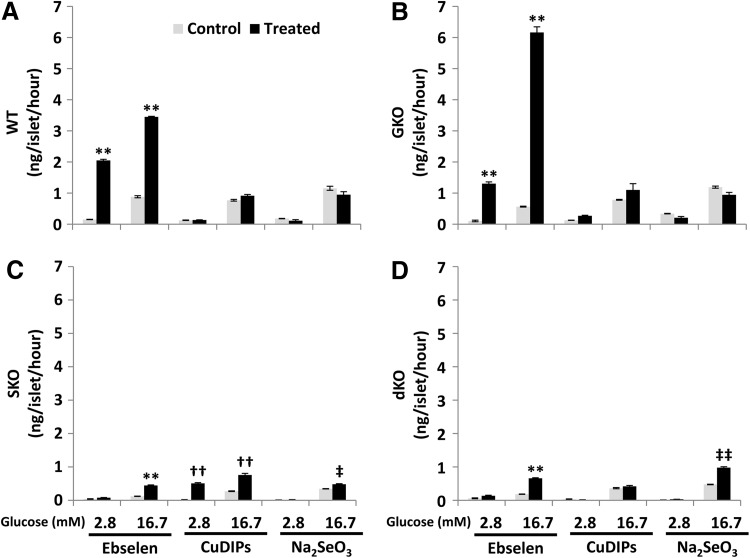
Impacts of the GPX and SOD mimics and inorganic selenium on insulin secretion by islets. The islets were isolated from WT (A), GKO (B), SKO (C), and dKO (D) mice and pre-treated with ebselen (50 μM in DMSO), CuDIPs (10 μM in ethanol), and sodium selenite (100 nM in saline) or the respective solvent controls for 5 h. The 16.7 mM glucose stimulation increased insulin secretion (p < 0.05 versus 2.8 mM glucose) in all treatment groups. **p < 0.01 versus DMSO solvent control; ††p < 0.01 versus ethanol solvent control; ‡p < 0.05, ‡‡p < 0.01 versus saline control. Values are means ± SEM (n = 3). CuDIPs, copper diisopropylsalicylate; dKO, double knockout of GPX1 and SOD1; DMSO, dimethyl sulfoxide; GKO, GPX1 knockout; GPX, glutathione peroxidase; GSIS, glucose-stimulated insulin secretion; SEM, standard error of means; SKO, SOD1 knockout; SOD, superoxide dismutase; WT, wild type.
<b>FIG. 2.</b>
FIG. 2.
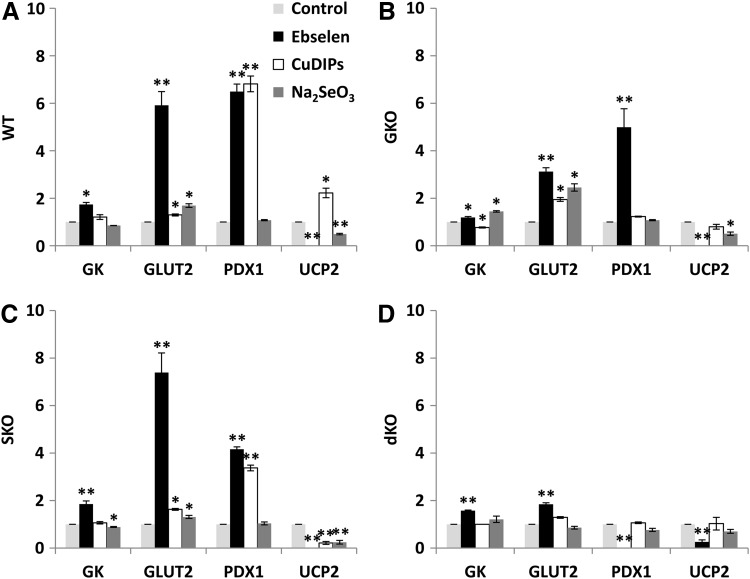
Impacts of the GPX and SOD mimics and inorganic selenium on protein production or function of key GSIS regulators in islets. The islets were isolated from WT (A), GKO (B), SKO (C), and dKO (D) mice and pre-treated with the mimics or selenium for 5 h. Thereafter, the islets were stimulated by 16.7 mM glucose for 1 h. GK is shown as enzyme activity (mU/mg protein), and GLUT2, PDX1, and UCP2 are shown as relative protein production by integrated optical densitometry. *p < 0.05, **p < 0.01 versus respective solvent control. Values are means ± SEM (n = 5). GK, glucokinase; GLUT2, glucose transporter type 2; PDX1, pancreatic and duodenal homeobox 1; UCP2, uncoupling protein 2.
<b>FIG. 3.</b>
FIG. 3.
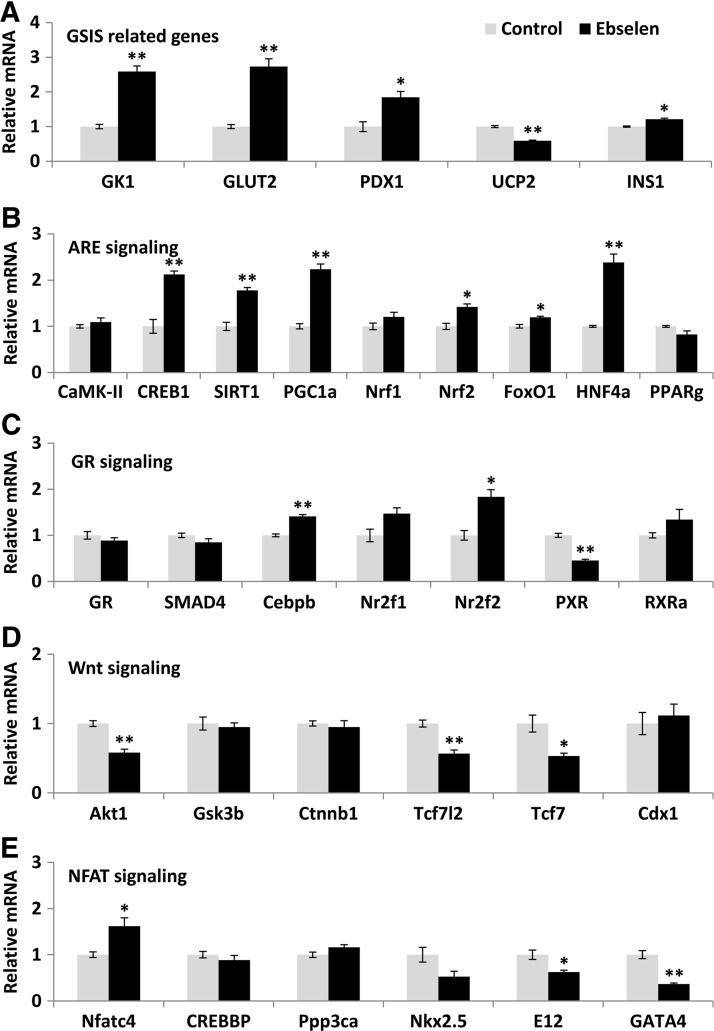
Impacts of the GPX mimic on gene expression of the key regulators of GSIS and their potential upstream signal proteins in islets of the GKO mice. The GSIS-related (A), the ARE pathway (B), the GR pathway (C), the Wnt pathway (D), and the NFAT pathway (E). The islets were pre-treated with ebselen for 5 h and then stimulated by 16.7 mM glucose for 1 h. *p < 0.05, **p < 0.01 versus control. Values are means ± SEM (n = 6). ARE, antioxidant response element; GR, glucocorticoid receptor; NFAT, nuclear factor of activated T-cells; Wnt, wingless-type MMTV integration site.
<b>FIG. 4.</b>
FIG. 4.
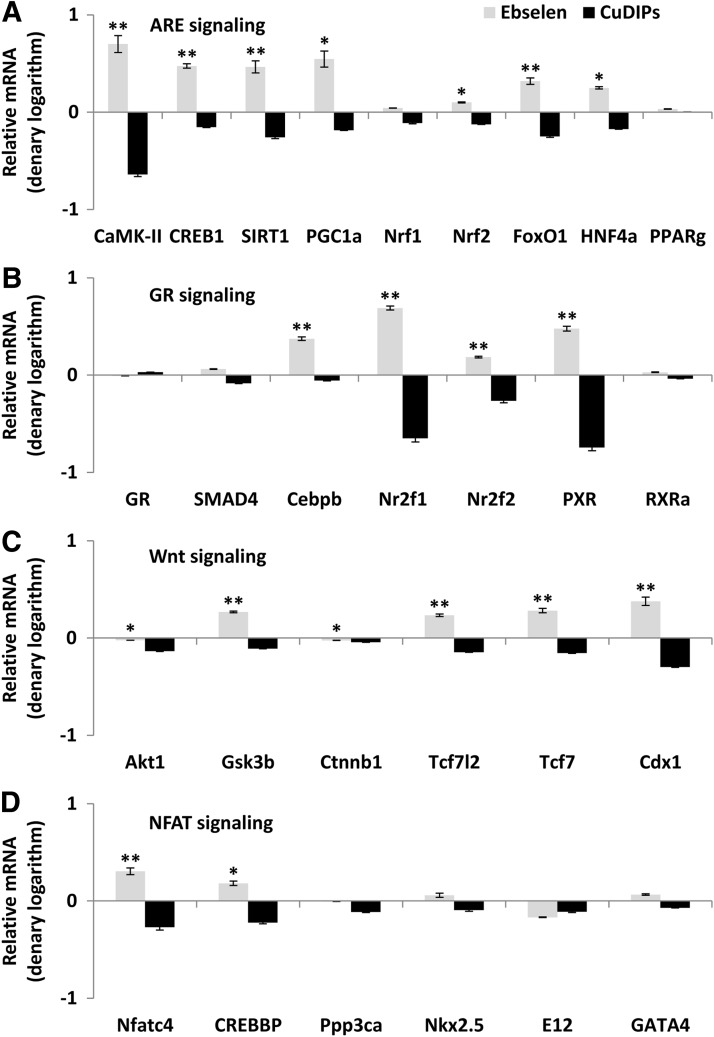
Comparative impacts of the GPX and SOD mimics on gene expression of the potential upstream signal proteins of the key regulators of GSIS in islets of the dKO mice. The ARE pathway (A), the GR pathway (B), the Wnt pathway (C), and the NFAT pathway (D). The islets were pre-treated with the mimics for 5 h and then stimulated by 16.7 mM glucose for 1 h. Data are presented as denary logarithm values (stimulation and inhibition are shown as positive and negative values, respectively). *p < 0.05, **p < 0.01 ebselen versus CuDIPs group. Values are means ± SEM (n = 6).
<b>FIG. 5.</b>
FIG. 5.
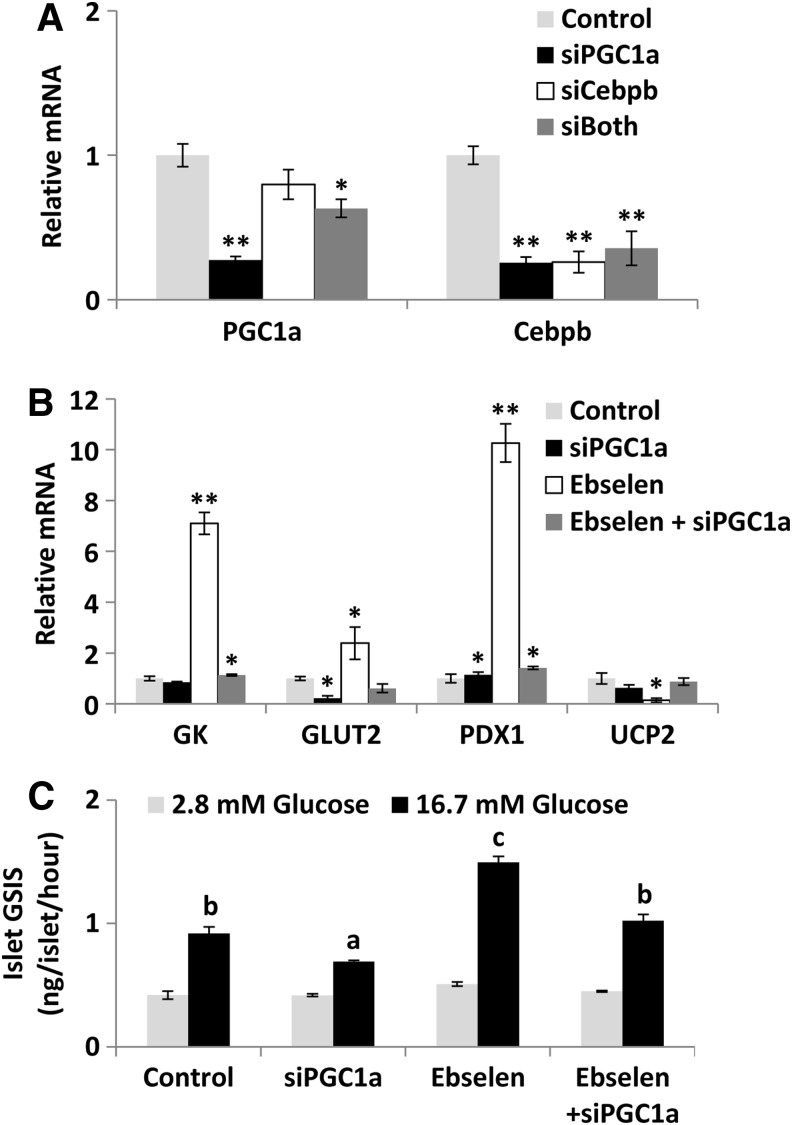
Blocking the GPX mimic-mediated GSIS rescue in islets of the GKO mice by suppressing target mediator genes. Knock down of pgc-1α and c/ebpβ gene expression (A), mRNA responses of the key regulators of GSIS (B), and responses of the ebselen-mediated GSIS rescue (C). *p < 0.05, **p < 0.01 versus control in (A) and (B), and means with different letters a, b, and c, p < 0.05 in (C). Values are means ±SEM (n = 6). c/ebpβ, CCAAT/enhancer binding protein (C/EBP), beta; pgc-1α, proxisome proliferator-activated receptor gamma coactivator 1 alpha; siRNA, small interfering RNA.
<b>FIG. 6.</b>
FIG. 6.
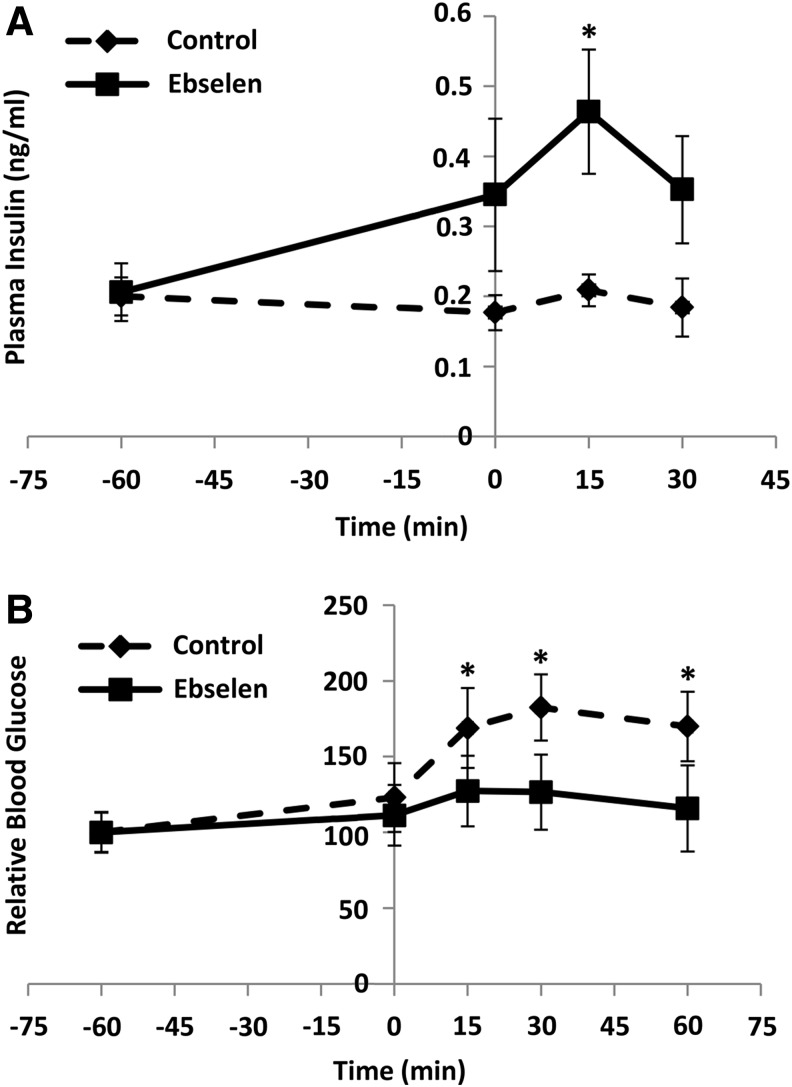
The in vivo rescue of insulin secretion and glucose tolerance by the GPX mimic in the GKO mice. GSIS (A) and GTT (B). The ebselen (50 mg/kg) was injected (i.p.) into fasting (overnight for 8 h) GKO mice at 1 h before the glucose challenge (1 g/kg), and DMSO was injected as the solvent control. GTT data are presented as relative values (fasting blood glucose before ebselen injection was defined as 100). *p < 0.05 versus control. Values are means ± SEM (n = 6). GTT, glucose tolerance test.

References

    1. Amacher DE. A toxicologist's guide to biomarkers of hepatic response. Hum Exp Toxicol 21: 253–262, 2002 - PubMed
    1. Ashcroft FM. and Rorsman P. Diabetes mellitus and the beta cell: the last ten years. Cell 148: 1160–1171, 2012 - PMC - PubMed
    1. Austin CP, Brady LS, Insel TR, and Collins FS. NIH molecular libraries initiative. Science 306: 1138–1139, 2004 - PubMed
    1. Barrett CW, Ning W, Chen X, Smith JJ, Washington MK, Hill KE, Coburn LA, Peek RM, Chaturvedi R, Wilson KT, Burk RF, and Williams CS. Tumor suppressor function of the plasma glutathione peroxidase gpx3 in colitis-associated carcinoma. Cancer Res 73: 1245–1255, 2013 - PMC - PubMed
    1. Becker DJ, Reul B, Ozcelikay AT, Buchet JP, Henquin JC, and Brichard SM. Oral selenate improves glucose homeostasis and partly reverses abnormal expression of liver glycolytic and gluconeogenic enzymes in diabetic rats. Diabetologia 39: 3–11, 1996 - PubMed

Publication types

MeSH terms

Substances