


Buprenorphine treatment outcomes among opioid-dependent cocaine users and non-users
- PMID: 23795874
- PMCID: PMC3694744
- DOI: 10.1111/j.1521-0391.2013.12032.x
Buprenorphine treatment outcomes among opioid-dependent cocaine users and non-users
Abstract
Background and objectives: National treatment guidelines state that polysubstance users, including cocaine users, may not be appropriate candidates for office-based buprenorphine treatment. However, data to support this recommendation are sparse and conflicting, and the implications of this recommendation may include limiting the usefulness of buprenorphine treatment, as cocaine use is common among opioid-dependent individuals seeking buprenorphine treatment. We compared buprenorphine treatment outcomes (6-month treatment retention and self-reported opioid use over 6 months) in opioid-dependent cocaine users versus non-users who initiated buprenorphine treatment at an urban community health center.
Methods: We followed 87 participants over 6 months, collecting interview and medical record data. We used logistic regression models to test whether baseline cocaine use was associated with treatment retention and mixed effects nonlinear models to test whether baseline cocaine use was associated with self-reported opioid use.
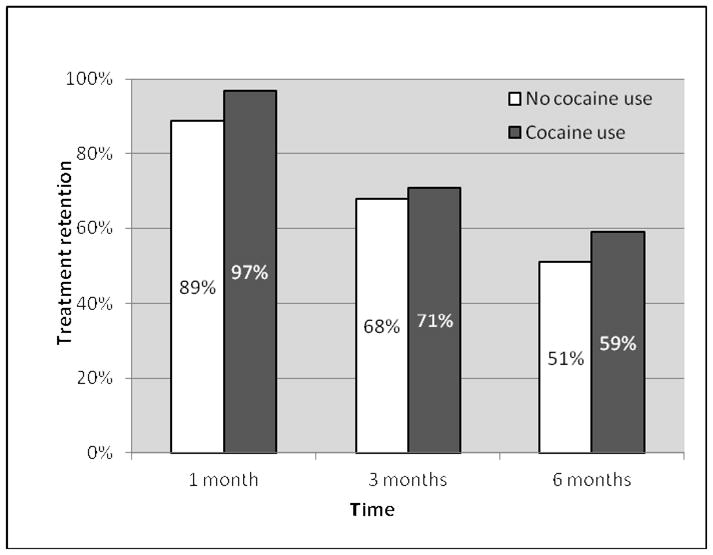
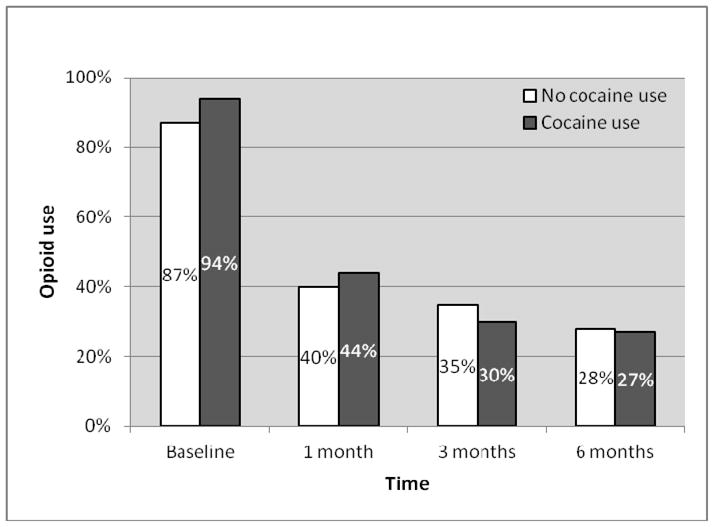
Results: At baseline, 39.1% reported cocaine use. In all participants, self-reported opioid use decreased from 89.7% to 27.4% over 6 months, and 6-month treatment retention was 54.5%. We found no significant difference in 6-month treatment retention (AOR = 1.56, 95% CI: .58-4.17, p = .38) or self-reported opioid use (AOR = .89, 95% CI: .26-3.07, p = .85) between cocaine users and non-users.
Conclusions and scientific significance: This study demonstrates that buprenorphine treatment retention is not worse in cocaine users than non-users, with clinically meaningful improvements in self-reported opioid use. These findings suggest that opioid-dependent cocaine users attain considerable benefits from office-based buprenorphine treatment and argue for the inclusion of these patients in office-based buprenorphine treatment programs.
Copyright © American Academy of Addiction Psychiatry.
Conflict of interest statement
The authors report no conflicts of interest. The authors alone are responsible for the content and writing of this paper.
Figures
References
-
- Cicero TJ, Inciardi JA, Munoz A. Trends in abuse of Oxycontin and other opioid analgesics in the United States: 2002–2004. J Pain. 2005;6(10):662–72. - PubMed
-
- Sung HE, Richter L, Vaughan R, Johnson PB, Thom B. Nonmedical use of prescription opioids among teenagers in the United States: trends and correlates. J Adolesc Health. 2005 Jul;37(1):44–51. - PubMed
-
- Substance Abuse and Mental Health Services Administration. Results from the 2007 National Survey on Drug Use and Health: National Findings. Rockville, MD: Office of Applied Studies; NSDUH Series H-34, DHHS Publication No. SMA 08-4343; 2008.
-
- Substance Abuse and Mental Health Services Administration Office of Applied Studies. DAWN Series D-30 DHHS Publication No SMA 08-4339. Rockville, MD: 2008. Drug Abuse Warning Network, 2006: National Estimates of Drug-Related Emergency Department Visits.
-
- Fiellin DA. The first three years of buprenorphine in the United States: Experience to date and future directions. J Addict Med. 2007;1:62–7. - PubMed
Publication types
MeSH terms
Substances
Grants and funding
LinkOut - more resources
Full Text Sources
Other Literature Sources
Medical
