


A modified Hargreaves' method for assessing threshold temperatures for heat nociception
- PMID: 23796910
- PMCID: PMC3759573
- DOI: 10.1016/j.jneumeth.2013.06.005
A modified Hargreaves' method for assessing threshold temperatures for heat nociception
Abstract
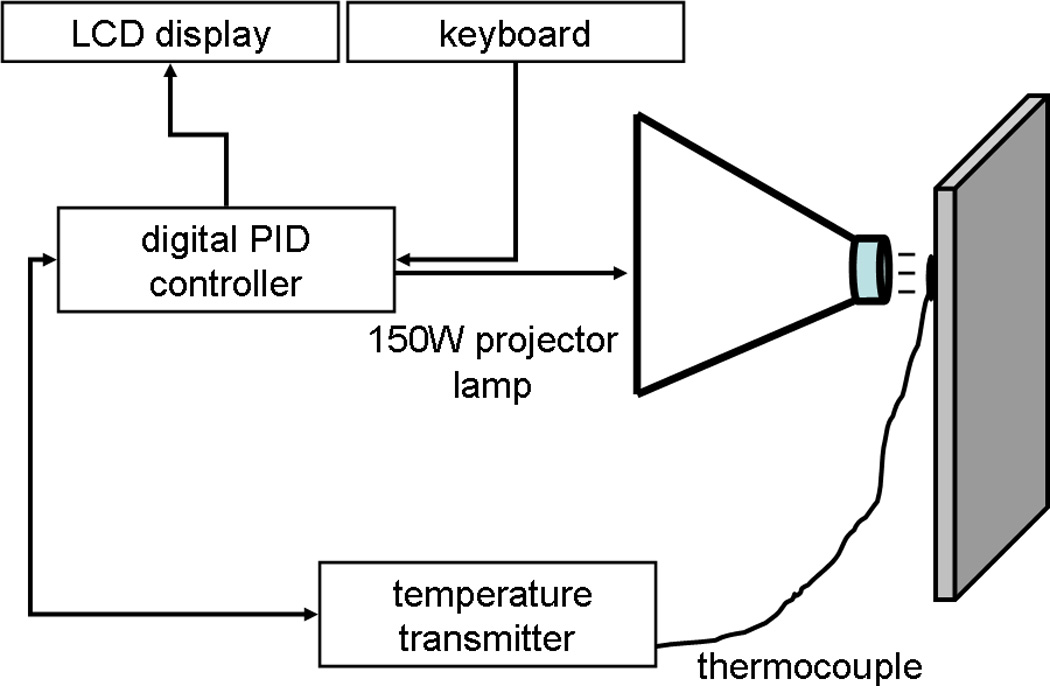
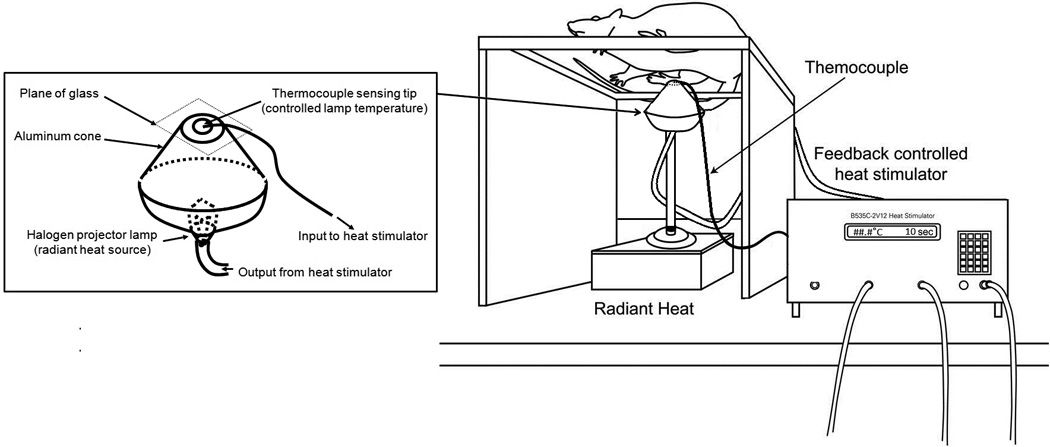
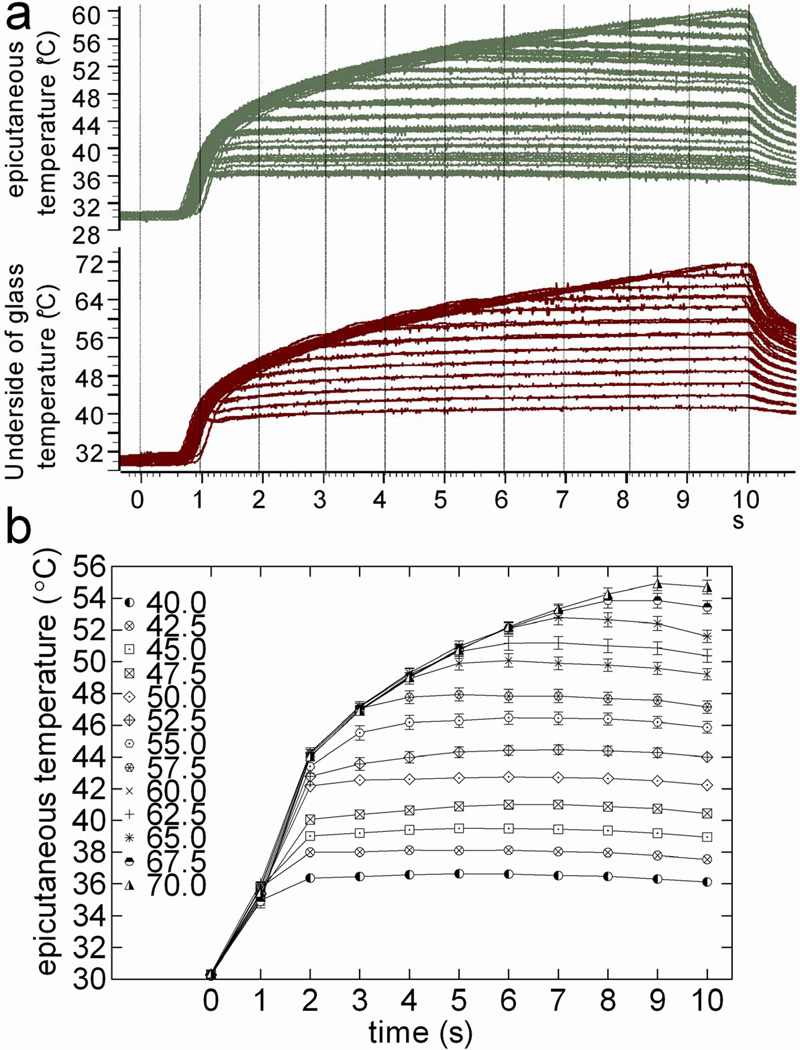
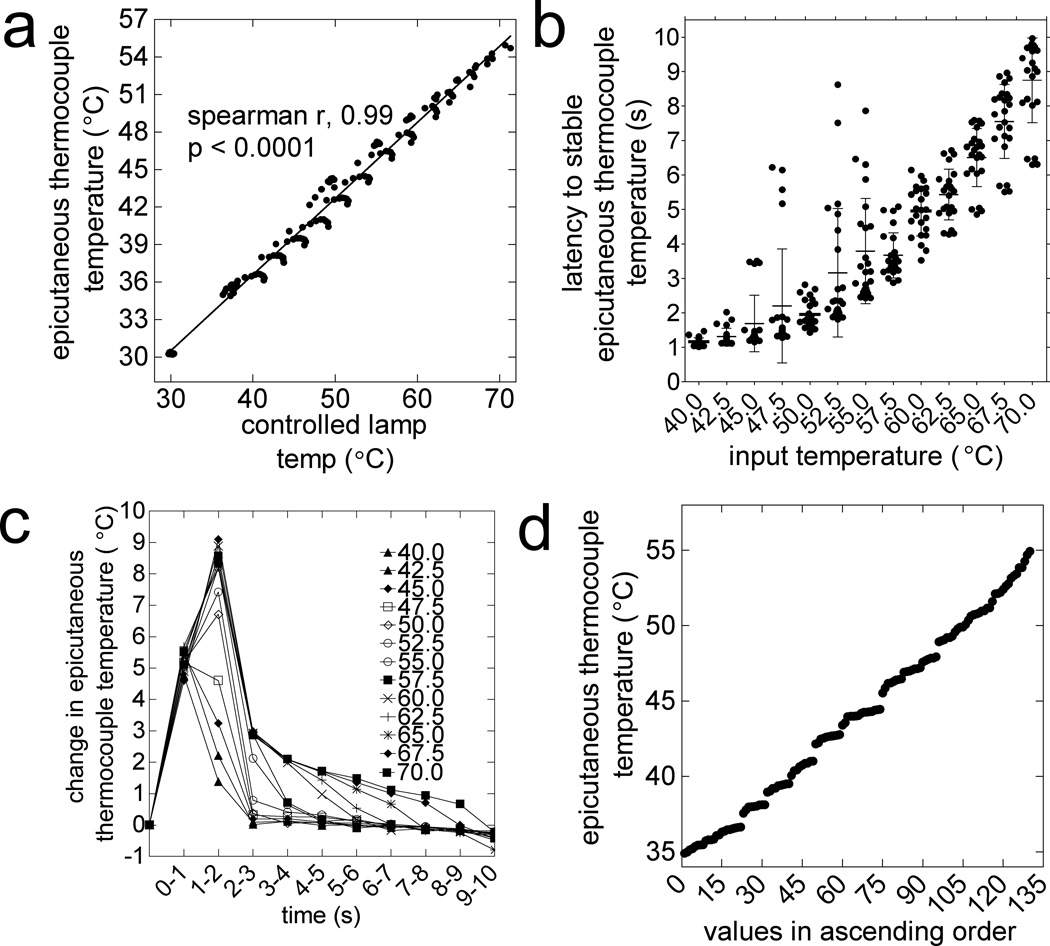
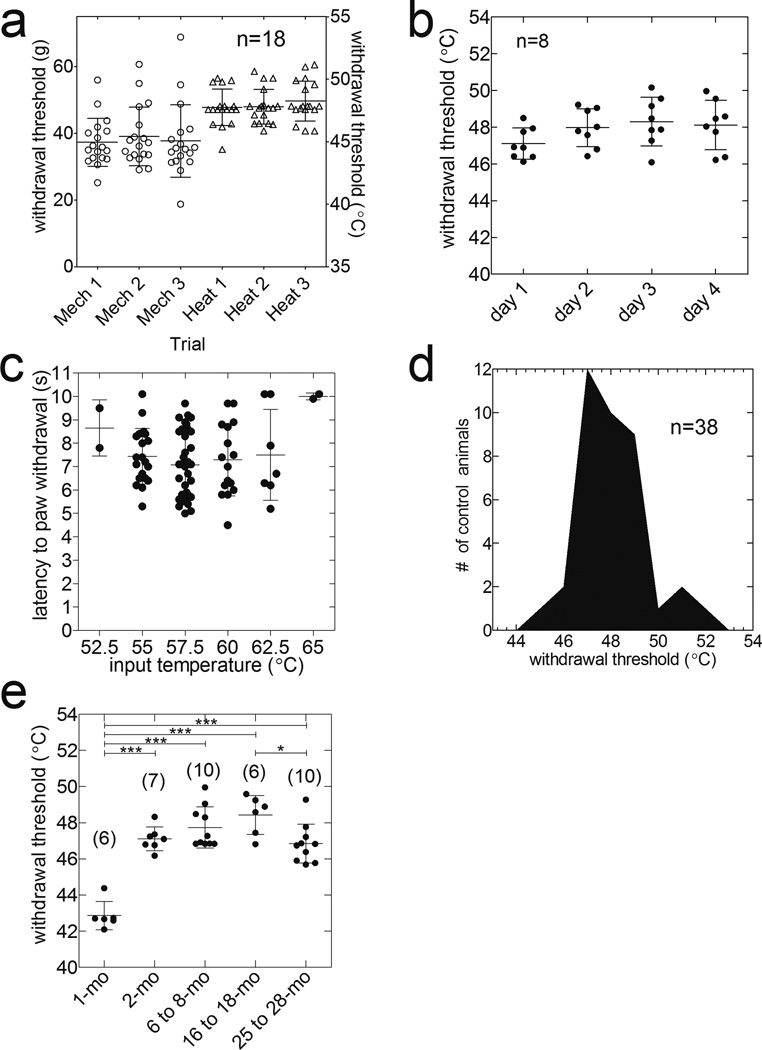
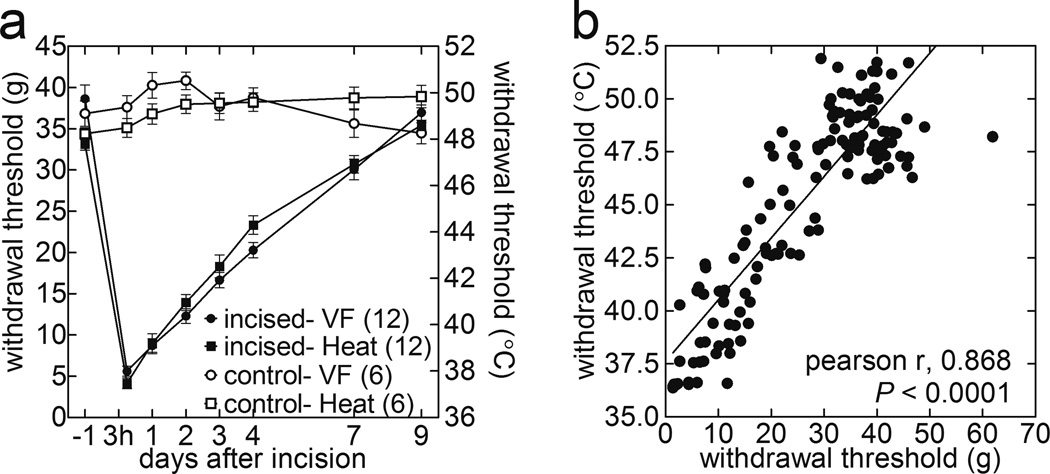
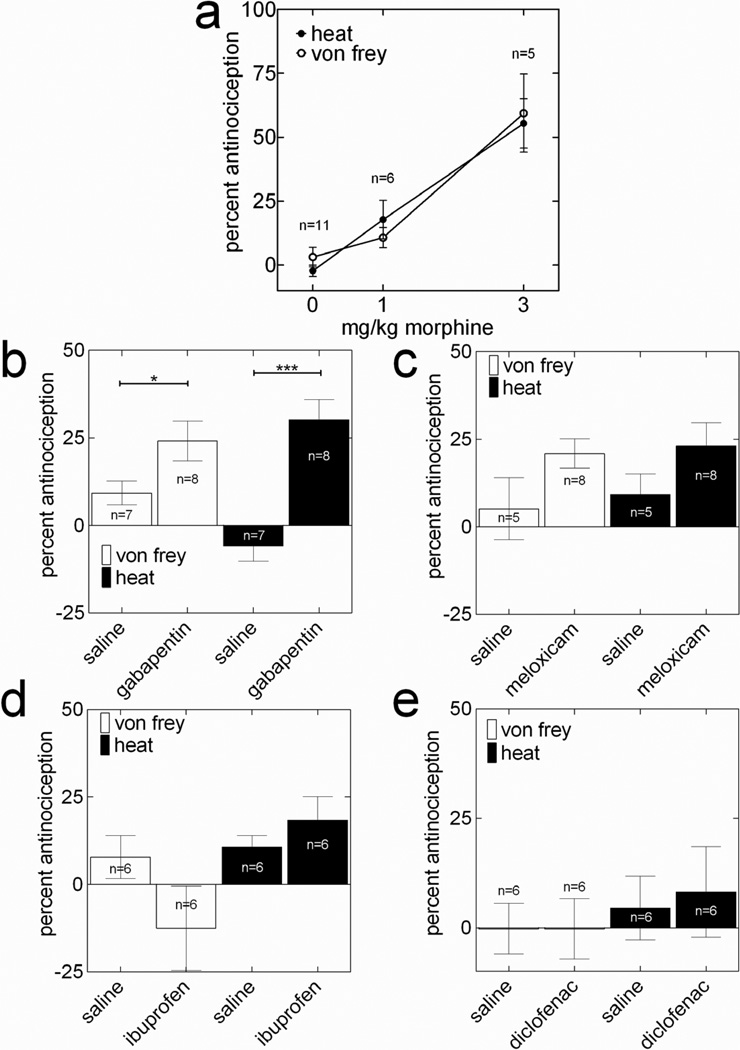
This study describes a modified Hargreaves' method for assessing paw withdrawal threshold temperatures for heat (PWT-H) nociception in the hind paws of rats. This method utilises radiant heat to maintain controlled lamp temperatures (CLTs) on a glass floor beneath the rat hind paw. An ascending series of CLTs were applied for 10s, with 5-10min intervals between applications, until characteristic withdrawal behaviour was observed or a cutoff CLT was reached. The average plantar epicutaneous temperatures measured from anaesthetised rats corresponding to CLTs and withdrawal latencies were used for determining PWT-H. The mean PWT-H in 2-month-old (mo) naïve Sprague-Dawley rats (n=38) was 47.6±0.2°C, which is comparable to the noxious threshold temperature for human glabrous skin (46.5±0.5°C). The PWT-H was consistent between trials and daily assessments over four consecutive days. No significant differences were observed between the PWT-H in 2-, 6- to 8-, and >24-mo F344 rats, but the PWT-H in 1-mo rats was significantly reduced. Three hours following plantar incision, the PWT-H decreased to 37.5±0.2°C, consistent with previous observations of C-fibre afferents from incised glabrous skin firing at 36.7±3.6°C. Parallel testing, using the current method and an electronic von Frey device, illustrated similar degrees of incision-induced hyperalgesia, gradual improvements in hyperalgesia, and reversals induced through morphine and gabapentin. In conclusion, the present method facilitates a comparison of PWT-H using electrophysiological and human psychophysical studies involving thermosensation, and as a behavioural assay identical to von Frey testing, this method also measures the threshold for nociception.
Keywords: Gabapentin; Morphine; Nociception; Radiant heat; Rat; Threshold temperature.
Copyright © 2013 Elsevier B.V. All rights reserved.
Conflict of interest statement
Conflict of interest: The authors declare no personal financial interest in the method or equipment discussed in this article. The authors did not receive any benefit, financial or otherwise, by referring to the Bioengineering Department in the University of Iowa for development of the equipment discussed.
Figures
References
-
- Andrew D, Greenspan JD. Mechanical and heat sensitization of cutaneous nociceptors after peripheral inflammation in the rat. J Neurophysiol. 1999;82:2649–2656. - PubMed
-
- Andrews K. The effect of changes in temperature and humidity on the accuracy of von Frey hairs. Journal of neuroscience methods. 1993;50:91–93. - PubMed
-
- Banik RK, Brennan TJ. Spontaneous discharge and increased heat sensitivity of rat C-fiber nociceptors are present in vitro after plantar incision. Pain. 2004;112:204–213. - PubMed
-
- Banik RK, Kabadi RA. 13th World Congress of Pain. Montreal, Canada: International Association for the study of Pain; 2010. a modified hargreaves’ method for measuring approximate threshold temperature for thermonociception.
Publication types
MeSH terms
Substances
Grants and funding
LinkOut - more resources
Full Text Sources
Other Literature Sources
