


Genetic properties of endemic Chinese porcine epidemic diarrhea virus strains isolated since 2010
- PMID: 23797760
- PMCID: PMC7087078
- DOI: 10.1007/s00705-013-1767-7
Genetic properties of endemic Chinese porcine epidemic diarrhea virus strains isolated since 2010
Abstract
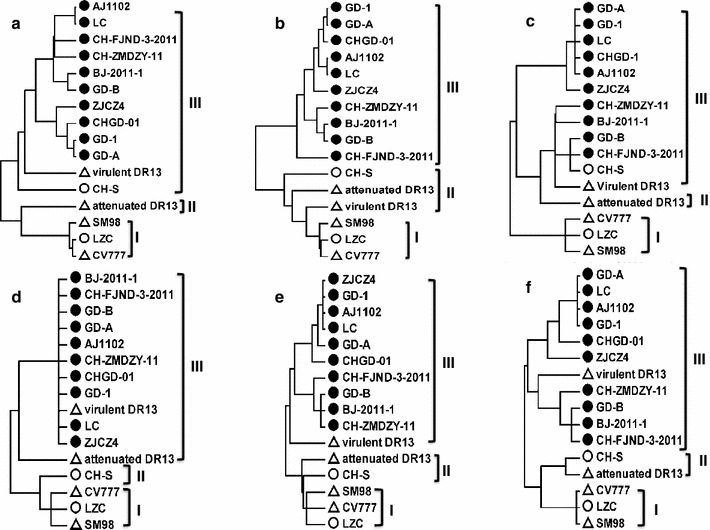
Acute diarrhea outbreaks caused by porcine epidemic diarrhea virus (PEDV) have been observed in various pig-breeding provinces of China since December 2010. Endemic strains of PEDV were isolated from different areas, and the complete genome sequences of 10 isolates were determined. Our objective in this study was to genetically characterize current Chinese field isolates of PEDV to better understand their epidemiology and genetic diversity. Sequence analysis showed that 10 post-2010 isolates shared high homology with each other and were always clustered together with the virulent DR13 strains (South Korea) and/or one earlier Chinese strain, CH-S, in phylogenetic analysis. All post-2010 isolates possessed common sequence changes in each gene. Our results suggest that current Chinese PEDV isolates originated from either South Korean and/or Chinese ancestors that underwent some genetic variation, thereby forming a new PEDV genotype in China.
Figures
References
-
- Pensaert MB, Yeo SG. Porcine epidemic diarrhea. In: Straw BE, Zimmerman JJ, D’Allaire S, Taylor DJ, editors. Diseases of swine. 9. Ames: Blackwell Publishing; 2006. pp. 367–372.
-
- Puranaveja S, Poolperm P, Lertwatcharasarakul P, Kesdaengsakonwut S, Boonsoongnern A, Urairong K, Kitikoon P, Choojai P, Kedkovid R, Teankum K, Thanawongnuwech R. Chinese-like strain of porcine epidemic diarrhea virus, Thailand. Emerg Infect Dis. 2009;15(7):1112–1115. doi: 10.3201/eid1507.081256. - DOI - PMC - PubMed
Publication types
MeSH terms
Substances
LinkOut - more resources
Full Text Sources
Other Literature Sources
Medical
