


Genetic polymorphism in PDE4D gene and risk of ischemic stroke in Chinese population: a meta-analysis
- PMID: 23799094
- PMCID: PMC3684617
- DOI: 10.1371/journal.pone.0066374
Genetic polymorphism in PDE4D gene and risk of ischemic stroke in Chinese population: a meta-analysis
Abstract
Background: Stroke is the second most common cause of death and major cause of disability worldwide. The SNP 83 in PDE4D gene has been suggested as a risk factor in ischemic stroke, but direct evidence from genetic association studies remains inconclusive even in Chinese population.
Methods: Meta-analysis of case-control studies on the relationship between SNP 83 in PDE4D gene and susceptibility to ischemic stroke in Chinese population published domestically and abroad from January 2003 to September 2012.
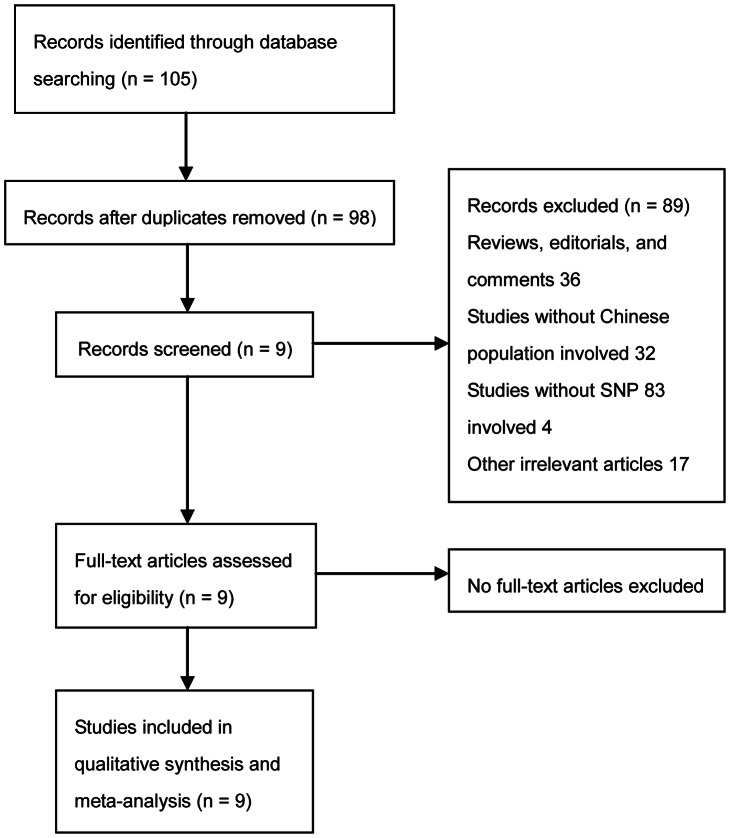
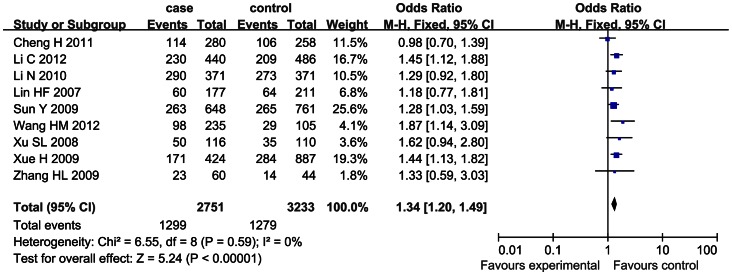
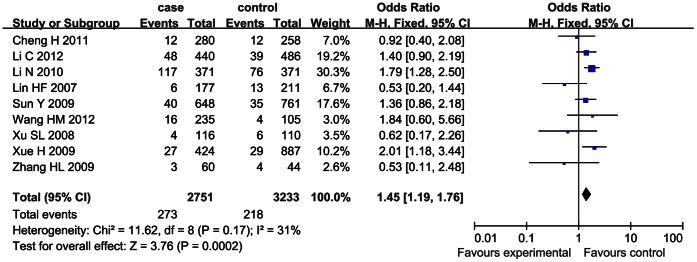
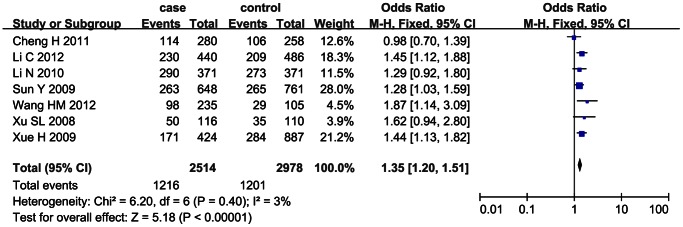
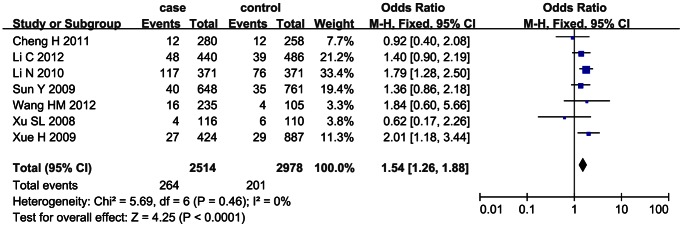
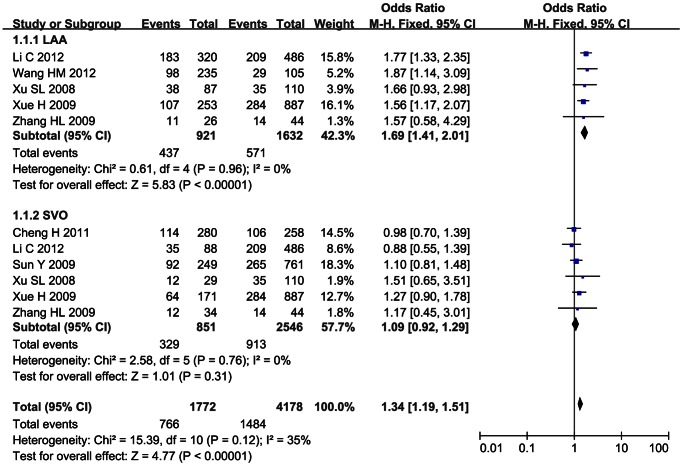
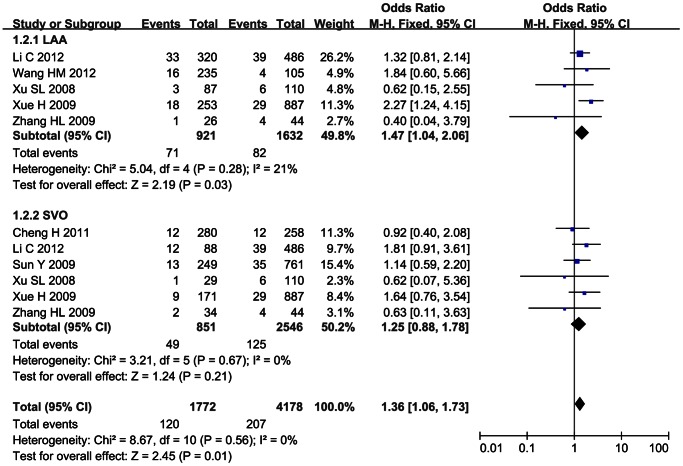
Results: 9 case-control studies were selected. Meta-analysis results showed that the significant association between SNP 83 and ischemic stroke was found under the dominant model (OR = 1.34, 95% CI: 1.20-1.49) and recessive model (OR = 1.45, 95% CI: 1.19-1.76) in Chinese population. In subgroup meta-analysis, SNP 83 and atherothrombotic stroke, rather than lacunar stroke, showed the significant association under the dominant model (OR = 1.69, 95% CI: 1.41-2.01) and recessive model (OR = 1.47, 95% CI: 1.04-2.06).
Conclusions: The results suggest that SNP 83 in PDE4D gene is significantly associated with susceptibility to ischemic stroke in Chinese population.
Conflict of interest statement
Figures
References
-
- Donnan GA, Fisher M, Macleod M, Davis SM (2008) Stroke. Lancet 371: 1612–1623. - PubMed
-
- Liu L, Wang D, Wong KS, Wang Y (2011) Stroke and stroke care in China: huge burden, significant workload, and a national priority. Stroke 42: 3651–3654. - PubMed
-
- Thrift AG, Dewey HM, Macdonell RA, McNeil JJ, Donnan GA (2001) Incidence of the major stroke subtypes: initial findings from the North East Melbourne stroke incidence study (NEMESIS). Stroke 32: 1732–1738. - PubMed
-
- Flossmann E, Schulz UG, Rothwell PM (2004) Systematic review of methods and results of studies of the genetic epidemiology of ischemic stroke. Stroke 35: 212–227. - PubMed
Publication types
MeSH terms
Substances
LinkOut - more resources
Full Text Sources
Other Literature Sources
Medical
