


Outbreak of enterotoxigenic Escherichia coli O169 enteritis in schoolchildren associated with consumption of kimchi, Republic of Korea, 2012
- PMID: 23800632
- PMCID: PMC9151085
- DOI: 10.1017/S0950268813001477
Outbreak of enterotoxigenic Escherichia coli O169 enteritis in schoolchildren associated with consumption of kimchi, Republic of Korea, 2012
Erratum in
- Epidemiol Infect. 2014 Mar;142(3):624
Abstract
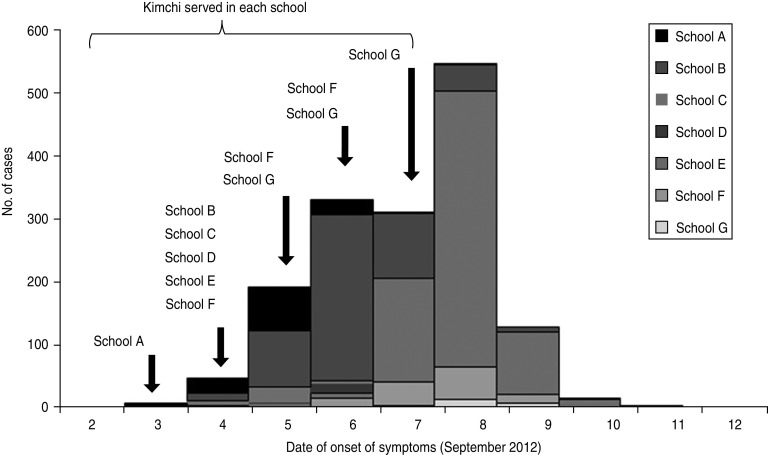
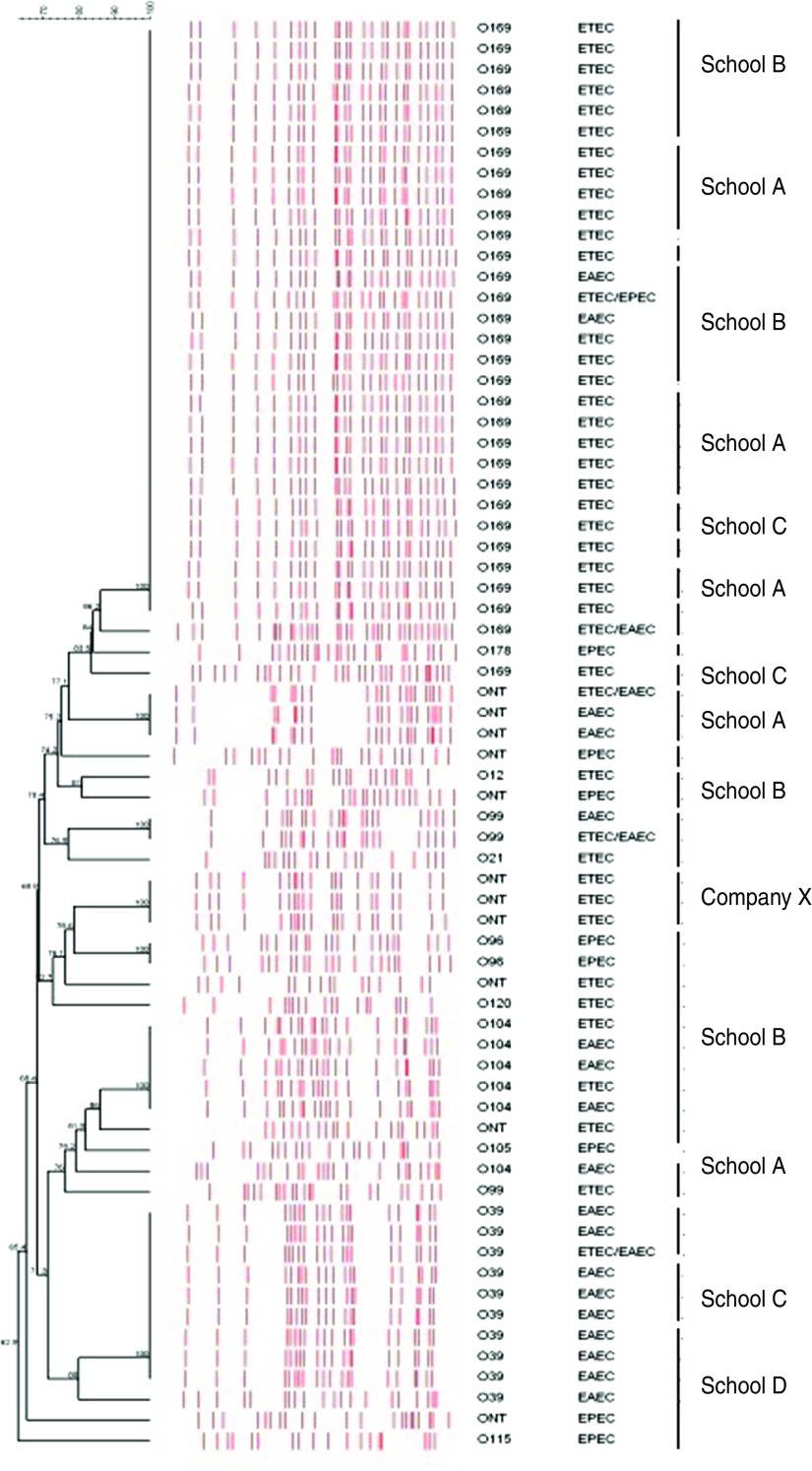
Enterotoxigenic Escherichia coli (ETEC) is now recognized as a common cause of foodborne outbreaks. This study aimed to describe the first ETEC O169 outbreak identified in Korea. In this outbreak, we identified 1642 cases from seven schools. Retrospective cohort studies were performed in two schools; and case-control studies were conducted in five schools. In two schools, radish kimchi was associated with illness; and in five other schools, radish or cabbage kimchi was found to have a higher risk among food items. Adjusted relative risk of kimchi was 5·87-7·21 in schools that underwent cohort studies; and adjusted odds ratio was 4·52-12·37 in schools that underwent case-control studies. ETEC O169 was isolated from 230 affected students, and was indistinguishable from the isolates detected from the kimchi product distributed by company X, a food company that produced and distributed kimchi to all seven schools. In this outbreak, we found that the risk of a kimchi-borne outbreak of ETEC O169 infection is present in Korea. We recommend continued monitoring regarding food safety in Korea, and strengthening surveillance regarding ETEC O169 infection through implementation of active laboratory surveillance to confirm its infection.
Figures
References
-
- Kiers JL, et al. Effect of processed and fermented soyabeans on net absorption in enterotoxigenic Escherichia coli-infected piglet small intestine. British Journal of Nutrition 2006; 95: 1193–1198. - PubMed
-
- Jain S, et al. An outbreak of enterotoxigenic Escherichia coli associated with sushi restaurants in Nevada, 2004. Clinical Infectious Diseases 2008; 47: 1–7. - PubMed
MeSH terms
LinkOut - more resources
Full Text Sources
Other Literature Sources
Medical
