. 2013 Oct 15;272(2):408-13.
doi: 10.1016/j.taap.2013.06.009. Epub 2013 Jun 22.

Inhibition of chlorine-induced pulmonary inflammation and edema by mometasone and budesonide

Affiliations

Inhibition of chlorine-induced pulmonary inflammation and edema by mometasone and budesonide

Jing Chen et al. Toxicol Appl Pharmacol. .

Abstract

Chlorine gas is a widely used industrial compound that is highly toxic by inhalation and is considered a chemical threat agent. Inhalation of high levels of chlorine results in acute lung injury characterized by pneumonitis, pulmonary edema, and decrements in lung function. Because inflammatory processes can promote damage in the injured lung, anti-inflammatory therapy may be of potential benefit for treating chemical-induced acute lung injury. We previously developed a chlorine inhalation model in which mice develop epithelial injury, neutrophilic inflammation, pulmonary edema, and impaired pulmonary function. This model was used to evaluate nine corticosteroids for the ability to inhibit chlorine-induced neutrophilic inflammation. Two of the most potent corticosteroids in this assay, mometasone and budesonide, were investigated further. Mometasone or budesonide administered intraperitoneally 1h after chlorine inhalation caused a dose-dependent inhibition of neutrophil influx in lung tissue sections and in the number of neutrophils in lung lavage fluid. Budesonide, but not mometasone, reduced the levels of the neutrophil attractant CXCL1 in lavage fluid 6h after exposure. Mometasone or budesonide also significantly inhibited pulmonary edema assessed 1 day after chlorine exposure. Chlorine inhalation resulted in airway hyperreactivity to inhaled methacholine, but neither mometasone nor budesonide significantly affected this parameter. The results suggest that mometasone and budesonide may represent potential treatments for chemical-induced lung injury.

Keywords: Acute lung injury; Corticosteroids; Pneumonitis; Pulmonary edema.


Figures

Figure 1
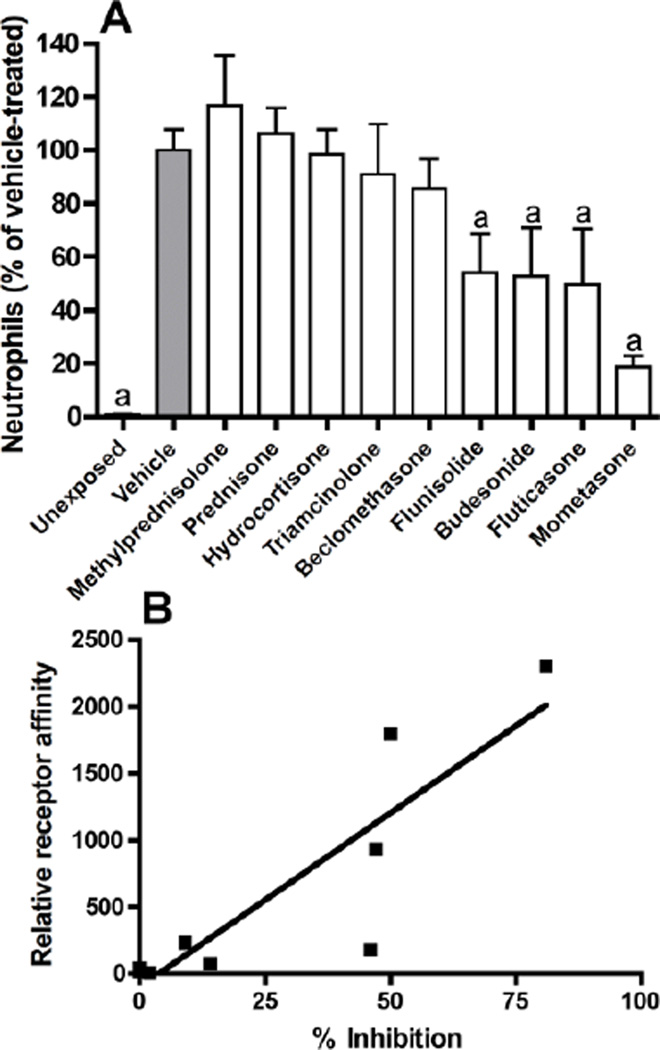
Figure 1. Inhibition of chlorine-induced neutrophilic inflammation by corticosteroids
Mice were exposed to chlorine and treated with the indicated corticosteroids i.p. at 3 mg/kg starting 1 h after exposure and then b.i.d. thereafter until euthanized for lung lavage and enumeration of neutrophils 48 hr after exposure. Panel A shows the percent inhibition of the number of neutrophils in lavage fluid relative to chlorine-exposed, vehicle treated mice (gray bar). a, p<0.01 vs. chlorine-exposed, vehicle-treated. Panel B shows a significant correlation between the percent inhibition for the individual compounds and their relative affinity for the glucocorticoid receptor (Rohdewald et al., 1985; Mager et al., 2003; Winkler et al., 2004); r2=0.77, p<0.01.
Figure 2
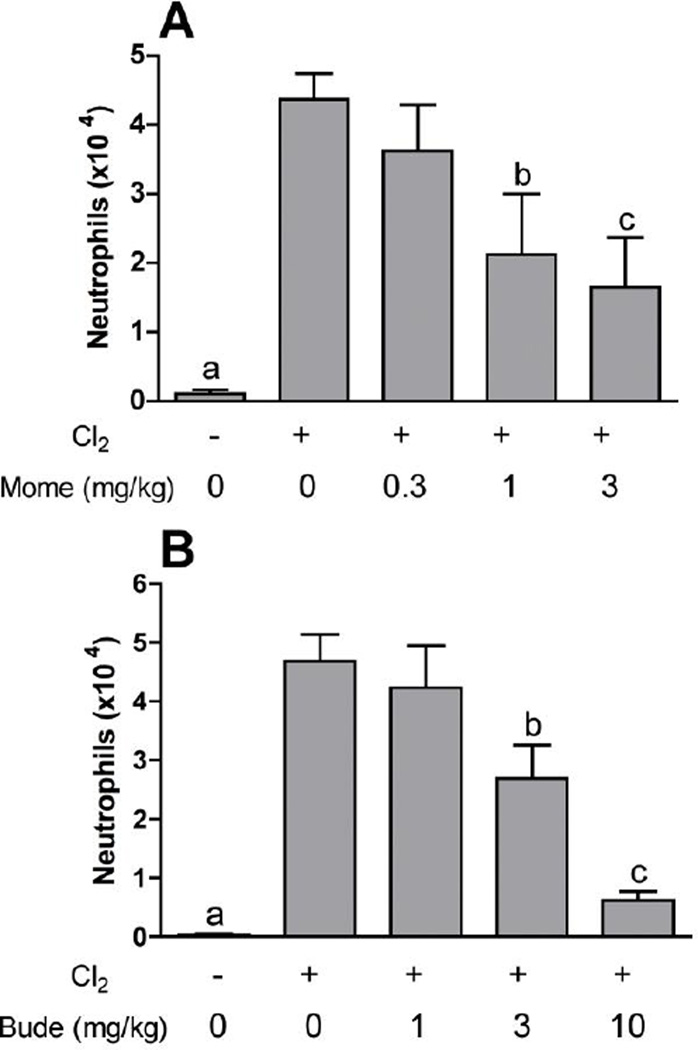
Figure 2. Inhibition of lavage fluid neutrophils by mometasone and budesonide
Mice were exposed to chlorine and treated with mometasone (A) or budesonide (B) i.p. at the indicated doses starting 1 h after exposure and then b.i.d. thereafter until euthanized for lung lavage and enumeration of neutrophils 48 hr after exposure. The maximum dose of mometasone was limited to 3 mg/kg because of the limited solubility of this compound. a, p<0.01 vs. all other groups; b, p<0.05 vs. chlorine, no corticosteroid; c, p<0.01 vs. chlorine, no corticosteroid.
Figure 3
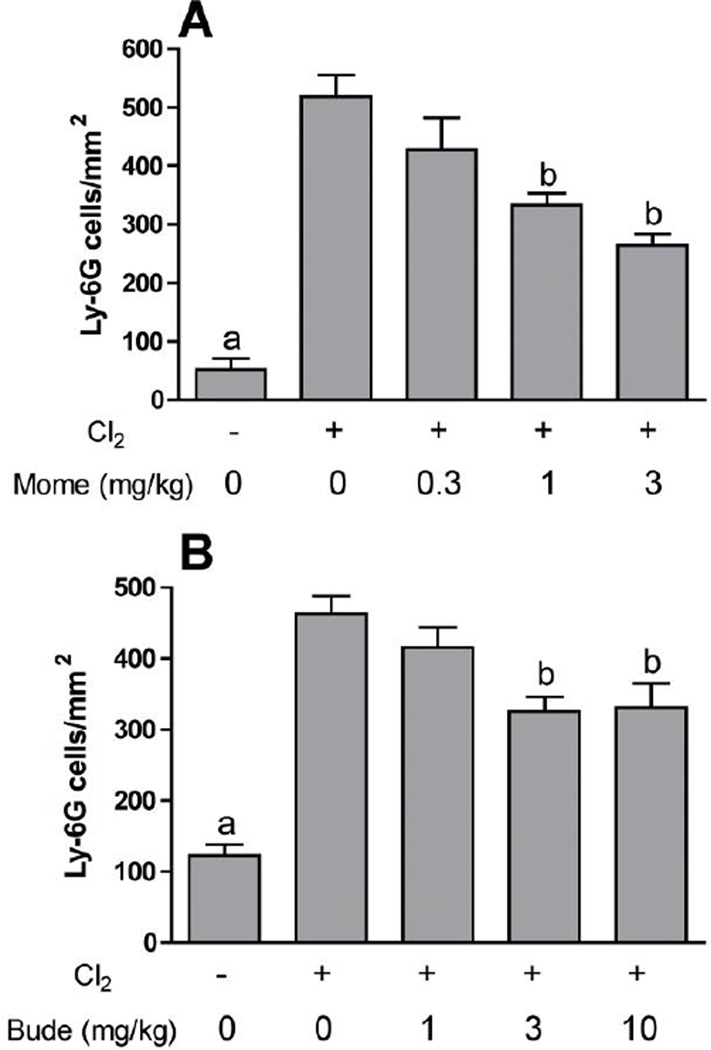
Figure 3. Inhibition of lung neutrophil influx by mometasone and budesonide
Mice were exposed to chlorine and treated with mometasone (A) or budesonide (B) i.p. at the indicated doses 1 h after exposure. Mice were euthanized for lung fixation 6 hr after exposure, and sections were stained for the neutrophil marker Ly-6G. a, p<0.001 vs. all other groups; b, p<0.01 vs. chlorine, no corticosteroid.
Figure 4
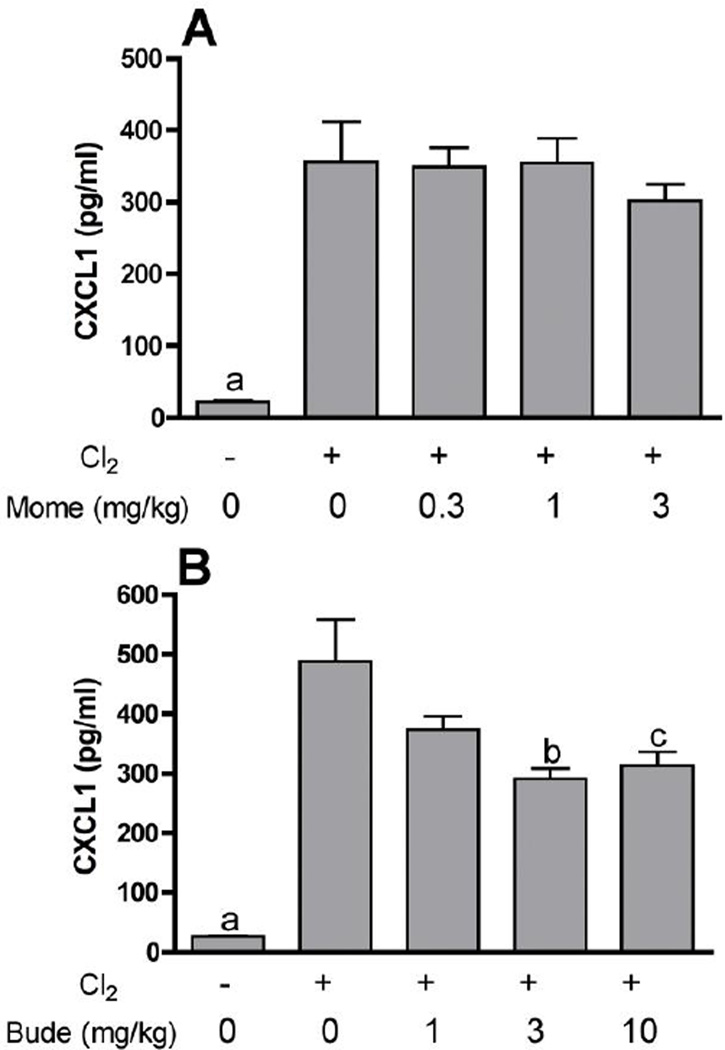
Figure 4. Effect of mometasone and budesonide on lavage fluid CXCL1
Mice were exposed to chlorine and treated with mometasone (A) or budesonide (B) i.p. at the indicated doses 1 h after exposure. Mice were euthanized for lung lavage 6 hr after exposure for measurement of CXCL1 by ELISA. a, p<0.001 vs. all other groups; b, p<0.05 vs. chlorine, no budesonide; c, p<0.01 vs. chlorine, no budesonide.
Figure 5
Figure 5. Inhibition of chlorine-induced pulmonary edema by mometasone and budesonide
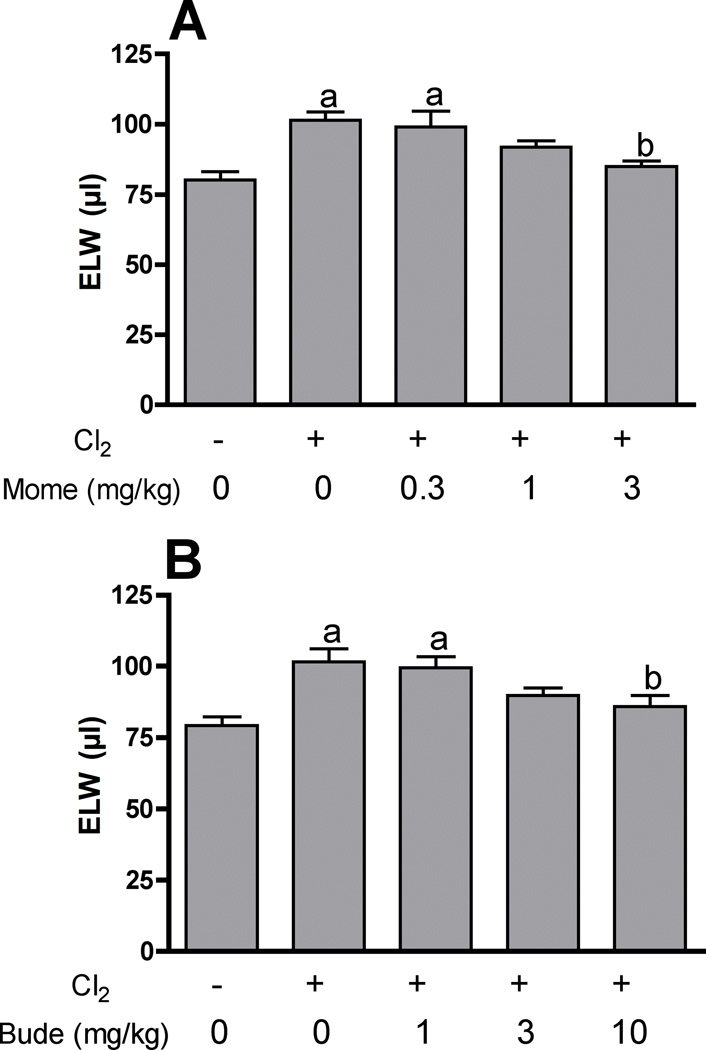
Mice were exposed to chlorine and treated with mometasone (A) or budesonide (B) i.p. at the indicated doses 1 h and 10 h after exposure. Twenty-four h after exposure lungs were collected to measure extravascular lung water (ELW). a, p<0.01 vs. no chlorine; b, p<0.05 vs. chlorine, no corticosteroid.
Figure 6
Figure 6. Effect of mometasone and budesonide on airway reactivity
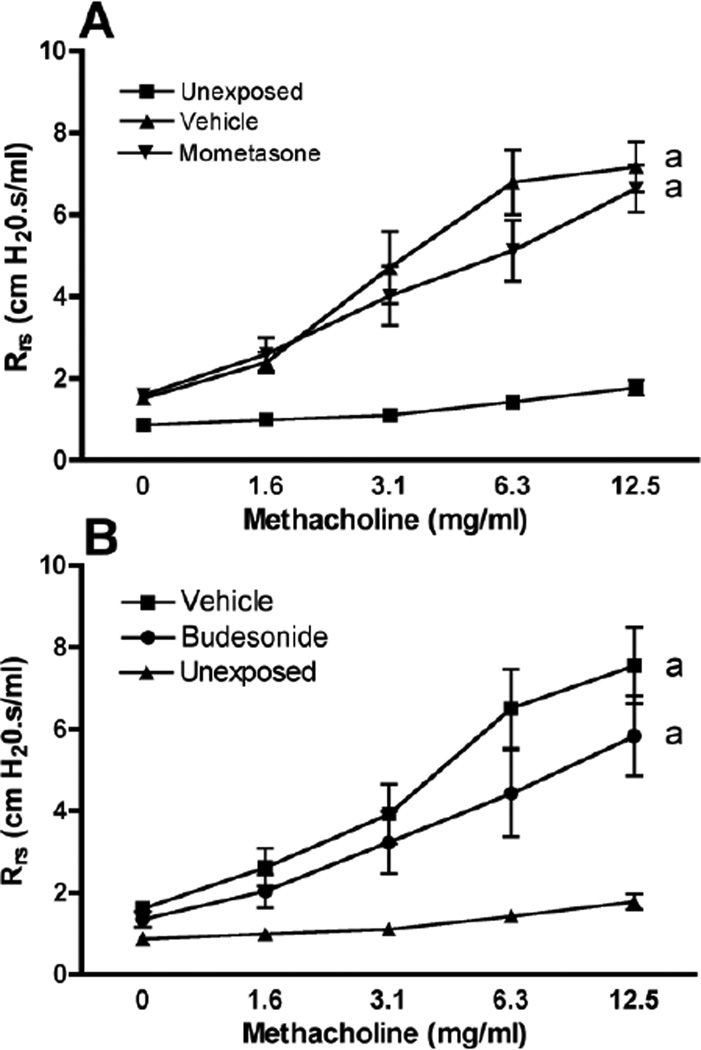
Mice were exposed to chlorine and treated with mometasone (A) or budesonide (B) i.p. at the indicated doses 1 and 10 h after exposure and then the following day 2 h before lung function measurements. Rrs, respiratory system resistance. a, dose-response curves different at p<0.01 vs. unexposed.

References

    1. Abraham E, Carmody A, Shenkar R, Arcaroli J. Neutrophils as early immunologic effectors in hemorrhage- or endotoxemia-induced acute lung injury. Am. J. Physiol. Lung Cell Mol. Physiol. 2000;279:L1137–L1145. - PubMed
    1. Agabiti N, Ancona C, Forastiere F, Di Napoli A, Lo Presti E, Corbo GM, D'Orsi F, Perucci CA. Short term respiratory effects of acute exposure to chlorine due to a swimming pool accident. Occup. Environ. Med. 2001;58:399–404. - PMC - PubMed
    1. Balamayooran G, Batra S, Fessler MB, Happel KI, Jeyaseelan S. Mechanisms of neutrophil accumulation in the lungs against bacteria. Am. J. Respir. Cell Mol. Biol. 2010;43:5–16. - PMC - PubMed
    1. Barnes PJ. Scientific rationale for inhaled combination therapy with long-acting beta2-agonists and corticosteroids. Eur. Resp. J. 2002;19:182–191. - PubMed
    1. Barquin N, Ciccolella DE, Ridge KM, Sznajder JI. Dexamethasone upregulates the Na-K-ATPase in rat alveolar epithelial cells. Am. J. Physiol. 1997;273:L825–L830. - PubMed

Publication types

MeSH terms