


Uterine perforation - 5-year experience in 3-D image guided gynaecological brachytherapy at Institute of Oncology Ljubljana
- PMID: 23801912
- PMCID: PMC3691089
- DOI: 10.2478/raon-2013-0030
Uterine perforation - 5-year experience in 3-D image guided gynaecological brachytherapy at Institute of Oncology Ljubljana
Abstract
Background: Accurate applicator placement is a precondition for the success of gynaecological brachytherapy (BT). Unrecognized uterine perforation can lead to bleeding, infection, high doses to pelvic organs and underdosage of the target volume, resulting in acute morbidity, long-term complications and reduced chance of cure. We aimed to assess the incidence and clinical characteristics of our cases with uterine perforation, review their management and impact on the treatment course.
Patinets and methods: In all patients, treated with utero-vaginal image guided BT for gynaecological cancer between January 2006 and December 2011, the CT/MR images with the applicator in place were reviewed. The incidence of uterine perforations was recorded. Clinical factors that may have predisposed to increased risk of perforation were recorded. Management of perforations and their impact on treatment course was assessed.
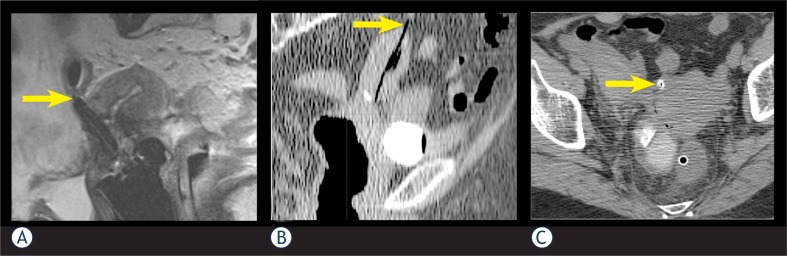
Results: 219 patients (428 applications) were suitable for analysis. Uterine perforation was found in 13 (3.0%) applications in 10 (4.6%) patients. The most frequent perforation site was posterior uterine wall (n = 9), followed by anterior wall (n = 2) and fundus (n = 2). All cases were managed conservatively, without complications. Prophylactic antibiotics were administered in 8 cases. In 4 patients, abdominal and/or transrectal ultrasound (US) guidance was used on subsequent applications for applicator insertion; adequate applicator placement was achieved and treatment completed as planned in all cases.
Conclusions: 3D imaging for BT planning enables accurate identification of uterine perforations. The incidence of perforations at our department is one of the lowest reported in the literature. US guidance of applicator insertion is useful and feasible, allowing to complete the planned treatment even in challenging cases.
Keywords: 3D imaging; brachytherapy; ultrasound guidance; uterine perforation.
Figures
References
-
- Kim RY, Levy DS, Brascho DJ, Hatch KD. Uterine perforation during intra-cavitary application. Prognostic significance in carcinoma of the cervix. Radiology. 1983;147:249–51. - PubMed
-
- Corn BW, Shaktman BD, Lanciano RM, Hogan WM, Cater JR, Anderson L, et al. Intra- and perioperative complications associated with tandem and colpostat application for cervix cancer. Gynecol Oncol. 1997;64:224–9. - PubMed
-
- Jhingran A, Eifel PJ. Perioperative and postoperative complications of intra-cavitary radiation for FIGO stage I–III carcinoma of the cervix. Int J Radiat Oncol Biol Phys. 2000;46:1177–83. - PubMed
-
- Granai CO, Doherty F, Allee P, Ball HG, Madoc-Jones H, Curry SL. Ultrasound for diagnosing and preventing malplacement of intrauterine tandems. Obstet Gynecol. 1990;75:110–3. - PubMed
-
- Matsuyama T, Tsukamoto N, Matsukuma K, Kamura T, Jingu K. Uterine perforation at the time of brachytherapy for the carcinoma of the uterine cervix. Gynecol Oncol. 1986;23:205–11. - PubMed
LinkOut - more resources
Full Text Sources
Other Literature Sources
