. 2013 Aug;89(4):583-95.
doi: 10.1111/mmi.12307. Epub 2013 Jul 15.

Competence and natural transformation in vibrios

Affiliations

Competence and natural transformation in vibrios

Yan Sun et al. Mol Microbiol. 2013 Aug.

Abstract

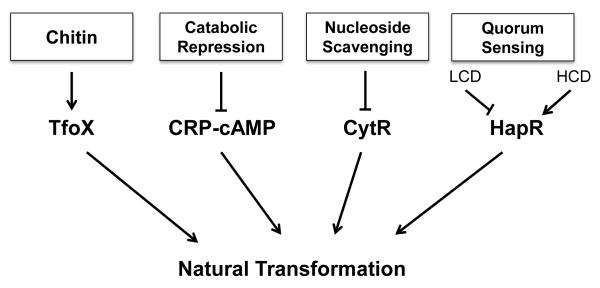
Natural transformation is a major mechanism of horizontal gene transfer in bacteria. By incorporating exogenous DNA elements into chromosomes, bacteria are able to acquire new traits that can enhance their fitness in different environments. Within the past decade, numerous studies have revealed that natural transformation is prevalent among members of the Vibrionaceae, including the pathogen Vibrio cholerae. Four environmental factors: (i) nutrient limitation, (ii) availability of extracellular nucleosides, (iii) high cell density and (iv) the presence of chitin, promote genetic competence and natural transformation in Vibrio cholerae by co-ordinating expression of the regulators CRP, CytR, HapR and TfoX respectively. Studies of other Vibrionaceae members highlight the general importance of natural transformation within this bacterial family.


Figures

Fig. 1
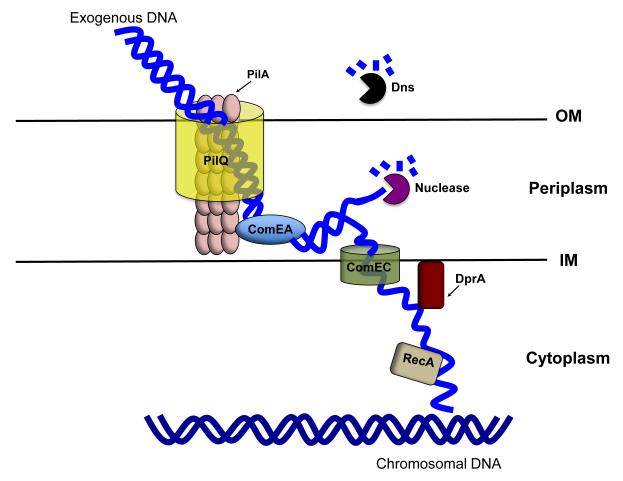
Fig. 1. The natural transformation machinery in V. cholerae
Double-stranded DNA enters the periplasm by means of the secretin pore PilQ located within the outer membrane. The pseudo-pilus (PilA represents a subunit) helps the DNA bind to the periplasmic protein ComEA, which directs the DNA to the inner-membrane channel ComEC. Other components of a type IV pili system (not shown) may contribute to this process, but their involvement in natural transformation remains unknown. The extracellular DNA that fails to enter the periplasm is degraded by extracellular deoxyribonuclease Dns. One strand of the DNA enters the cytoplasm through ComEC, while the complement strand is degraded. The internalized single-stranded DNA is shielded from nuclease attack by the DNA protecting protein DprA and incorporated into chromosome by the recombinase RecA. IM = inner membrane; OM = outer membrane.
Fig. 2
Fig. 2. The current model of the regulatory network governing competence in V. cholerae
The four known environmental stimuli are chitin, quorum sensing, and the availability of carbon sources and extracellular nucleosides. The model does not include information concerning crosstalk between signaling cascades. The lines connecting components of the signaling cascade do not indicate direct interaction. LCD = low cell density; HCD = high cell density.
Fig. 3
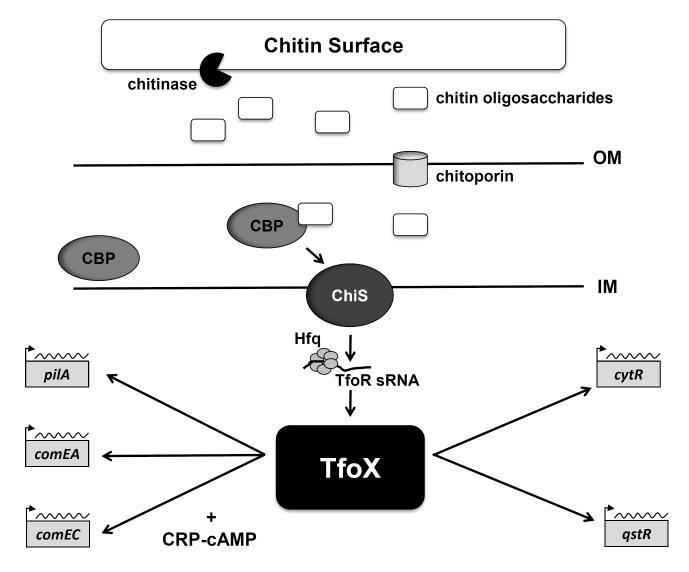
Fig. 3. Chitin-dependent signaling pathways for natural transformation in V. cholerae
Chitin is degraded by extracellular chitinases into oligosaccharides fragments, which enter the periplasm through a chitoporin. With the help of CBP (chitin oligosaccharides binding protein), the sensor kinase ChiS senses the presence of chitin oligosaccharides and activates the TfoR sRNA. Via the RNA chaperone Hfq, TfoR initiates translation of TfoX, the master regulator of competence in Vibrionaceae. Consequently, TfoX up-regulates the expression of numerous competence genes (e.g., pilA, comEA and comEC) and of two genes encoding transcription factors (cytR and qstR). Regulation of the competence genes by TfoX also requires the cAMP-CRP complex. The lines connecting components of the signaling cascade represent positive regulation, but not direct interaction. IM = inner membrane; OM = outer membrane.
Fig. 4
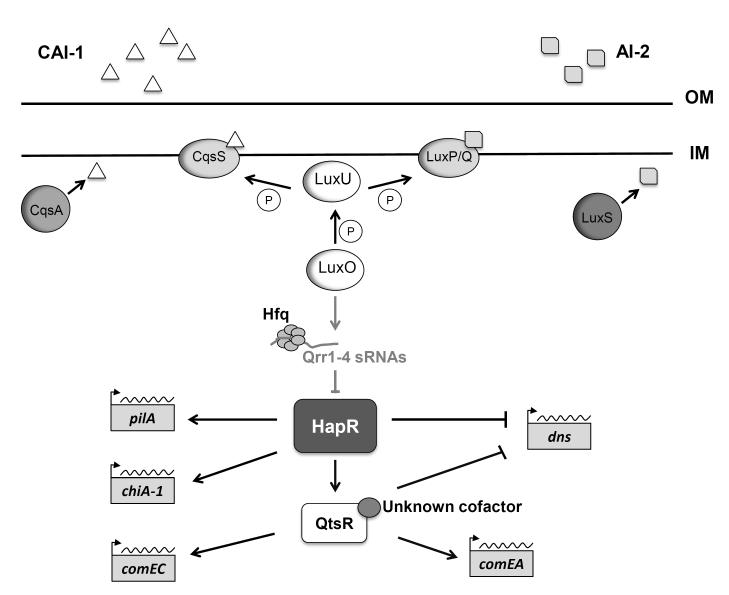
Fig. 4. Quorum sensing-dependent pathways for natural transformation in V. cholerae
At high cell density (depicted here), CAI-1 and AI-2 autoinducers bind to their cognate histidine kinase receptors (CqsS and LuxP/Q, respectively), which shuttle phosphate from the response regulator LuxO. In the unphosphorylated form, LuxO is unable to transcribe the Qrr1-4 sRNAs (grey), and, despite the presence of the RNA chaperone Hfq, the quorum-sensing master regulator HapR is produced. HapR positively regulates transcription of pilA and chiA-1 while repressing transcription of dns. By up-regulating expression of the transcription factor QstR, HapR also indirectly exerts positive effect on transcription of comEA and comEC. An unknown cofactor was also implicated in the transcriptional regulation by QstR. The lines connecting components of the signaling cascade represent positive or negative regulation, but not direct interaction. Grey lines and factors indicate inactive pathways and factors not present at high cell density. IM = inner membrane; OM = outer membrane.
Fig. 5
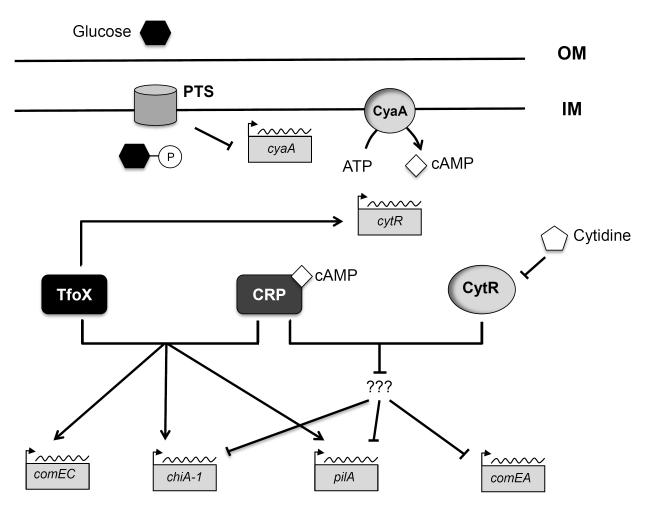
Fig. 5. Impact of external carbon-source and nucleosides on natural transformation pathways in V. cholerae
In the absence of a preferred carbon source, CyaA increases the intracellular concentration of cAMP. The cAMP-CRP complex interacts with TfoX to activate transcription of multiple genes involved in natural transformation (pilA, comEC and dprA) and in chitin metabolism (chiA-1). When pyrimidine levels are low, the nucleoside scavenging cytidine repressor CytR interacts with CRP to anti-activate putative repressors of comEA, pilA and chiA-1, resulting in upregulation of these genes. The model is over-simplified, and it remains unknown whether comEA, pilA and chiA-1 share a common repressor that is regulated by CytR-CRP. The lines connecting components of the signaling cascade represent positive or negative regulation, but not direct interaction. IM = inner membrane; OM = outer membrane.

References

    1. Aas FE, Wolfgang M, Frye S, Dunham S, Løvold C, Koomey M. Competence for natural transformation in Neisseria gonorrhoeae: components of DNA binding and uptake linked to type IV pilus expression. Mol Microbiol. 2002;46:749–760. - PubMed
    1. Alam M, Sultana M, Nair G, B Siddique, A K, Hasan NA, Sack RB, et al. Viable but nonculturable Vibrio cholerae O1 in biofilms in the aquatic environment and their role in cholera transmission. Proc Natl Acad Sci USA. 2007;104:17801–6. - PMC - PubMed
    1. Albert MJ, Bhuiyan NA, Talukder KA, Farugue AS, Nahar S, Faruque SM, et al. Phenotypic and genotypic changes in Vibrio cholerae O139 Bengal. J Clin Microbiol. 1997;35:2588–2592. - PMC - PubMed
    1. Amako K, Shimodori S, Imoto T, Miake S, Umeda A. Effects of chitin and its soluble derivatives on survival of Vibrio cholerae O1 at low temperature. Appl Environ Microbiol. 1987;53:603–605. - PMC - PubMed
    1. Anorsti C. Microbial extracellular enzymes and the marine carbon cycle. Ann Rev Mar Sci. 2011;3:401–425. - PubMed

Publication types

MeSH terms