


Sleep discrepancy, sleep complaint, and poor sleep among older adults
- PMID: 23804432
- PMCID: PMC3744049
- DOI: 10.1093/geronb/gbt030
Sleep discrepancy, sleep complaint, and poor sleep among older adults
Abstract
Objectives: Discrepancy between self-report- and actigraphy-measured sleep, often considered an artifact of measurement error, has been well documented among insomnia patients. Sleep problems are common among older adults, and this discrepancy may represent meaningful sleep-related phenomenon, which could have clinical and research significance.
Method: Sleep discrepancy was examined in 4 groups of older adults (N = 152, mean age = 71.93 years) based on sleep complaint versus no complaint and presence versus absence of insomnia symptoms. Participants completed the Beck Depression Inventory-second edition (BDI-II) and 14 nights of sleep diaries and actigraphy.
Results: Controlling for covariates, group differences were found in the duration and frequency of discrepancy in sleep onset latency (SOLd) and wake after sleep onset (WASOd). Those with insomnia symptoms and complaints reported greater duration and frequency of WASOd than the other 3 groups. Quantities of SOLd and WASOd were related to BDI-II score and group status, indicating that sleep discrepancy has meaningful clinical correlates.
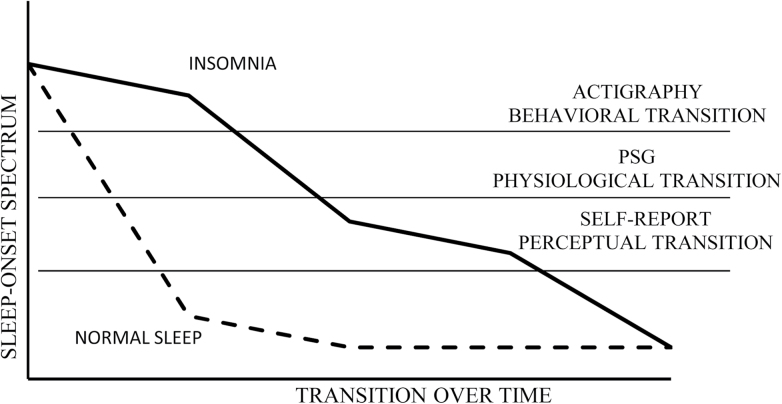
Discussion: Discrepancy occurred across all groups but was pronounced among the group with both insomnia symptoms and complaints. This discrepancy may provide a means of quantifying and conceptualizing the transition from wake to sleep among older adults, particularly those with sleeping problems.
Keywords: Depression; Insomnia; Older adults; Sleep; Sleep discrepancy.
Figures
References
-
- Ancoli-Israel S., Cole R., Alessi C., Chambers M., Moorcroft W., Pollak C. P. (2003). The role of actigraphy in the study of sleep and circadian rhythms. Sleep, 26, 342–392 - PubMed
-
- Baker F. C., Maloney S., Driver H. S. (1999). A comparison of subjective estimates of sleep with objective polysomnographic data in healthy men and women. Journal of Psychosomatic Research, 47, 335–341.10.1016/S0022-3999(99)00017-3 - PubMed
-
- Beck A. T., Steer R. A., Brown G.K. (Eds.). (1996). Beck Depression Inventory-Second Edition. San Antonio, TX: The Psychological Corporation
-
- Boselli M., Parrino L., Smerieri A., Terzano M. G. (1998). Effect of age on EEG arousals in normal sleep. Sleep, 21, 351–357 - PubMed
-
- Buysse D. J., Germain A., Moul D. E. (2005). Diagnosis, epidemiology and consequences of insomnia. Primary Psychiatry, 12, 37–44
Publication types
MeSH terms
Grants and funding
LinkOut - more resources
Full Text Sources
Other Literature Sources
Medical
