


Tracking a dietary pattern associated with increased adiposity in childhood and adolescence
- PMID: 23804590
- PMCID: PMC3846445
- DOI: 10.1002/oby.20542
Tracking a dietary pattern associated with increased adiposity in childhood and adolescence
Abstract
Objective: Understanding dietary tracking may help to inform interventions to improve dietary intakes and health outcomes. This study investigated how a dietary pattern (DP) associated with increased adiposity in childhood tracked from 7 to 13 years of age, in the Avon Longitudinal Study of Parents and Children (ALSPAC).
Design and methods: Three-day food diaries were collected at 7, 10 and 13 years. Reduced rank regression was used to score respondents for an energy-dense, high fat, low fiber DP at each age. Tracking coefficients were estimated for the DP and its key foods using data from 7,027 children.
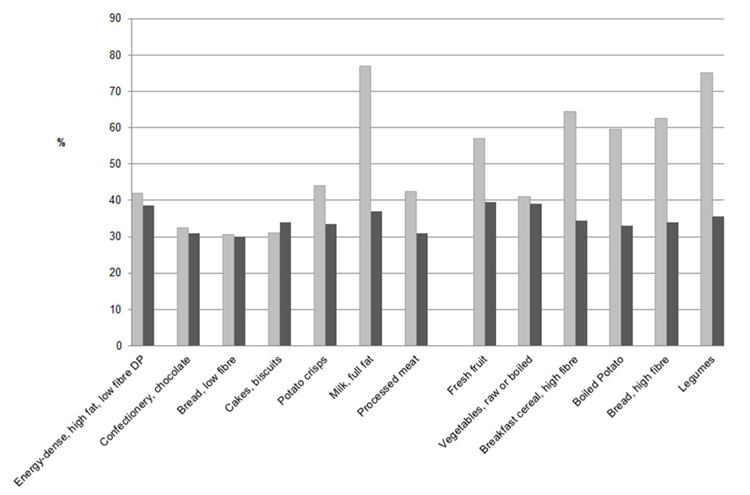
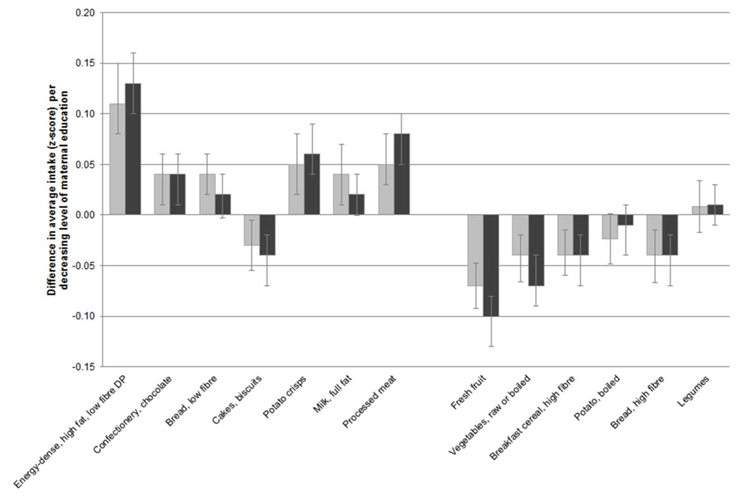
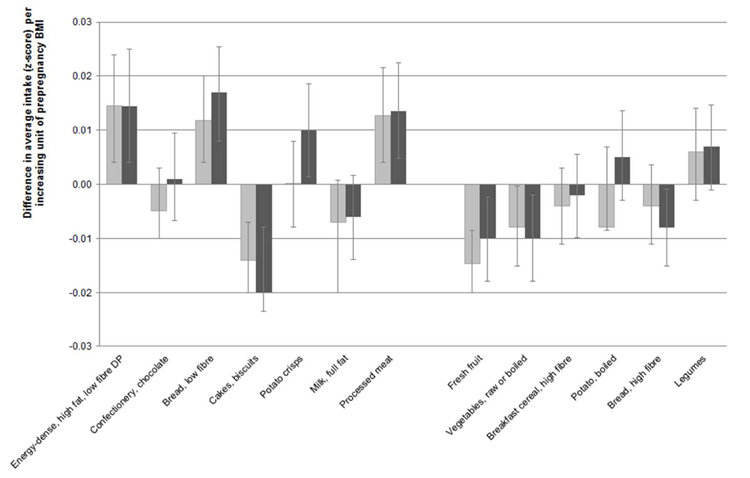
Results: The DP tracking coefficient was 0.48 (95% CI: 0.44-0.52) for boys and 0.38 (95% CI: 0.35-0.41) for girls. Of 10 key food groups, fruit, vegetables, high fiber bread, high fiber breakfast cereals and full fat milk intakes exhibited the strongest tracking, particularly among low consumers. Lower maternal education and greater prepregnancy maternal BMI predicted higher DP z scores and lower fruit and vegetable intakes.
Conclusions: A dietary pattern associated with increased adiposity tracks moderately from 7 to 13 years of age in this large UK cohort. Specific groups of families may require additional support to foster lifelong healthy dietary habits in their children.
Copyright © 2013 The Obesity Society.
Figures
References
-
- Mikkilä V, Räsänen L, Raitakari OT, Pietinen P, Viikari J. Consistent dietary patterns identified from childhood to adulthood: the Cardiovascular Risk in Young Finns Study. Br J Nutr. 2005;93:923–931. - PubMed
-
- Pearson N, Salmon J, Campbell K, Crawford D, Timperio A. Tracking of children’s body-mass index, television viewing and dietary intake over five-years. Prev Med. 2011;53:268–270. - PubMed
-
- Zive MM, Berry CC, Sallis JF, Frank GC, Nader PR. Tracking dietary intake in white and Mexican-American children from age 4 to 12 years. J Am Diet Assoc. 2002;102:683–689. - PubMed
-
- Robson PJ, Gallagher AM, Livingstone MBE, Cran GW, Strain JJ, Savage JM, et al. Tracking of nutrient intakes in adolescence: the experiences of the Young Hearts Project, Northern Ireland. Br J Nutr. 2000;84:541–548. - PubMed
Publication types
MeSH terms
Grants and funding
LinkOut - more resources
Full Text Sources
Other Literature Sources
Medical
