


New insights into adipose tissue VEGF-A actions in the control of obesity and insulin resistance
- PMID: 23805408
- PMCID: PMC3661112
- DOI: 10.4161/adip.22880
New insights into adipose tissue VEGF-A actions in the control of obesity and insulin resistance
Abstract
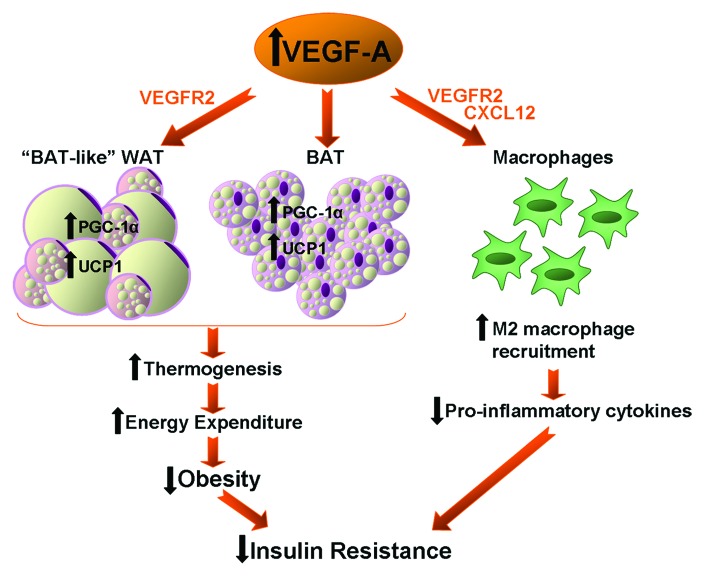
Vascular endothelial growth factor A (VEGF-A) is classically viewed as a key factor in angiogenesis and tissue remodeling. However, recent evidence suggests a potential role of this growth factor in the control of energy metabolism and adipose tissue function. In this regard, we and others have described the effects of the up and downregulation of VEGF-A in adipose tissue on the control of energy homeostasis. VEGF-A overexpression protects against diet-induced obesity and insulin resistance. The observation that VEGF-A overexpression leads to an increase in brown adipose tissue (BAT) thermogenesis and also promotes a "BAT-like" phenotype in white adipose tissue depots is of particular relevance for the understanding of the mechanisms underlying obesity development. In addition, VEGF-A may not only have pro-inflammatory but also anti-inflammatory properties, with a chemotactic activity specific for M2 anti-inflammatory macrophages. This new scientific evidence highlights the importance that VEGF-A actions on metabolism could have on the design of new treatments for obesity, insulin resistance and obesity-related disorders.
Keywords: VEGF-A; adipose tissue; inflammation; insulin resistance; obesity.
Figures
Comment on
- I Elias, S Franckhauser, T Ferré, L Vilà, S Tafuro, S Muñoz.Adipose tissue overexpression of vascular endothelial growth factor protects against diet-induced obesity and insulin resistanceDiabetes20126118011310.2337/db11-0832. doi: 10.2337/db11-0832
References
LinkOut - more resources
Full Text Sources
Other Literature Sources
