


Trend analysis of the pharmaceutical market in Iran; 1997-2010; policy implications for developing countries
- PMID: 23805853
- PMCID: PMC3718624
- DOI: 10.1186/2008-2231-21-52
Trend analysis of the pharmaceutical market in Iran; 1997-2010; policy implications for developing countries
Abstract
Background: So far, no detailed study of the Iranian pharmaceutical market has been conducted, and only a few studies have analyzed medicine consumption and expenditure in Iran. Pharmaceutical market trend analysis remains one of the most useful instruments to evaluate the pharmaceutical systems efficiency. An increase in imports of medicines, and a simultaneous decrease in domestic production prompted us to investigate the pharmaceutical expenditure structure. On the other hand, analyzing statistics provides a suitable method to assess the outcomes of national pharmaceutical policies and regulations.
Methods: This is a descriptive and cross-sectional study which investigates the Iranian pharmaceutical market over a 13-year period (1997-2010). This study used the Iranian pharmaceutical statistical datasheet published by the Iranian Ministry of Health. Systematic searches of the relevant Persian and English research literature were made. In addition, official government documents were analyzed as sources of both data and detailed statements of policy.
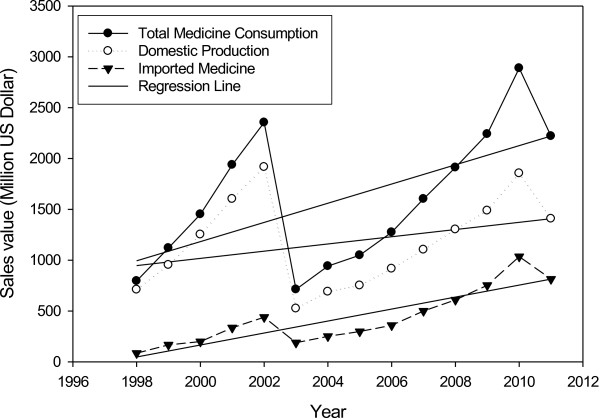
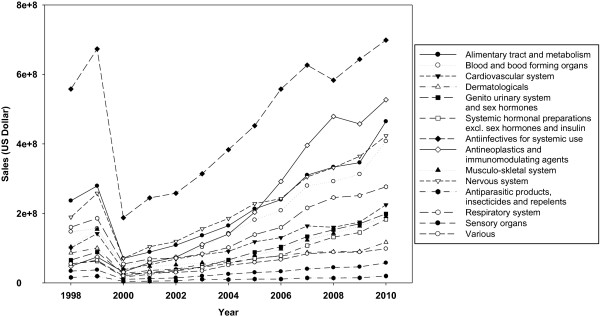
Results: Analysis of the Iranian pharmaceutical market in the 13-year period shows that medicine consumption sales value growth has been 28.38% annually. Determination of domestic production and import reveals that 9.3% and 42.3% annual growth, respectively, have been experienced.
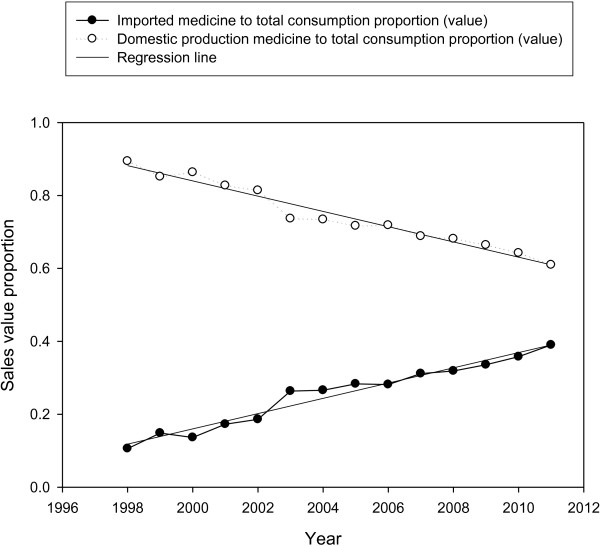
Conclusions: The Iranian pharmaceutical market has undergone great growth in comparison with developing countries and the pharmerging group, and the market is expanding quickly while a major share goes to biotechnology drugs, which implies the need to commercialization activities in novel fields like pharmaceutical biotechnology. This market expansion has been in favor of imported medicine in sales terms, caused by the reinforcement of suspicious policies of policy makers that necessitates fundamental rearrangements.
Figures
References
-
- Ensor T, Weinzierl S. Regulating health care in low- and middle-income countries: Broadening the policy response in resource constrained environments. Soc Sci Med. 2007;65:355–366. - PubMed
-
- Kebrieezadeh A, Eslamitabar S, Khatibi M. Iranian pharmaceutical law and regulations. 2. Tehran: Razico; 2009.
-
- Reinhardt UE. An information infrastructure for the pharmaceutical market. Health Aff. 2004;23(1):107–112. - PubMed
-
- Davari M, Walley T, Haycox A. Pharmaceutical policy and market in Iran: past experiences and future challenges. J Pharm Health Serv Res. 2011;2:47–52.
-
- Cheraghali AM. Pharmacoeconomics: An Effective Tool for Prioritization in Iran Healthcare System. Iranian J Pharm Res. 2008;7(2):89–91.
LinkOut - more resources
Full Text Sources
Other Literature Sources
