


Incidence and predictors of tuberculosis among adult people living with human immunodeficiency virus at the University of Gondar Referral Hospital, Northwest Ethiopia
- PMID: 23806088
- PMCID: PMC3698213
- DOI: 10.1186/1471-2334-13-292
Incidence and predictors of tuberculosis among adult people living with human immunodeficiency virus at the University of Gondar Referral Hospital, Northwest Ethiopia
Abstract
Background: Tuberculosis (TB) is the leading killer of people living with HIV (PLHIV). Many of these deaths occur in developing countries. This study aimed at determining the incidence and predictors of tuberculosis among PLHIV.
Methods: A five year retrospective follow up study was conducted among adult PLHIV. The Cox proportional hazards model was used to identify predictors.
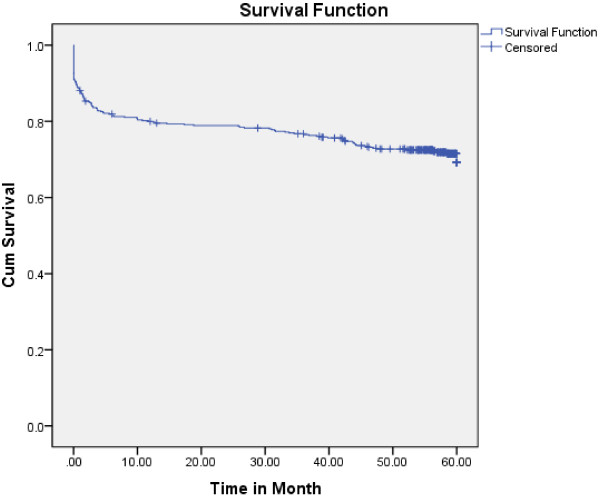
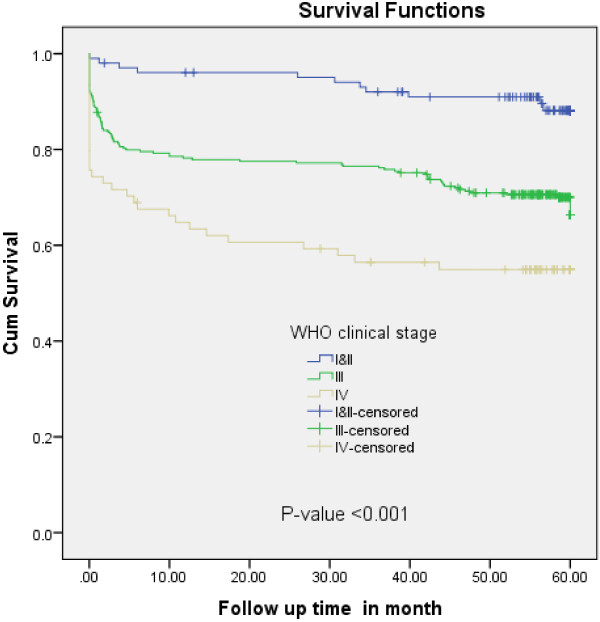
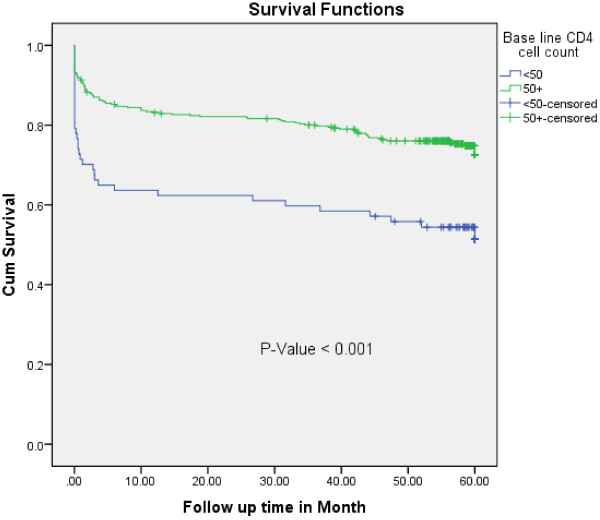
Results: A total of 470 patients were followed and produced 1724.13 Person-Years (PY) of observation, and 136 new TB cases occurred during the follow up period. The overall incidence density of TB was 7.88 per 100 PY. It was high (95.9/100PY) in the first year of enrolment. The cumulative proportion of TB- free survivals was 79% and 67% at the end of the first and fifth years, respectively. Baseline WHO clinical stage III (AHR = 2.88, 95% CI = 1.53-5.43), WHO clinical stage IV (AHR = 3.82, 95% CI = 1.86-7.85), CD4 count <50 cell/ul (AHR = 2.13, 95% CI = 1.28-3.53) and ambulatory or bed ridden functional status (AHR = 1.64, 95%CI = 1.13-2.38) were predictors of time to TB occurrence.
Conclusions: TB incidence rate among PLHIV, especially in the first year of enrollment was high. Advanced WHO clinical stage, limited functional status, and low CD4 count (<50 cell cell/ul) were found to be the independent predictors of TB occurrence. Early care seeking and initiation of HAART to improve the CD4 count and functional status are important to reduce the risk of TB infection.
Figures
References
-
- WHO. Priority research questions for TB/HIV in HIV-prevalent and resource-limited settings. Geneva, Switzerland; 2010.
-
- FMOH. Tuberculosis, Leprosy, and TB/HIV prevention and control programme manual. Fourth edition. Addis Abeba, Ethiopia; 2008. pp. 71–74.
-
- Jamison T, Feachem G, Makgoba W, Bos R, Baingana K, Hofman J. Disease and Mortality in Sub-Saharan Africa. second. Washington: World Bank; 2006. - PubMed
MeSH terms
LinkOut - more resources
Full Text Sources
Other Literature Sources
Medical
Research Materials
