. 2013 Sep;40(3):195-202.
doi: 10.1097/SHK.0b013e31829f91fc.

Fresh frozen plasma lessens pulmonary endothelial inflammation and hyperpermeability after hemorrhagic shock and is associated with loss of syndecan 1

Affiliations

Fresh frozen plasma lessens pulmonary endothelial inflammation and hyperpermeability after hemorrhagic shock and is associated with loss of syndecan 1

Zhanglong Peng et al. Shock. 2013 Sep.

Abstract

We have recently demonstrated that injured patients in hemorrhagic shock shed syndecan 1 and that the early use of fresh frozen plasma (FFP) in these patients is correlated with improved clinical outcomes. As the lungs are frequently injured after trauma, we hypothesized that hemorrhagic shock-induced shedding of syndecan 1 exposes the underlying pulmonary vascular endothelium to injury resulting in inflammation and hyperpermeability and that these effects would be mitigated by FFP. In vitro, pulmonary endothelial permeability, endothelial monolayer flux, transendothelial electrical resistance, and leukocyte-endothelial binding were measured in pulmonary endothelial cells after incubation with equal volumes of FFP or lactated Ringer's (LR). In vivo, using a coagulopathic mouse model of trauma and hemorrhagic shock, pulmonary hyperpermeability, neutrophil infiltration, and syndecan 1 expression and systemic shedding were assessed after 3 h of resuscitation with either 1× FFP or 3× LR and compared with shock alone and shams. In vitro, endothelial permeability and flux were decreased, transendothelial electrical resistance was increased, and leukocyte-endothelial binding was inhibited by FFP compared with LR-treated endothelial cells. In vivo, hemorrhagic shock was associated with systemic shedding of syndecan 1, which correlated with decreased pulmonary syndecan 1 and increased pulmonary vascular hyperpermeability and inflammation. Fresh frozen plasma resuscitation, compared with LR resuscitation, abrogated these injurious effects. After hemorrhagic shock, FFP resuscitation inhibits endothelial cell hyperpermeability and inflammation and restores pulmonary syndecan 1 expression. Modulation of pulmonary syndecan 1 expression may mechanistically contribute to the beneficial effects FFP.


Conflict of interest statement

Conflict of Interest: The authors declare no competing conflicts of interest.

Figures
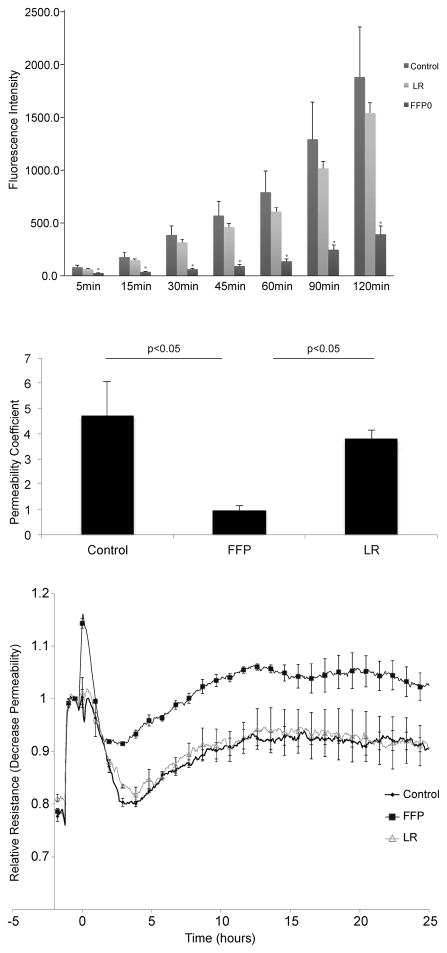
Figure 1
Figure 1. FFP decreases pulmonary endothelial cell permeability in vitro
A. Fluorescence intensity over time in a transwell endothelial cell permeability assay for cells treated with 10% LR or FFP diluted in basal medium. At all time points, fluorescence in FFP treated cells was significantly lower than in LR and control treated cells (*=p<0.05), while there was no significant difference at any time point between LR and controls. B. Permeability coefficients for each group at 10% concentration. All permeability coefficients are expressed as cm/min. Error bars represent the standard error of the mean. C. TEER measured at 4000 hertz in cells treated with 10% FFP, 10% LR or control media. FFP significantly increased transendothelial resistance compared to controls and LR (p < 0.05 by ANOVA with Tukey post hoc tests) indicating decreased endothelial permeability. Each trace represents the mean trace from three replicates. Dots appear with error bars indicating standard error of the mean at 1 hour intervals.
Figure 2
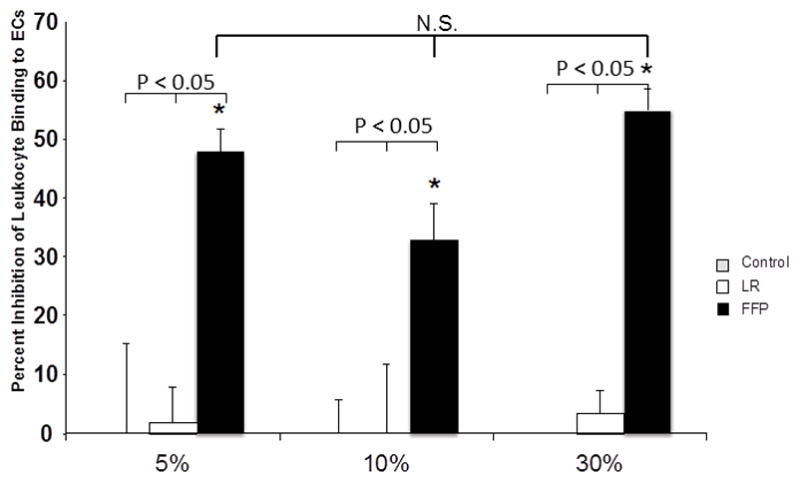
Figure 2. FFP decreases leukocyte adhesion in vitro
Percent decrease in the number of leukocytes bound to endothelial cells incubated with 10% LR or FFP diluted in basal medium. * indicated significance from both control and LR groups (p<0.05), NS= not significant.
Figure 3
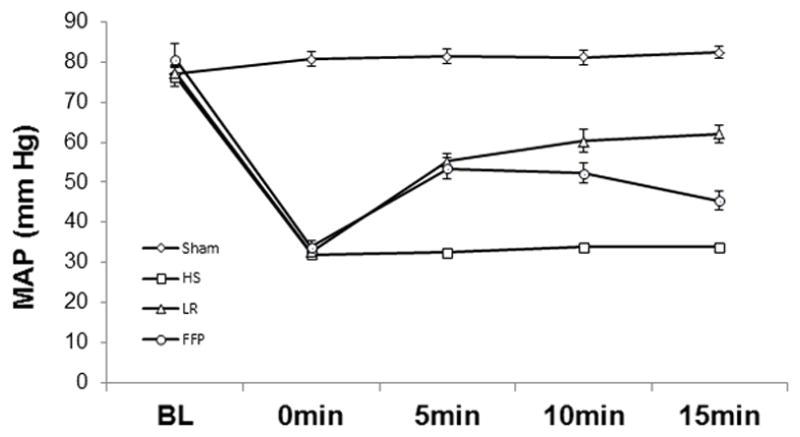
Figure 3. Mean arterial pressure during early resuscitation
Mean arterial pressure (MAP) for shams was significantly higher compared to all other groups (p<0.01). There was no significant difference between 1X FFP and 3XLR while hemorrhagic shock (HS) was significantly lower than both FFP and LR (p<0.01). Data was analyzed using repeated measure ANOVA, followed by Tukey’s post-hoc tests and Bonerroni correction, n=8/group.
Figure 4
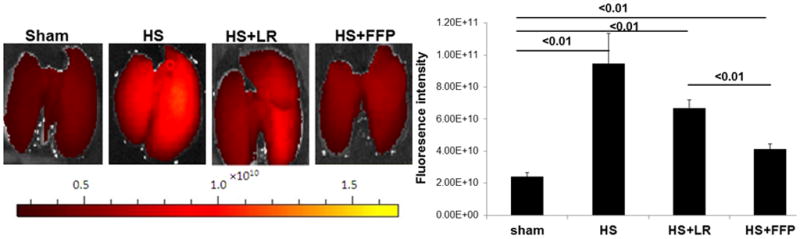
Figure 4. FFP mitigates pulmonary hyperpermeability in vivo
Vascular permeability was assessed in intact organs by measuring dye extravasation the infrared sensitive dye Alexafluor 680 into the lung using a Caliper Lumina XR imaging system (IVIS). Lung permeability was significantly increased after trauma and hemorrhagic shock and 3X lactated Ringers but was reduced by 1X FFP. Data are expressed as mean ± SEM, n=8 per group, p<0.05 considered statistically significant. HS= trauma and hemorrhagic shock; FFP= fresh frozen plasma; and LR= lactated Ringers.
Figure 5
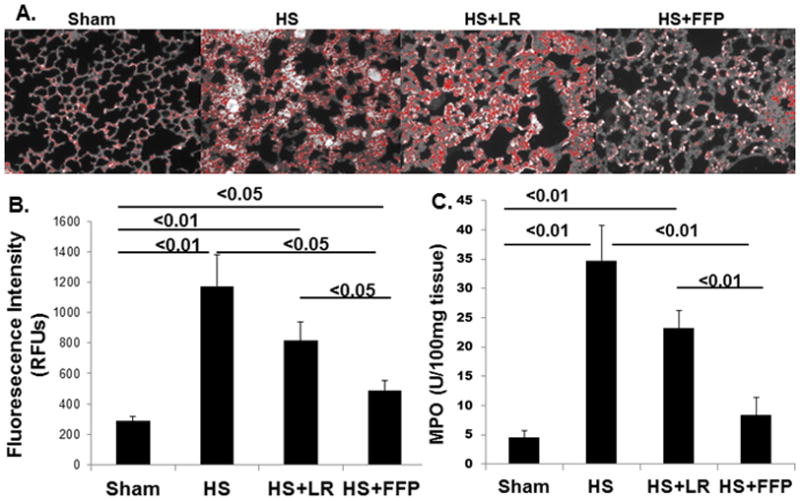
Figure 5. FFP lessens neutrophil infiltration
Infiltration of neutrophils into the lung tissue was assessed by myeloperoxidase (MPO) immunofluorescence staining (A and B) and MPO activity (C). Both MPO immunofluorescence and activity demonstrated HS significantly increased MPO compared to shams and 3XLR but was further significantly decreased by 1XFFP. Data are expressed as mean ± SEM, n=8 per group; p<0.05 considered statistically significant. HS= trauma and hemorrhagic shock; FFP= fresh frozen plasma; and LR= lactated Ringers
Figure 6
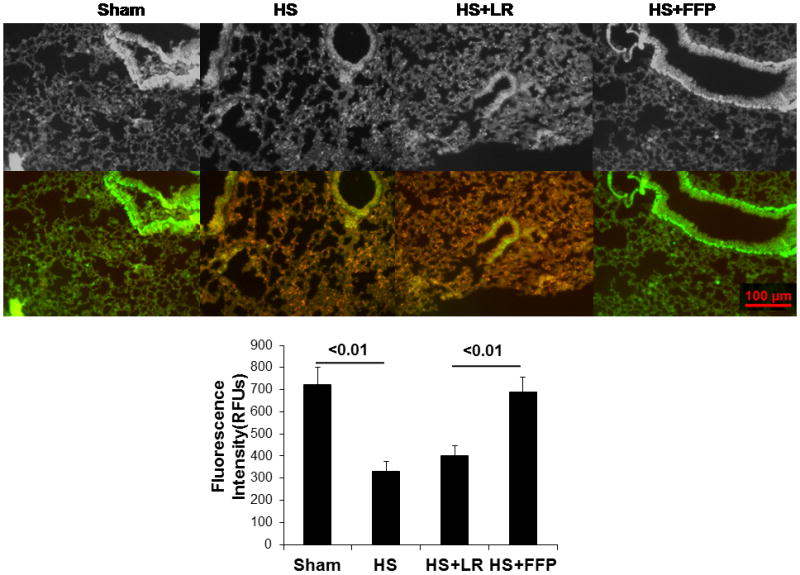
Figure 6. Pulmonary syndecan-1 is increased by FFP compared to lactated Ringers resuscitation
After trauma and HS alone or HS with 3XLR resuscitation, pulmonary syndecan-1 immunostaining was significantly decreased compared to 1XFFP and shams. Data are expressed as mean ± SEM, n=8 per group, p<0.05 considered statistically significant. HS= trauma and hemorrhagic shock; FFP= fresh frozen plasma; and LR= lactated Ringers
Figure 7
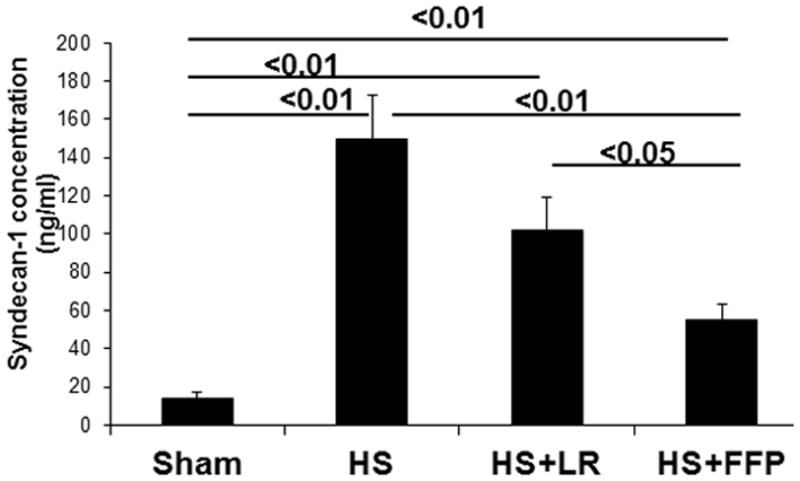
Figure 7. Shedding of the syndecan-1 ectodomain is lessened by FFP
Systemic levels of syndecan-1 ectodomain were quantified by ELISA. Shedding was increased by trauma and hemorrhagic shock (HS), lessened by 3X lactated Ringers (LR) resuscitation, but further decreased by 1X fresh frozen plasma (FFP). Data are expressed as mean ± SEM, n=8 per group, p<0.05 considered statistically significant.

References

    1. Savery MD, Jiang JX, Park PW, Damiano ER. The endothelial glycocalyx in syndecan-1 deficient mice. Microvascular Research. 2013;87:83–91. - PMC - PubMed
    1. Teng YH, Aquino RS, Park PW. Molecular functions of syndecan-1 in disease. Matrix Biol. 2012;31(1):3–16. - PMC - PubMed
    1. Hayashida K, Parks WC, Park PW. Syndecan-1 shedding facilitates the resolution of neutrophilic inflammation by removing sequestered CXC chemokines. Blood. 2009;114:3033–3043. - PMC - PubMed
    1. Hayashida A, Bartlett AH, Foster TJ, Park PW. Staphylococcus aureus beta-toxin induces lung injury through syndecan-1. Am J Pathol. 2009;174:509–518. - PMC - PubMed
    1. Childs EW, Tharakan B, Byrge N, Tinsley JH, Hunter FA, Smythe WR. Angiopoietin-1 inhibits intrinsic apoptotic signaling and vascular hyperpermeability following hemorrhagic shock. Am J Physiol Heart Circ Physiol. 2008;294:2285–2295. - PubMed

Publication types