


Interactive binocular treatment (I-BiT) for amblyopia: results of a pilot study of 3D shutter glasses system
- PMID: 23807383
- PMCID: PMC3772355
- DOI: 10.1038/eye.2013.113
Interactive binocular treatment (I-BiT) for amblyopia: results of a pilot study of 3D shutter glasses system
Abstract
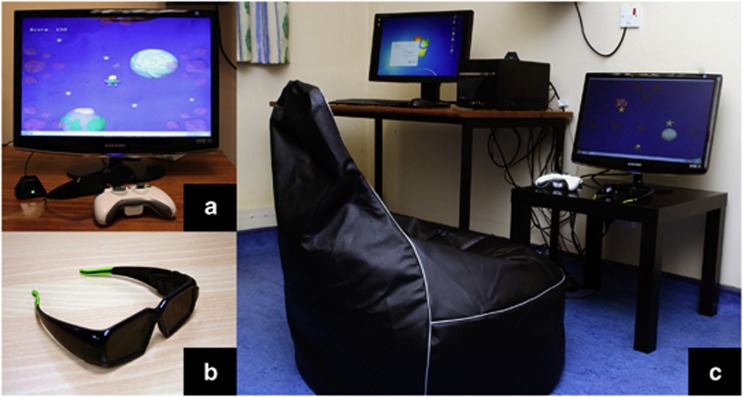
Purpose: A computer-based interactive binocular treatment system (I-BiT) for amblyopia has been developed, which utilises commercially available 3D 'shutter glasses'. The purpose of this pilot study was to report the effect of treatment on visual acuity (VA) in children with amblyopia.
Methods: Thirty minutes of I-BiT treatment was given once weekly for 6 weeks. Treatment sessions consisted of playing a computer game and watching a DVD through the I-BiT system. VA was assessed at baseline, mid-treatment, at the end of treatment, and at 4 weeks post treatment. Standard summary statistics and an exploratory one-way analysis of variance (ANOVA) were performed.
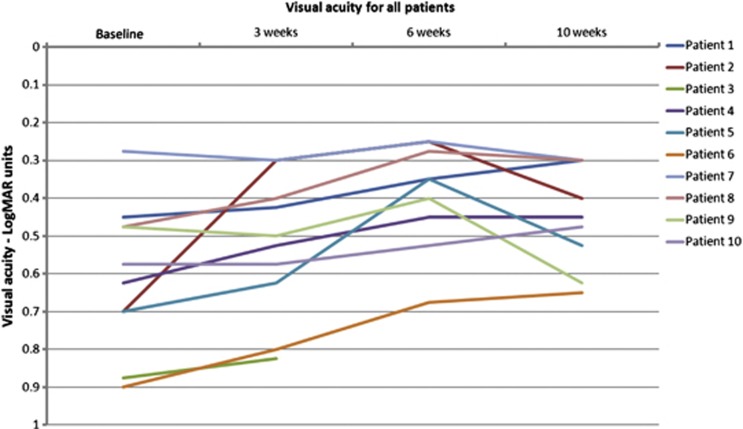
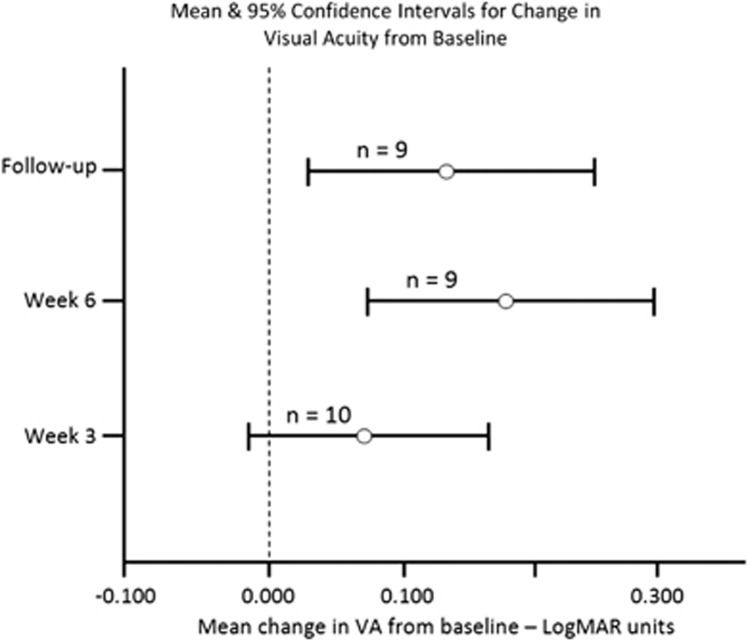
Results: Ten patients were enrolled with strabismic, anisometropic, or mixed amblyopia. The mean age was 5.4 years. Nine patients (90%) completed the full course of I-BiT treatment with a mean improvement of 0.18 (SD=0.143). Six out of nine patients (67%) who completed the treatment showed a clinically significant improvement of 0.125 LogMAR units or more at follow-up. The exploratory one-way ANOVA showed an overall effect over time (F=7.95, P=0.01). No adverse effects were reported.
Conclusion: This small, uncontrolled study has shown VA gains with 3 hours of I-BiT treatment. Although it is recognised that this pilot study had significant limitations-it was unblinded, uncontrolled, and too small to permit formal statistical analysis-these results suggest that further investigation of I-BiT treatment is worthwhile.
Figures
References
-
- Stewart C, Moseley M, Stephens D, Fielder A. Treatment dose–response in amblyopia therapy: the Monitored Occlusion Treatment of Amblyopia Study (MOTAS) Invest Ophthalmol Vis Sci. 2004;45:3048–3054. - PubMed
-
- Koklanis K, Abel LA, Aroni R. Psychosocial impact of amblyopia and its treatment: a multidisciplinary study. Clin Exp Ophthalmol. 2006;34:743–750. - PubMed
-
- Loudon SE, Passchier J, Chaker L, de Vos S, Fronius M, Harrad RA, et al. Psychological causes of non-compliance with electronically monitored occlusion therapy for amblyopia. Br J Ophthalmol. 2009;93:1499–1503. - PubMed
-
- Awan M, Proudlock FA, Gottlob I. A randomized controlled trial of unilateral strabismic and mixed amblyopia using occlusion dose monitors to record compliance. Invest Ophthalmol Vis Sci. 2005;46:1435–1439. - PubMed
Publication types
MeSH terms
Grants and funding
LinkOut - more resources
Full Text Sources
Other Literature Sources
Medical
