


Assessing patient preferences for the delivery of different community-based models of care using a discrete choice experiment
- PMID: 23809234
- PMCID: PMC5060844
- DOI: 10.1111/hex.12096
Assessing patient preferences for the delivery of different community-based models of care using a discrete choice experiment
Abstract
Objectives: To assess patient preferences for different models of care defined by location of care, frequency of care and principal carer within community-based health-care services for older people.
Design: Discrete choice experiment administered within a face-to-face interview.
Setting: An intermediate care service in a large city within the United Kingdom.
Participants: The projected sample size was calculated to be 200; however, 77 patients were recruited to the study. The subjects had recently been discharged from hospital and were living at home and were receiving short-term care by a publicly funded intermediate care service.
Interventions: Not applicable.
Main outcome measure: The degree of preference, measured using single utility score, for individual service characteristics presented within a series of potential care packages.
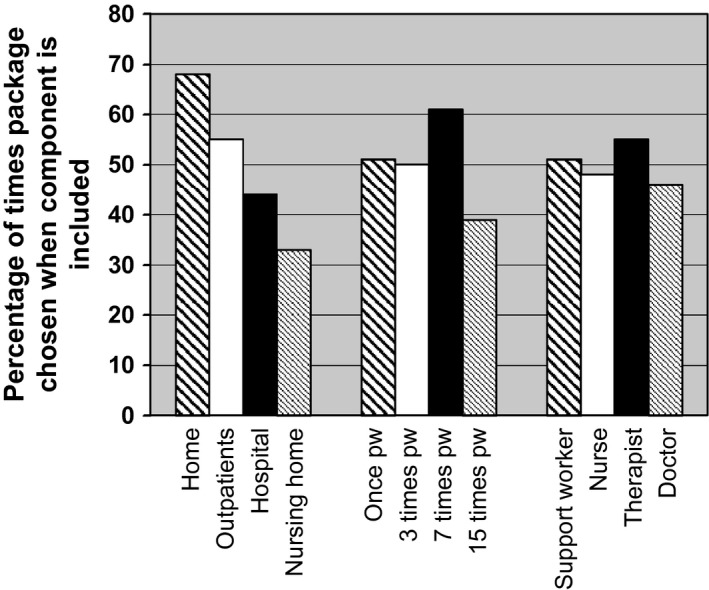
Results: Location of care was the dominant service characteristics with care at home being the strongly stated preference when compared with outpatient care (0.003), hospital care (<0.001) and nursing home care (<0.001) relative to home care, although this was less pronounced among less sick patients. Additionally, the respondents indicated a dislike for very frequent care contacts. No particular type of professional carer background was universally preferred but, unsurprisingly, there was evidence that sick patients showed a preference for nurse-led care.
Conclusions: Patients have clear preferences for the location for their care and were able to state preferences between different care packages when their ideal service was not available. Service providers can use this information to assess which models of care are most preferred within resource constraints.
Keywords: allied health; assistants; community rehabilitation services; conjoint analysis; intermediate care; models of care; outcomes; patient preference; staff; support workers.
© 2013 Crown copyright. Health Expectations © 2013 John Wiley & Sons Ltd.
Figures
References
-
- Department of Health . The National Service Framework for Older People. London: Department of Health, 2001. - PubMed
-
- Martin G, Peet S, Hewitt G, Parker H. Diversity in intermediate care. Health and Social Care in the Community, 2004; 12: 150–154. - PubMed
-
- Audit Commission . Living Well in Later Life. A Review of Progress Against the National Service Framework for Older People. London: Commission for Healthcare Audit and Inspection, 2006.
-
- Department of Health . HSC 2000/011: LAC 2000/10 Implementation of the Health Act Partnership Arrangements. London: Department of Health, 2000.
-
- Larkin GV. Occupational Monopoly and Modern Medicine. London: Tavistock, 1983.
Publication types
MeSH terms
Grants and funding
LinkOut - more resources
Full Text Sources
Other Literature Sources
Medical
