


Accuracy of pupil assessment for the detection of glaucoma: a systematic review and meta-analysis
- PMID: 23809274
- PMCID: PMC3818414
- DOI: 10.1016/j.ophtha.2013.04.012
Accuracy of pupil assessment for the detection of glaucoma: a systematic review and meta-analysis
Abstract
Objective: To assess the accuracy of using pupillary light reflex (PLR) in detecting glaucoma.
Clinical relevance: Glaucoma is a specific disease of the optic nerve and is often more severe in 1 eye. When large enough, this asymmetry in disease severity can cause a relative afferent pupillary defect (RAPD). Better detection of RAPDs may be one way to identify persons with glaucoma.
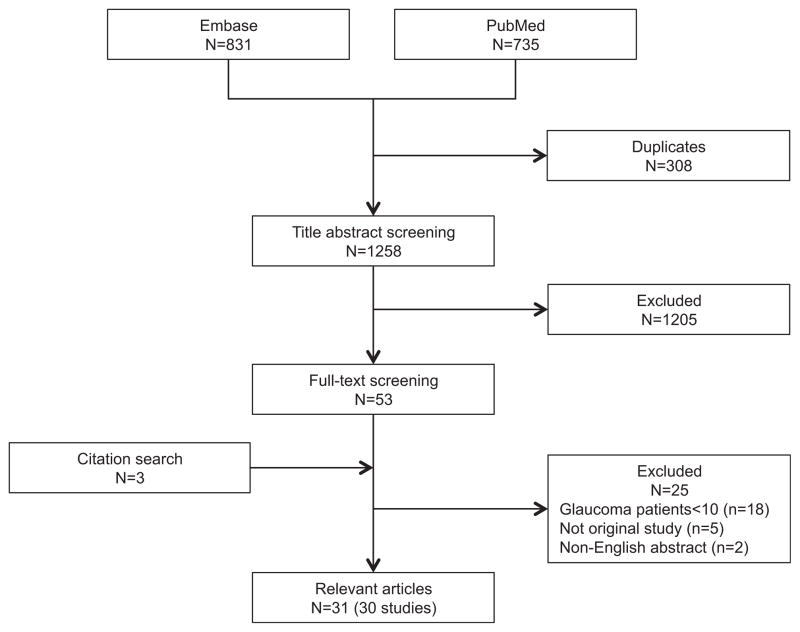
Methods: We searched Medline and Embase through June 2012 and searched bibliographies for relevant studies for additional references. Two authors independently reviewed all articles and selected studies that assessed PLRs in patients with glaucoma. We analyzed data using mixed-effect bivariate summary receiver operating characteristic meta-analysis models.
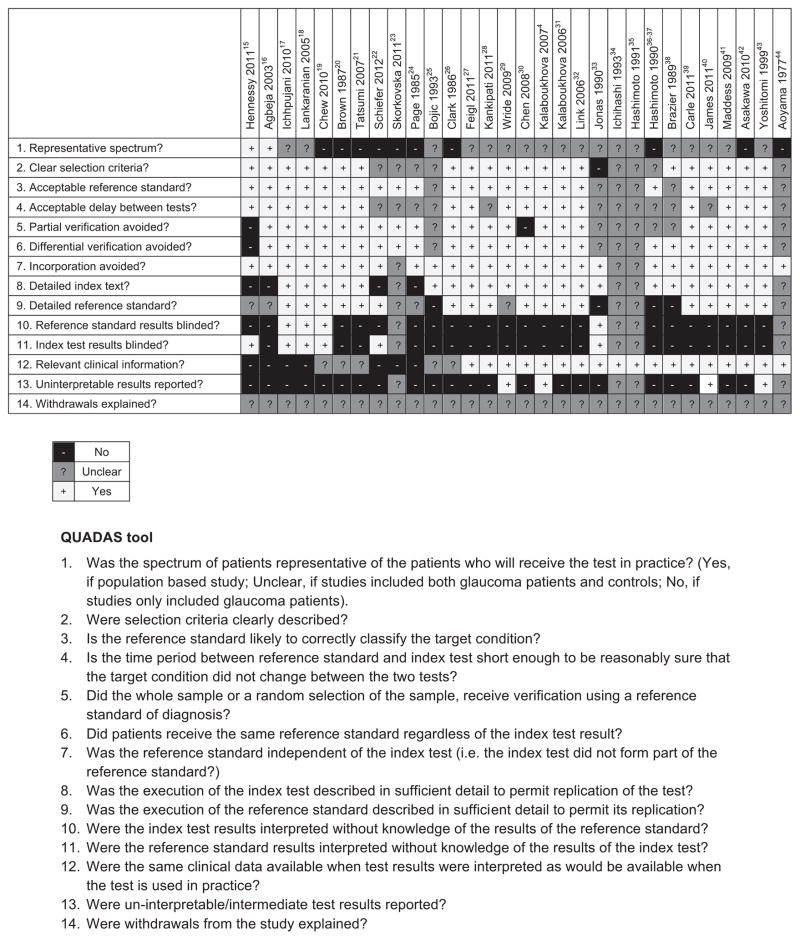
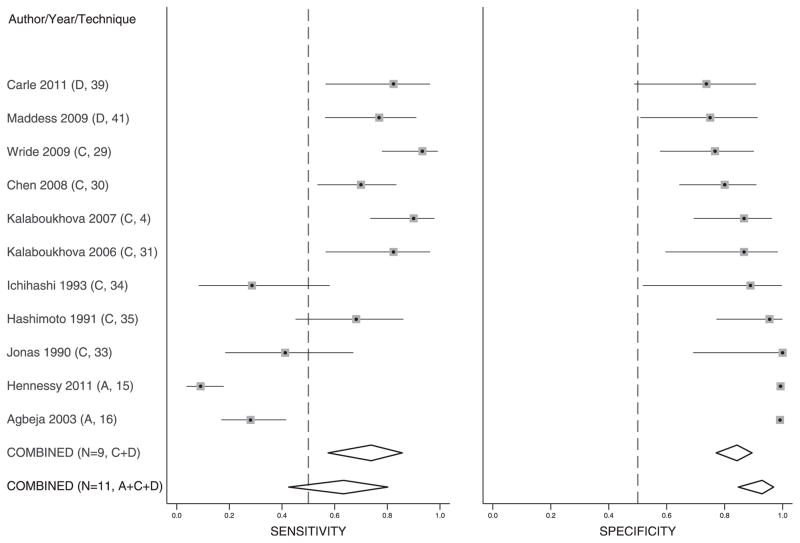
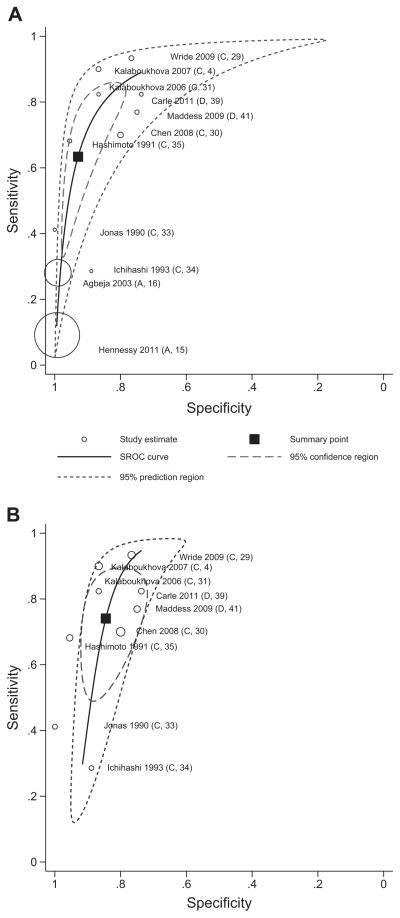
Results: A total of 30 studies were included in this review. An RAPD was observed in 9% to 82% of patients with glaucoma. Eleven studies with a total of 7271 participants were included in the analysis, and the pooled estimate corresponded to a sensitivity of 0.63 (95% confidence interval [CI], 0.43-0.80) and a specificity of 0.93 (95% CI, 0.85-0.97). After excluding 2 studies that used the swinging flashlight test, the sensitivity increased to 0.74 (95% CI, 0.59-0.85) with a specificity of 0.85 (95% CI, 0.77-0.90). Study designs and different pupil measurement techniques explained part of the heterogeneity between studies.
Conclusions: Patients with glaucoma frequently have an abnormal PLR and comparing the responses between the 2 eyes can in part distinguish between those with glaucoma and those without the disease. Newer instruments and analytic approaches to assess pupil function may improve the performance of pupil screening.
Copyright © 2013 American Academy of Ophthalmology. Published by Elsevier Inc. All rights reserved.
Figures
References
-
- Wang JC, Gazzard G, Foster PJ, et al. Interocular asymmetry of visual field defects in primary open angle glaucoma and primary angle-closure glaucoma. Eye (Lond) 2004;18:365–8. - PubMed
-
- Kalaboukhova L, Fridhammar V, Lindblom B. Relative afferent pupillary defect in glaucoma: a pupillometric study. Acta Ophthalmol Scand. 2007;85:519–25. - PubMed
-
- Thompson HS, Corbett JJ, Cox TA. How to measure the relative afferent pupillary defect. Surv Ophthalmol. 1981;26:39–42. - PubMed
Publication types
MeSH terms
Grants and funding
LinkOut - more resources
Full Text Sources
Other Literature Sources
Medical
