


Clearance of the mutant androgen receptor in motoneuronal models of spinal and bulbar muscular atrophy
- PMID: 23810450
- PMCID: PMC3748343
- DOI: 10.1016/j.neurobiolaging.2013.05.026
Clearance of the mutant androgen receptor in motoneuronal models of spinal and bulbar muscular atrophy
Abstract
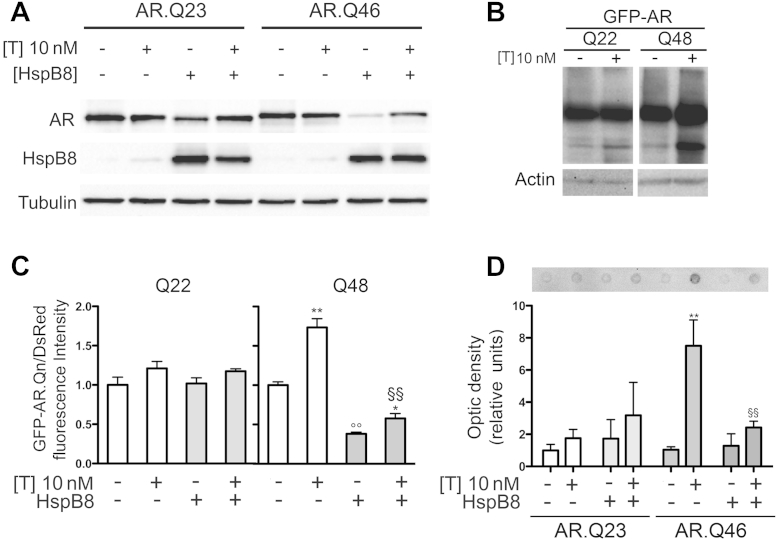
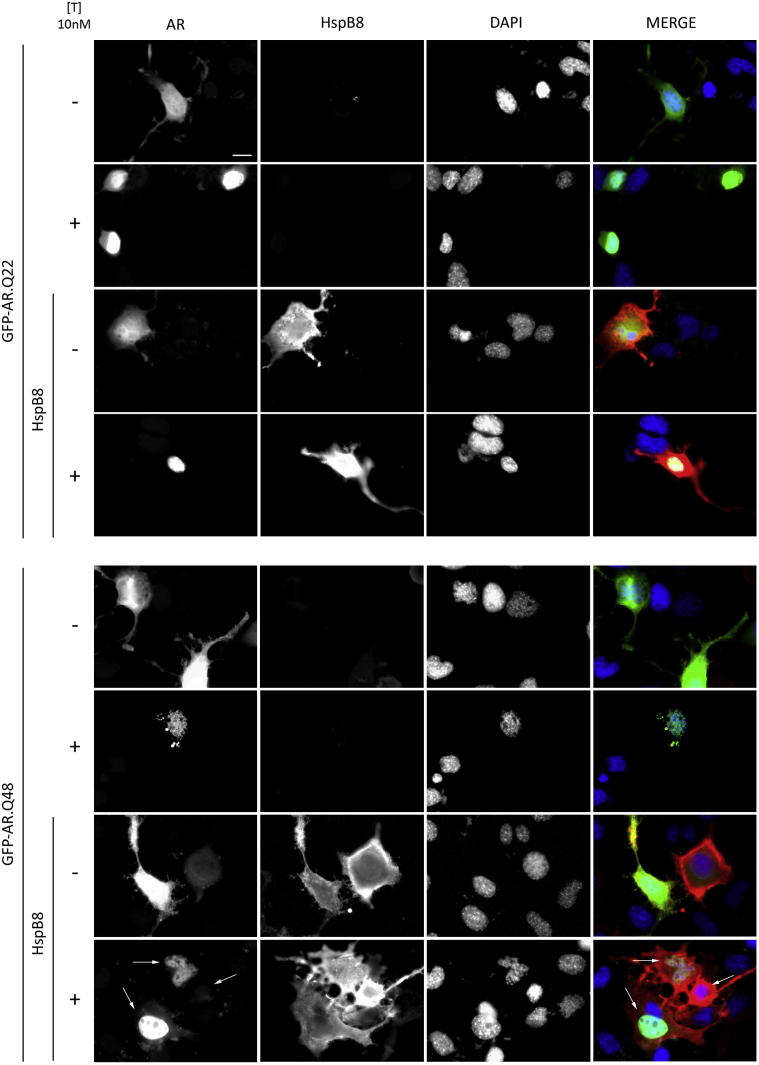
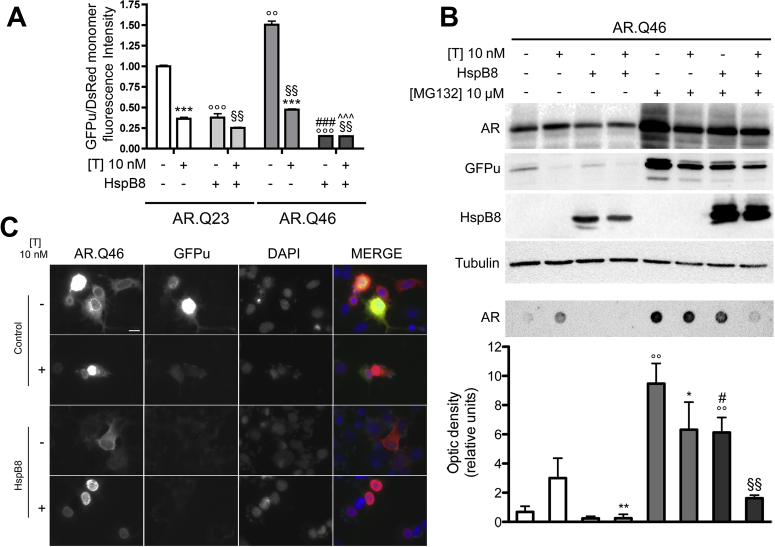
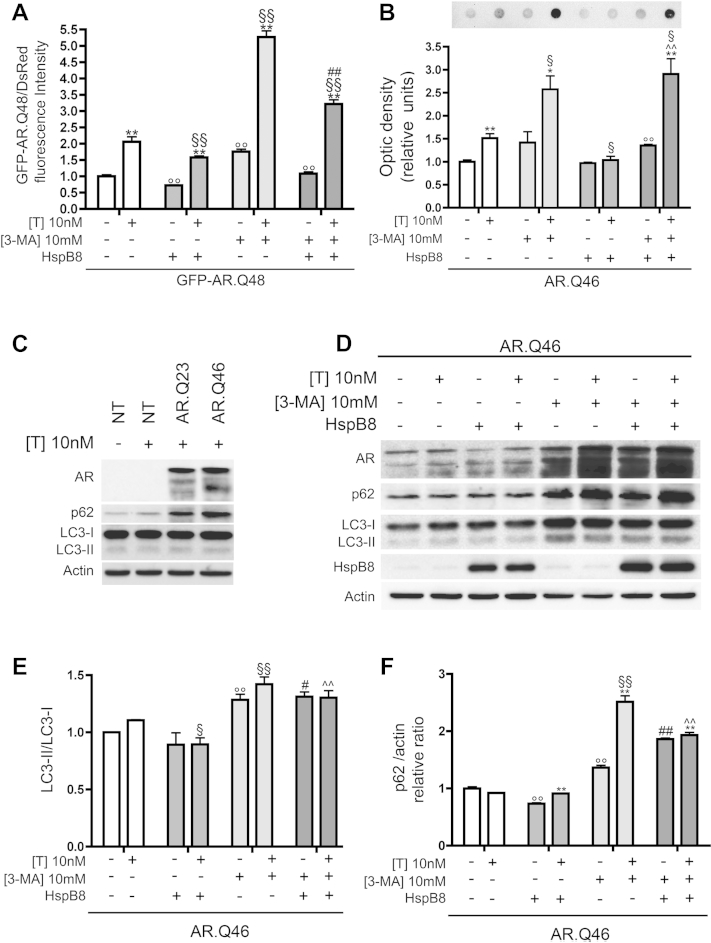
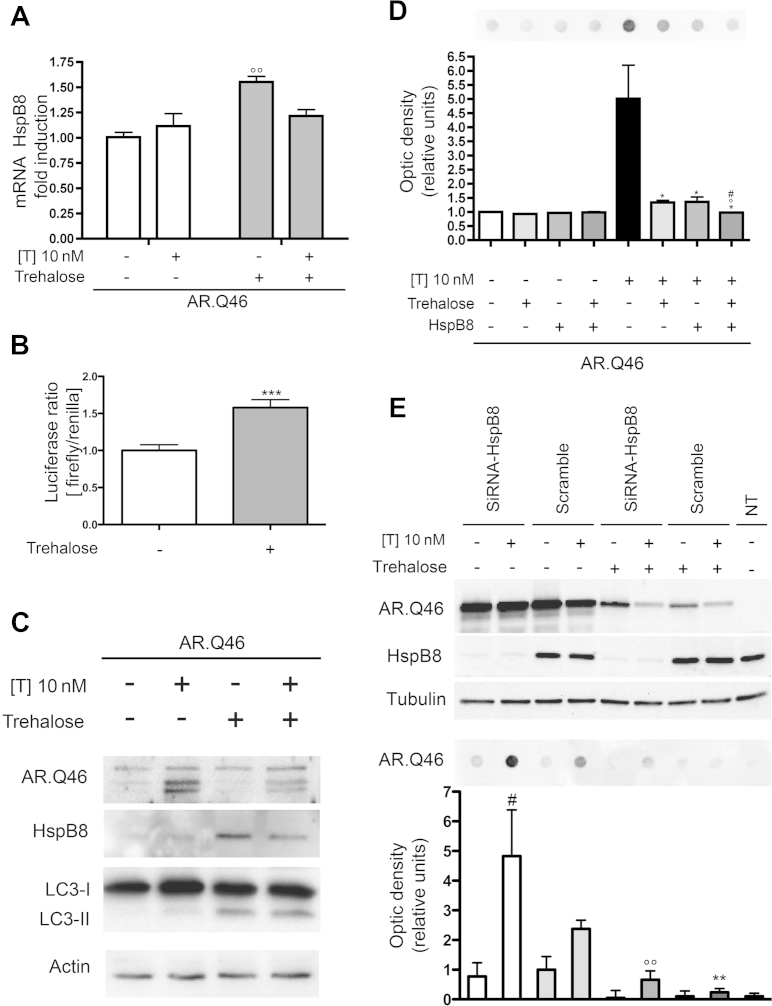
Spinal and bulbar muscular atrophy (SBMA) is an X-linked motoneuron disease caused by an abnormal expansion of a tandem CAG repeat in exon 1 of the androgen receptor (AR) gene that results in an abnormally long polyglutamine tract (polyQ) in the AR protein. As a result, the mutant AR (ARpolyQ) misfolds, forming cytoplasmic and nuclear aggregates in the affected neurons. Neurotoxicity only appears to be associated with the formation of nuclear aggregates. Thus, improved ARpolyQ cytoplasmic clearance, which indirectly decreases ARpolyQ nuclear accumulation, has beneficial effects on affected motoneurons. In addition, increased ARpolyQ clearance contributes to maintenance of motoneuron proteostasis and viability, preventing the blockage of the proteasome and autophagy pathways that might play a role in the neuropathy in SBMA. The expression of heat shock protein B8 (HspB8), a member of the small heat shock protein family, is highly induced in surviving motoneurons of patients affected by motoneuron diseases, where it seems to participate in the stress response aimed at cell protection. We report here that HspB8 facilitates the autophagic removal of misfolded aggregating species of ARpolyQ. In addition, though HspB8 does not influence p62 and LC3 (two key autophagic molecules) expression, it does prevent p62 bodies formation, and restores the normal autophagic flux in these cells. Interestingly, trehalose, a well-known autophagy stimulator, induces HspB8 expression, suggesting that HspB8 might act as one of the molecular mediators of the proautophagic activity of trehalose. Collectively, these data support the hypothesis that treatments aimed at restoring a normal autophagic flux that result in the more efficient clearance of mutant ARpolyQ might produce beneficial effects in SBMA patients.
Keywords: Androgen receptor; CAG repeat; Chaperones; HspB8; Motoneuron; Motoneuron disease; Neurodegeneration; Polyglutamine; Protein misfolding; Spinal and bulbar muscular atrophy.
Copyright © 2013 The Authors. Published by Elsevier Inc. All rights reserved.
Figures
References
-
- Adachi H., Katsuno M., Minamiyama M., Sang C., Pagoulatos G., Angelidis C., Kusakabe M., Yoshiki A., Kobayashi Y., Doyu M., Sobue G. Heat shock protein 70 chaperone overexpression ameliorates phenotypes of the spinal and bulbar muscular atrophy transgenic mouse model by reducing nuclear-localized mutant androgen receptor protein. J. Neurosci. 2003;23:2203–2211. - PMC - PubMed
-
- Adachi H., Katsuno M., Minamiyama M., Waza M., Sang C., Nakagomi Y., Kobayashi Y., Tanaka F., Doyu M., Inukai A., Yoshida M., Hashizume Y., Sobue G. Widespread nuclear and cytoplasmic accumulation of mutant androgen receptor in SBMA patients. Brain Res. 2005;128:659–670. - PubMed
-
- Anagnostou G., Akbar M.T., Paul P., Angelinetta C., Steiner T.J., de Belleroche J. Vesicle associated membrane protein B (VAPB) is decreased in ALS spinal cord. Neurobiol. Aging. 2010;31:969–985. - PubMed
-
- Arndt V., Dick N., Tawo R., Dreiseidler M., Wenzel D., Hesse M., Furst D.O., Saftig P., Saint R., Fleischmann B.K., Hoch M., Hohfeld J. Chaperone-assisted selective autophagy is essential for muscle maintenance. Curr. Biol. 2010;20:143–148. - PubMed
Publication types
MeSH terms
Substances
Grants and funding
LinkOut - more resources
Full Text Sources
Other Literature Sources
Research Materials
